

Yaroslav Azhnyuk, founder of Ukrainian defense firms The Fourth Law and Odd Systems, has emerged as a key figure in the development of artificial intelligence-enabled drone technology for military use. After Russia’s 2022 invasion, Azhnyuk transitioned from his previous work in Silicon Valley, where he had founded Petcube, a company producing AI-powered pet cameras, to focus on autonomous weapons systems. He argues that AI integration provides a decisive advantage in asymmetric warfare, potentially multiplying operational effectiveness significantly.
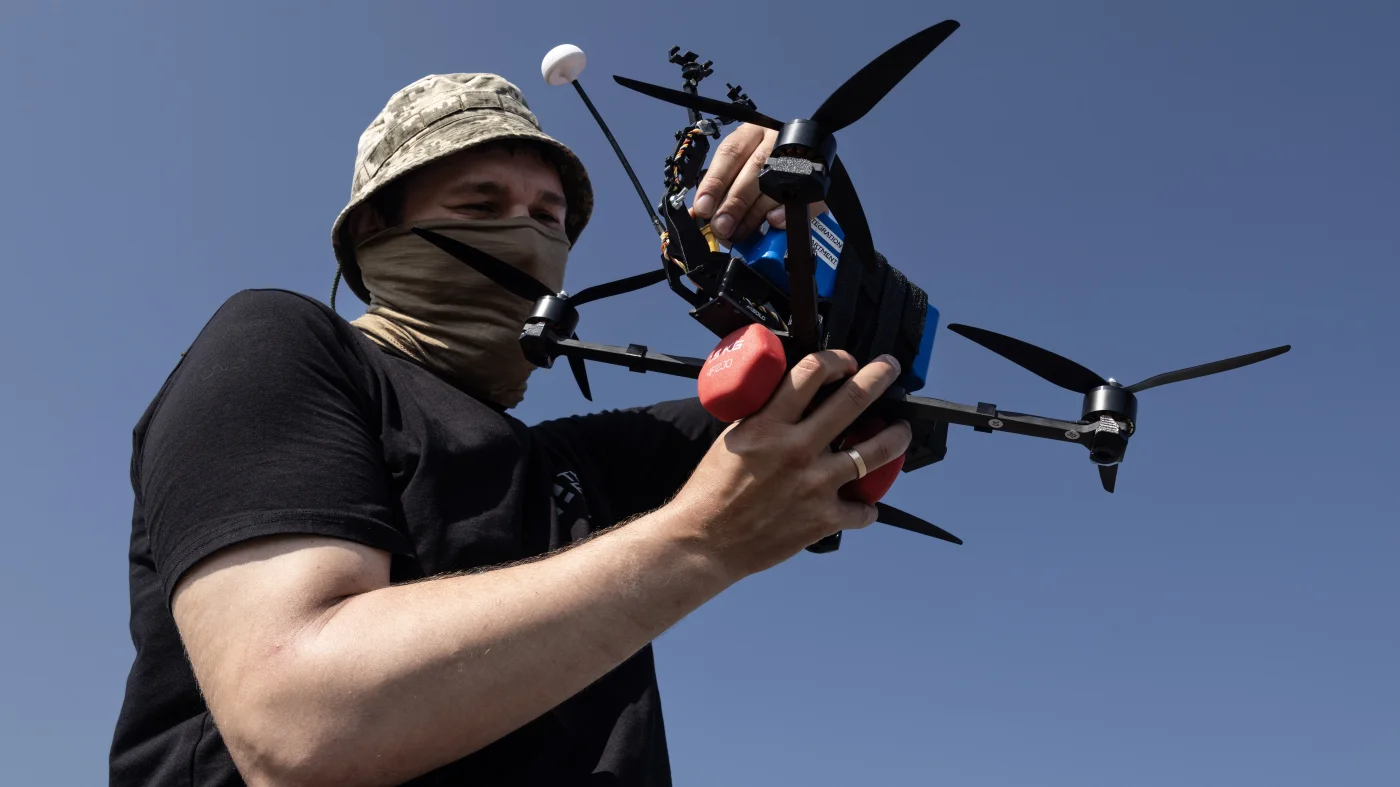
The Lupynis-10-TFL-1 drone, produced by The Fourth Law, represents the intersection of commercially available FPV drone technology and autonomous guidance systems. The platform combines a small, affordable flying platform with an onboard computer that assumes control during the final 500 meters of flight. The drone’s targeting system utilizes deep-learning neural networks trained on hours of combat footage to identify potential targets such as vehicles, tanks, and aircraft. During field testing, operators can manually select targets and initiate autonomous guidance, after which the microcomputer maintains course toward the objective without further pilot input.
The development of these systems has raised concerns among Ukrainian leadership. President Volodymyr Zelenskyy has warned that AI could influence battlefield decision-making processes in the near term. Azhnyuk acknowledges concerns about autonomous weapons but contends that such debates apply to all technological innovations throughout history. He emphasizes that human judgment remains central to target selection at The Fourth Law, with autonomous systems handling navigation and terminal guidance only after human authorization.
Russia has also deployed AI-enabled drone systems in the conflict, contributing to a broader high-tech arms race. The Fourth Law states that its autonomous systems include safeguards against unauthorized operation and resistance to electronic jamming, which represents an advantage over remotely piloted systems vulnerable to signal disruption. Multiple Ukrainian military units have integrated the Lupynis-10-TFL-1 into their operations since deployment began.
The company has named its drone systems after Ukrainian intellectuals and artists persecuted or killed by Russian authorities during the Soviet era, framing the weapons development as part of cultural and historical resistance.
Article Attribution | Read More at Article Source
Article summary produced by Claude AI