

General Motors has achieved a significant milestone in EV battery recycling by completing a pilot program that demonstrates closed-loop recycling methodology. The initiative involved recovering materials from end-of-life GM EV battery packs and reintroducing them into new battery cells for vehicle production. According to current technology capabilities, recycling processes can recover up to 95% of nickel, cobalt, and manganese, and up to 80% of lithium, with future advancements potentially enabling higher recovery rates.
The pilot program involved collaboration among multiple partners, including Cirba Solutions, Ultium Cells, LG Energy Solution, and others. Eighty end-of-life GM EV batteries were processed through Cirba Solutions’ facility, where they were converted into black mass—a material created through disassembly and separation of lithium-ion batteries. This black mass was then refined into cathode active material, a critical component that influences battery cost, safety, and performance. The recovered materials produced more than 12 metric tons of new cathode active material with 100% recycled nickel, cobalt, and manganese content.
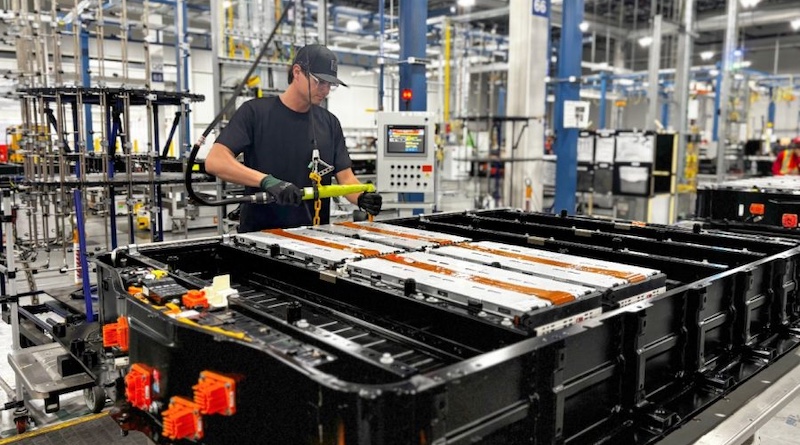
The recycled cathode active material underwent rigorous testing to ensure it met the same quality, safety, and performance standards as materials derived from virgin sources. Once validated, Ultium Cells manufactured new battery cells using this recycled content. Battery modules and packs were assembled at GM’s Factory ZERO and Spring Hill facilities. This month, the first production vehicles powered by these recycled-content batteries—including Cadillac LYRIQ and VISTIQ models, Chevrolet Silverado EV, and GMC Sierra EV—began rolling off assembly lines for customer delivery.
Beyond recycling, GM’s broader battery lifecycle strategy includes remanufacturing and refurbishment programs designed to reuse over 70% of pack components, extending useful life before final material recovery. The company is also deploying approximately 10,000 second-life GM batteries into energy storage applications through a partnership with Redwood Materials, including North America’s largest second-life battery microgrid. GM indicated that reducing material costs and carbon footprints while building circular economy pathways remain central objectives as EV battery volumes increase over the coming decade.
Article Attribution | Read More at Article Source
Article summary produced by Claude AI