

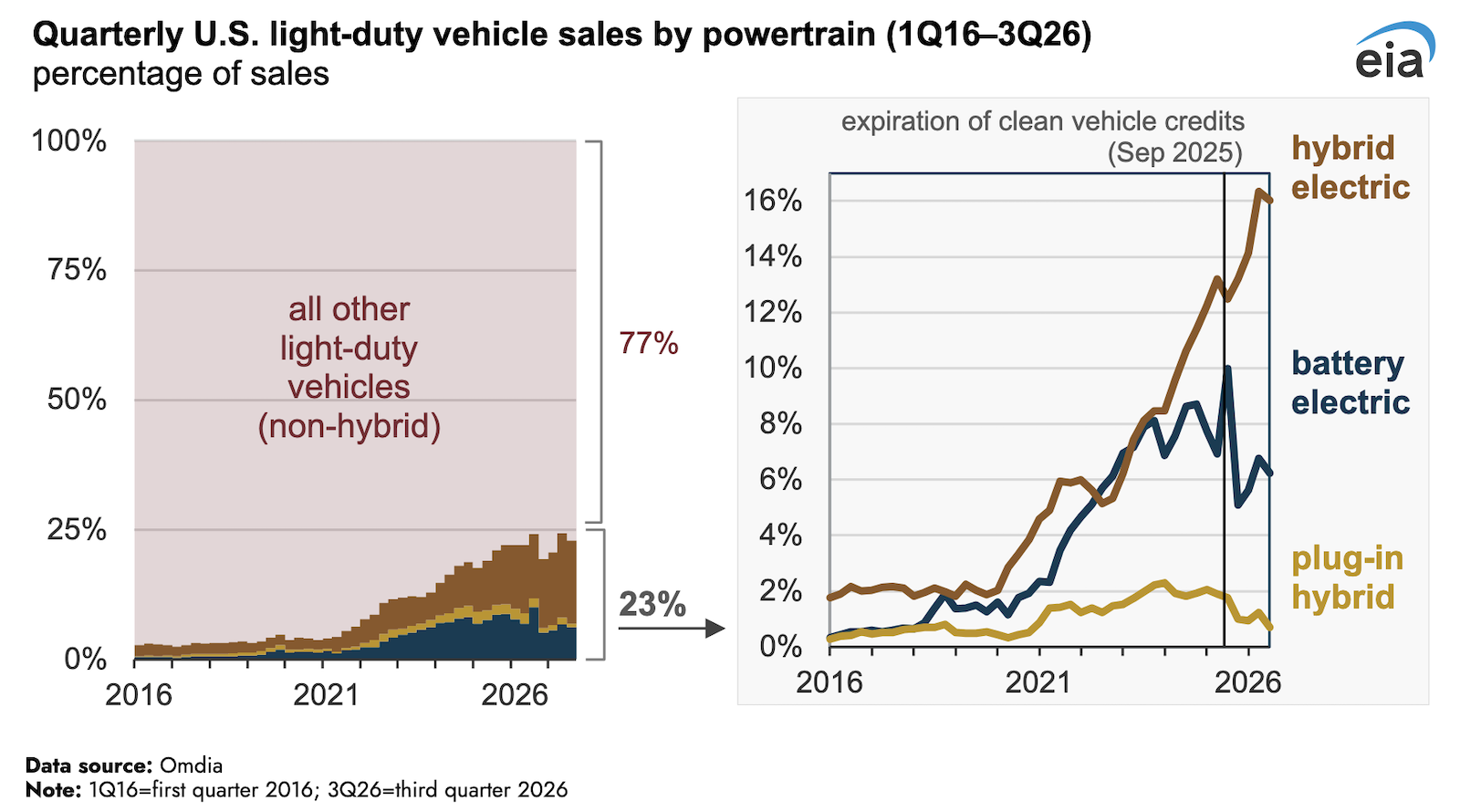
New vehicle electrification trends shifted in the third quarter of 2026, with combined sales of hybrid electric, battery electric, and plug-in hybrid electric vehicles representing 23% of light-duty vehicle sales, slightly down from 24% in the same quarter the previous year.
Hybrid electric vehicles continued their upward trajectory, capturing 16% of new vehicle sales during the period. However, this growth moderated compared to prior trends, coinciding with average transaction prices for new vehicles exceeding $50,000 for the first time during the year. Battery electric vehicles and plug-in hybrid electric vehicles both experienced market share declines. Battery electric vehicle sales fell to 6% from 10% year-over-year, while plug-in hybrid electric vehicles dropped from 1.8% to 0.7%.
These sales patterns followed the September 2025 expiration of two federal purchasing incentives: the New Clean Vehicle Credit and the Qualified Commercial Clean Vehicle Credit. Battery electric vehicles had reached a record 12% of sales in September 2025, immediately prior to the credits expiring. The decline has continued throughout 2026, with battery electric vehicles accounting for 6% of new sales in the first nine months compared to 8% during the same period in 2025.
The luxury vehicle segment, which typically shows higher electric vehicle adoption rates, also reflected this trend. Battery electric vehicles represented 12% of luxury light-duty vehicle sales in the third quarter, down significantly from 31% in the previous year’s comparable quarter. Despite the recent sales share of 6% for battery electric vehicles, their representation in the overall registered light-duty vehicle fleet remains substantially lower at 2%, based on 2024 data.
Article Attribution | Read More at Article Source
Article summary produced by Claude AI