

European Union sanctions targeting Russian energy imports face significant enforcement challenges through infrastructure loopholes that allow continued oil flows disguised as Kazakhstani origin, according to reports from EU energy security officials.
Under Regulation (EU) 2026/261, the EU has committed to completely phasing out Russian liquefied natural gas imports by January 2027 and all piped gas and crude exemptions by year-end. However, the Caspian Pipeline Consortium (CPC), which terminates at Russia’s Novorossiysk port, maintains a legal exemption granted in June 2022 based on claims that transported crude originates in Kazakhstan. Since that exemption date, CPC throughput has increased approximately 38.5% to 72 million metric tonnes annually, while Kazakhstan’s domestic oil production has grown less than 2% over the same period. EU sources attribute the discrepancy to Russian and Iranian crude being blended and transported through the CPC under forged Kazakhstani certificates.
According to EU energy security officials, this arrangement functions as a financing mechanism for Iran’s Islamic Revolutionary Guard Corps (IRGC) and associated entities. Iranian crude is reportedly transferred to Russia at discounts ranging from 35% to 42%, then integrated into Russian pipeline networks via tankers operating in the Caspian Sea before entering the CPC system. The mechanism enables Iran to conduct transactions outside Western financial networks while supporting purchases of advanced Russian military hardware including air-defense systems and orbital surveillance capabilities.
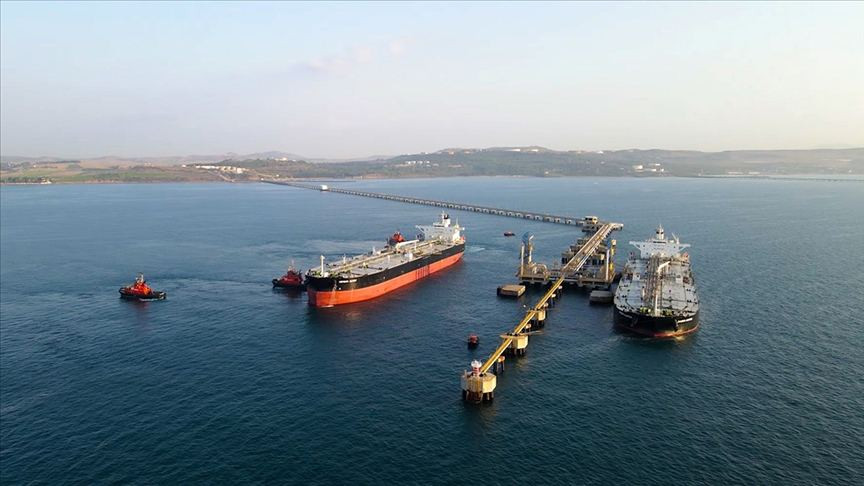
As the EU’s December 2027 phase-out deadline approaches, Moscow and Tehran are reportedly planning to redirect flows through the Baku-Tbilisi-Ceyhan (BTC) pipeline beginning in February 2027. Kazakhstan’s energy ministry stated plans to increase BTC crude shipments to 7 million metric tons annually, a more than five-fold increase from recent years. EU officials characterize this pivot as a strategic repositioning to circumvent forthcoming sanctions restrictions, with projected volumes of 600,000 to 750,000 barrels per day through the BTC corridor by March-April 2027.
Article Attribution | Read More at Article Source
Article summary produced by Claude AI