

Europe’s battery industry faces significant challenges despite having some foundational capacity in place, according to analysis of the Industrial Accelerator Act (IAA) framework. The continent has experienced substantial setbacks, with roughly a quarter of announced battery capacity since 2022 being cancelled or suspended. Germany’s project pipeline has been particularly affected, declining by half through 2035. Currently, non-European entities—predominantly South Korean manufacturers—dominate the landscape, controlling more than 72% of active battery cell manufacturing operations across Europe.
However, Europe is not beginning entirely from zero. More than half of battery cells used in electric vehicles sold within the EU market today are already manufactured locally. The region is establishing specialized capabilities in nickel-manganese-cobalt (NMC) and lithium iron phosphate (LFP) chemistries. European LFP production shows particular promise, with projections indicating output exceeding 100 gigawatt-hours annually by 2030, potentially reaching 140GWh if all planned projects materialize.
Capacity assessments suggest Europe could supply sufficient cells to power corporate electric vehicles by 2027 based on actual production output rather than theoretical capacity. By 2030, both corporate and private vehicle demand could be met with existing cell production. The cathode active material (CAM) supply chain presents greater challenges, with China potentially retaining over 80% of global production through 2035 and Europe accounting for only 3% globally. Despite this imbalance, emerging European cathode clusters for both LFP and NMC technologies are developing.
Precursor CAM emerges as a weaker link in the supply chain, with strategic importance currently not reflected in IAA requirements. Of announced precursor CAM capacity through 2030, only about 40% remains on track. Analysis indicates that industry proposals for fleet flexibility mechanisms could substantially diminish IAA effectiveness by allowing manufacturers to meet weakened requirements with minimal strategic investment. Claims of a 150-gigawatt-hour battery shortage projected for 2028 are disputed as overstated, resulting from restrictive accounting methodologies rather than genuine production gaps.
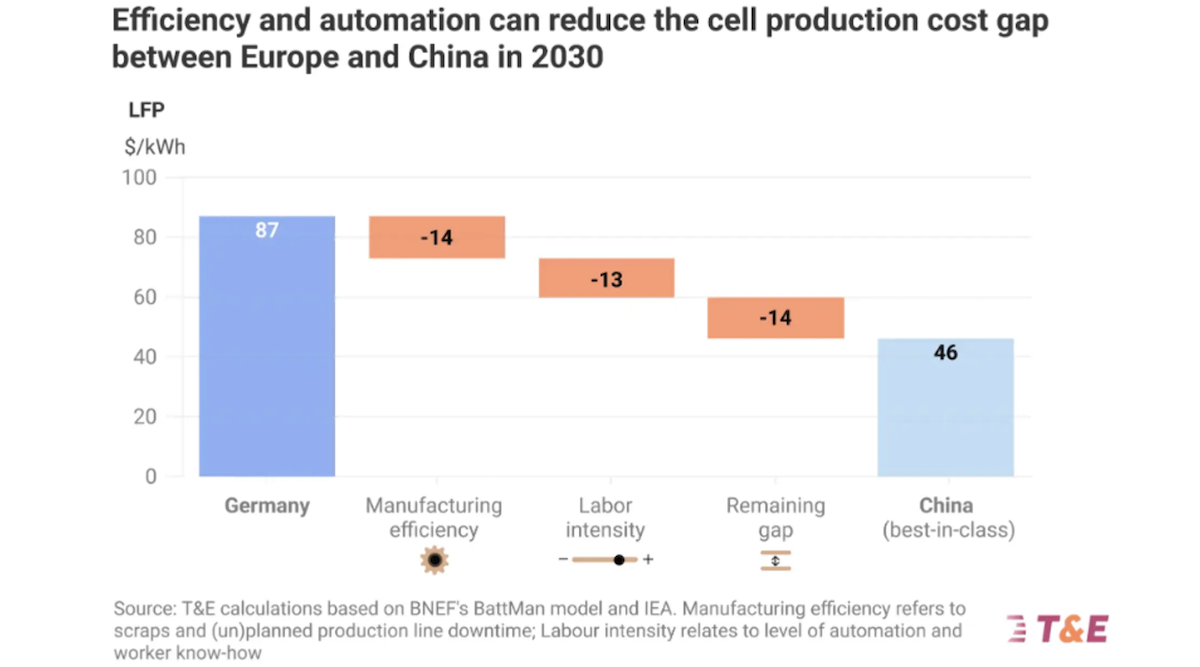
The IAA framework aims to support battery manufacturers and component producers navigating the transition from pilot production to mass manufacturing, a critical period characterized by high scrap rates and process optimization challenges. Creating local demand through policy mechanisms could help European companies overcome reliance on Chinese suppliers during this economically vulnerable phase.
Article Attribution | Read More at Article Source
Article summary produced by Claude AI