

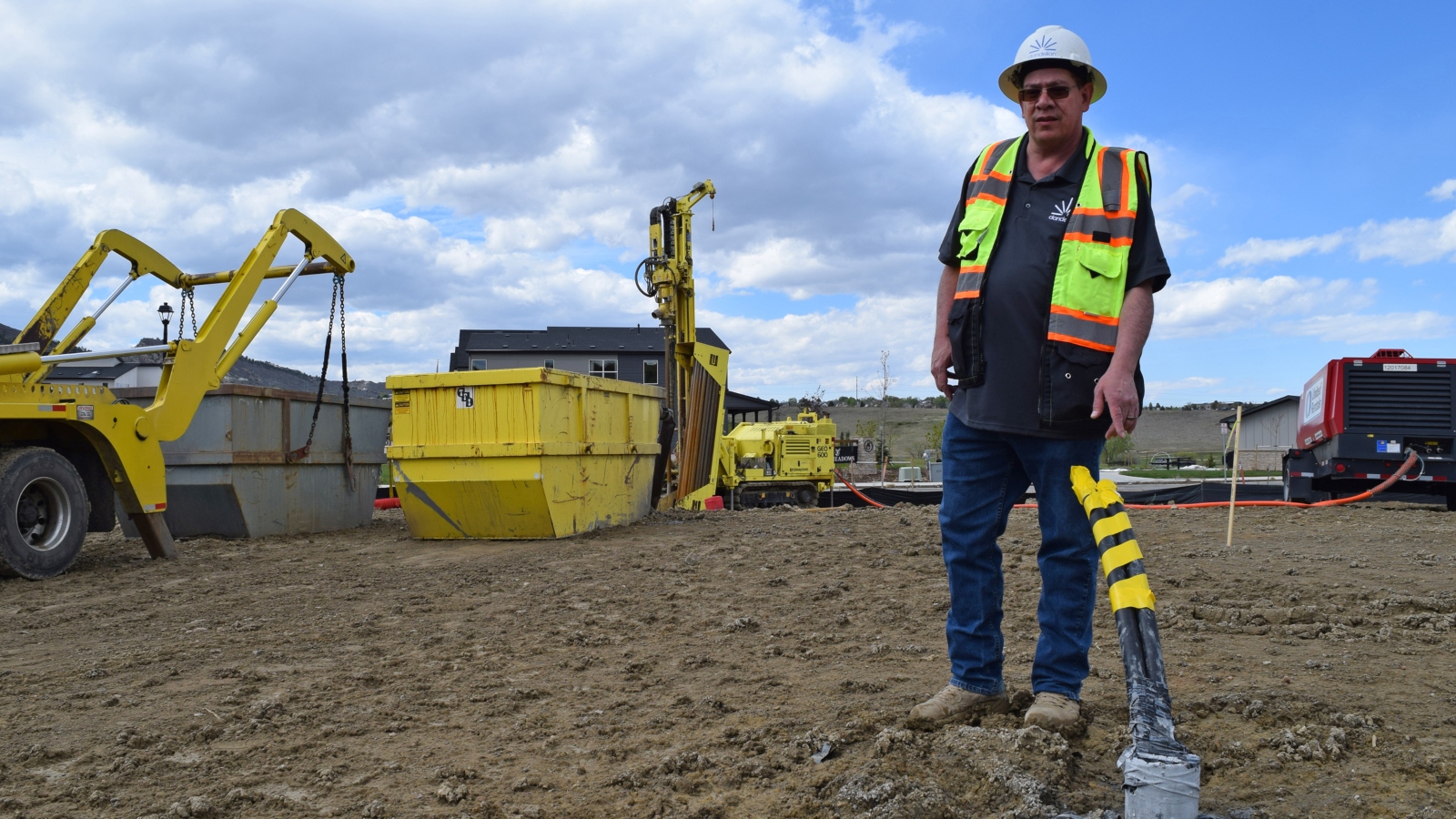
A new housing development south of Denver has become a demonstration site for ground-source heat pump technology through a collaboration between Dandelion Energy, a geothermal startup, and Lennar, one of the nation’s largest homebuilders. The project involves nearly 100 homes, each equipped with individual ground-source heat pump systems that leverage stable underground temperatures for heating and cooling. The technology uses substantially less electricity than air-source heat pumps and could help Colorado achieve its climate objectives while reducing peak energy demand.
Ground-source heat pumps traditionally require expensive custom installation, with drilling costs alone often exceeding $10,000 per home. Dandelion, which originated from X, a research and development subsidiary of Alphabet, asserts it can complete geothermal projects at half the typical cost and in half the time. The company deployed a lightweight drilling rig that efficiently moves between lots, completing boreholes—typically between 200 and 500 feet deep—for one or more homes daily. Water circulating through polyethylene pipe at these depths reaches stable temperatures around 50 degrees Fahrenheit year-round before heat pumps provide additional conditioning based on seasonal needs. Installing systems across multiple homes simultaneously eliminates the need for custom designs and costly retrofits.
Dandelion and Lennar launched a broader initiative in 2025 targeting installation of geothermal systems in more than 1,500 Colorado homes over two years, with aspirations to scale nationally to 10,000 homes annually. Currently, just over a million U.S. homes utilize ground-source heat pumps, with approximately 100,000 new installations annually. A 2025 Department of Energy report projects geothermal systems could reach 7 million homes by 2035, potentially reducing winter peak energy demand by more than 40 gigawatts and generating roughly $4 billion in annual grid cost savings.
Upfront costs remain a significant barrier, averaging around $25,000 for typical new home installations. Space constraints in dense urban areas and varying permitting requirements across jurisdictions also complicate deployment. Colorado addresses these challenges through utility rebates, tax credits, and policies requiring developers to fund new gas infrastructure expansion, incentivizing all-electric construction. Xcel Energy, the state’s largest utility, provides approximately $25,000 per home rebates for high-efficiency buildings with ground-source heat pumps, helping achieve Colorado’s Clean Heat Standard requirement to reduce greenhouse gas emissions 22 percent below 2015 levels by 2030.
Article Attribution | Read More at Article Source
Article summary produced by Claude AI