

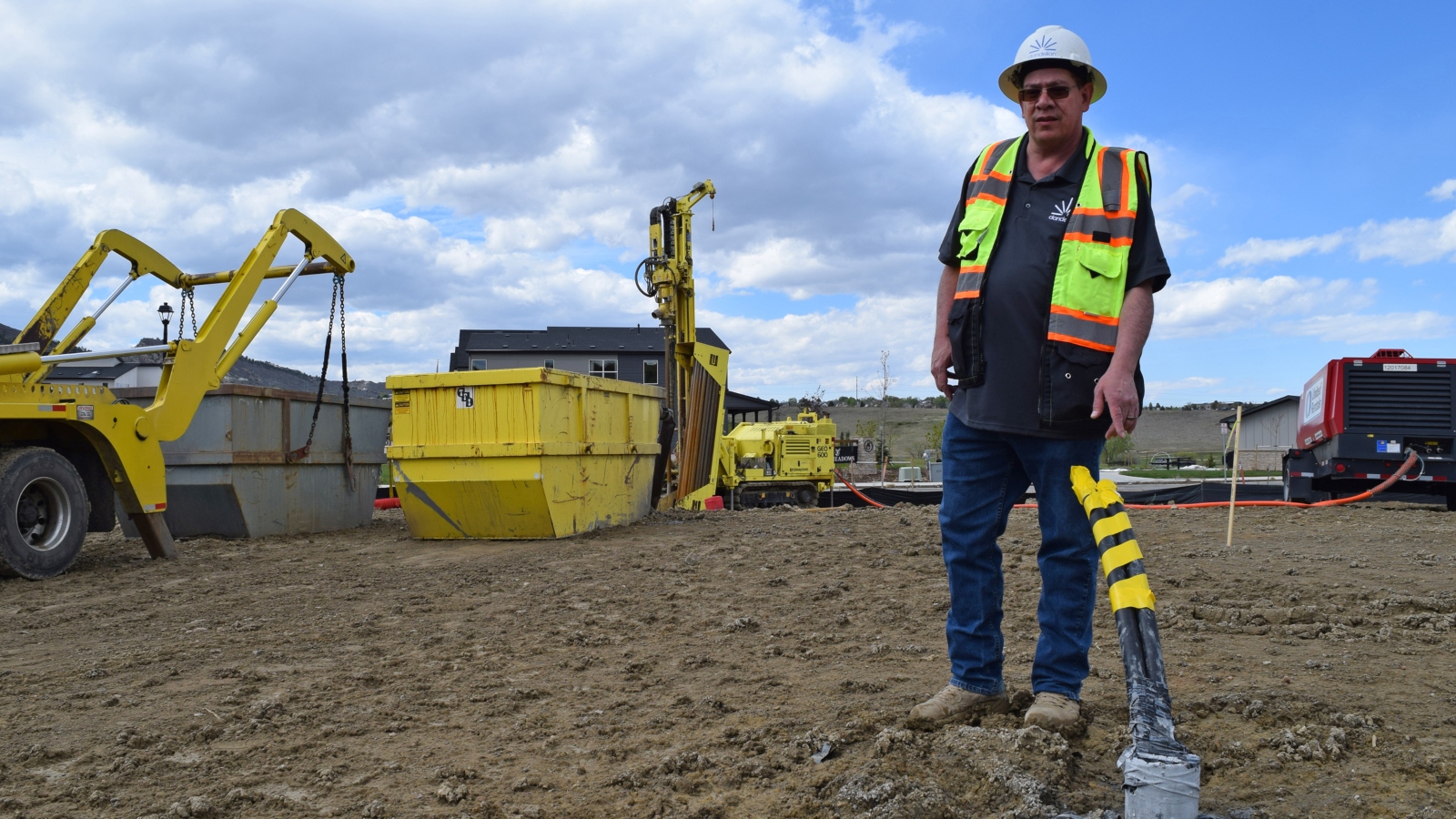
A residential development south of Denver is serving as a demonstration project for ground-source heat pump technology through a partnership between geothermal startup Dandelion Energy and major homebuilder Lennar. The project includes nearly 100 homes at the base of Colorado’s Front Range, each equipped with its own ground-source heat pump system. These systems use steady underground temperatures to heat and cool buildings more efficiently than conventional air-source heat pumps, potentially helping states meet climate goals while reducing peak energy demand.
Dandelion Energy, which originated from Alphabet’s X research division, claims its approach reduces installation costs and timelines significantly compared to traditional geothermal systems. The company uses a lightweight drilling rig that moves efficiently from lot to lot, installing boreholes between 200 and 500 feet deep before home foundations are poured. Water circulates through polyethylene pipe at these depths where temperatures remain around 50 degrees Fahrenheit year-round, with a heat pump in each home’s basement providing additional heating or cooling as needed. The company reports it can complete multiple boreholes daily when working across a large development.
The Ken Caryl Ranch project is part of a broader initiative launched in 2025 between Dandelion and Lennar to install geothermal systems in more than 1,500 Colorado homes over two years, with plans to scale to 10,000 homes annually nationwide. According to a 2025 U.S. Department of Energy report, expanding ground-source heat pumps to 7 million homes by 2035 could reduce winter peak energy demand by over 40 gigawatts and save approximately $4 billion annually in grid costs. Currently, just over a million U.S. homes use ground-source systems, with roughly 100,000 new installations per year.
Challenges to broader adoption include upfront costs averaging around $25,000 for typical new homes, space constraints in dense urban areas, and varying permitting requirements across states. Colorado offers several incentives including approximately $25,000 in rebates from Xcel Energy for new high-efficiency buildings with ground-source heat pumps, a $2,000 state tax credit, and requirements that developers pay for gas service expansion. These policies aim to support Colorado’s Clean Heat Standard requirement to reduce building-sector greenhouse gas emissions 22 percent below 2015 levels by 2030.
Article Attribution | Read More at Article Source
Article summary produced by Claude AI