

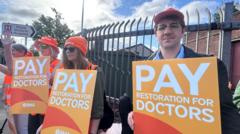
Resident physicians in Northern Ireland initiated industrial action on Monday in an ongoing dispute regarding compensation. The strike lasted 24 hours, starting at 07:00 BST and concluding at 06:59 on Tuesday. This action follows strike activity by consultants and specialist doctors the preceding week, marking the first such labor action by these physician groups in the region.
The dispute centers on a recommended pay increase of 3.5% from an independent pay review body, which physician organizations deemed insufficient. According to voting results, 92% of resident doctors, 79% of consultants, and 90% of specialist associate specialist and speciality (SAS) doctors voted in favor of strike action. Physician leaders characterized the recommended increase as failing to address what they described as over 18 years of pay erosion. Dr. Steven Montgomery, chairman of the BMA’s Northern Ireland resident doctors committee, stated that physician compensation had decreased by over 20% since 2008.
Health Minister Mike Nesbitt indicated his commitment to implementing the year’s pay award but cited the absence of an agreed budget as preventing him from doing so. He noted that exceeding the 3.5% recommendation would create significant consequences across the broader public sector workforce. The minister emphasized that no scope existed for pay awards beyond review body recommendations in the budget period.
Doctors participating in the action raised concerns about workforce retention and patient care implications. Survey data indicated that over 54% of penultimate and final year medical students in Northern Ireland indicated they did not plan to practice in the region. Participants cited poor working conditions, overtime without compensation, and superior pay opportunities in other countries as factors influencing physician departures to locations including Australia and New Zealand.
Strike organizers indicated that emergency and urgent care would receive priority during the action. Leadership stated that elective procedures and outpatient appointments would likely face cancellation but emphasized that patient safety would remain a primary consideration. BMA representatives indicated they had sought meaningful negotiations with health department officials but stated that no credible negotiations had been offered.
Article Attribution | Read More at Article Source
Article summary produced by Claude AI