

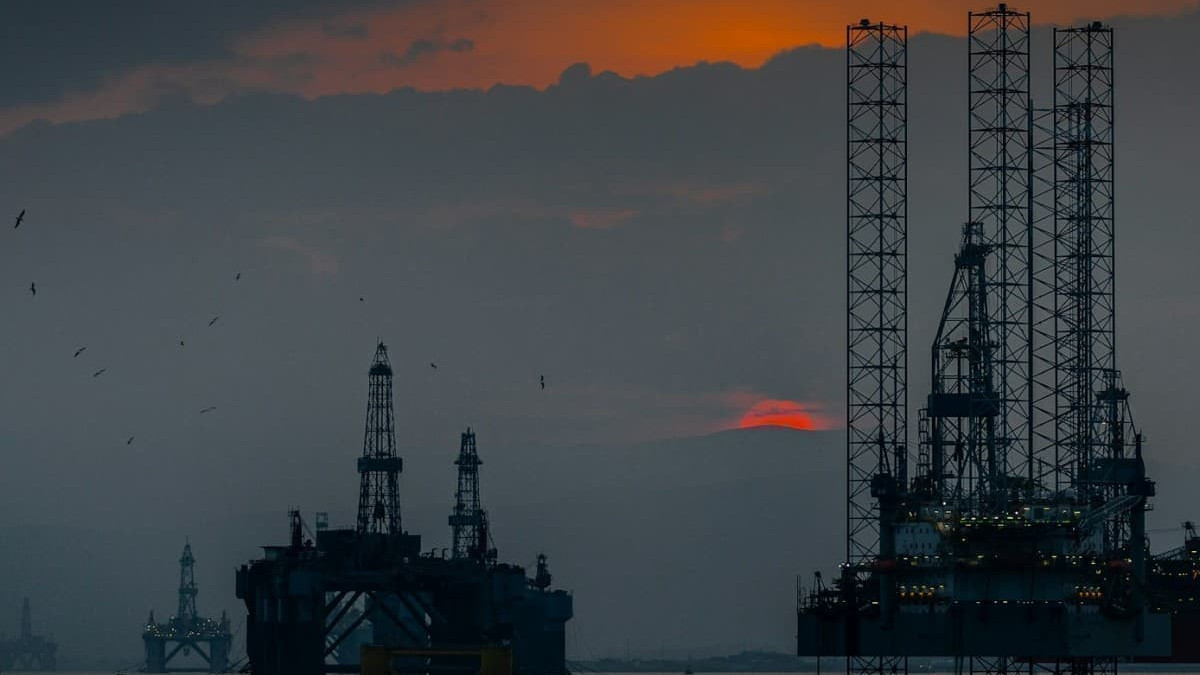
Norway holds potentially significant but largely unexplored oil and gas reserves beneath thick volcanic rock formations in the western Vøring and Møre basins of the Norwegian Sea. Although these areas were opened for petroleum exploration in 1994, they have attracted minimal drilling activity over the following decades due to the technical challenges posed by basalt layers, which interfere with conventional seismic imaging and make it difficult to identify subsurface structures.
Renewed industry interest in sub-basalt exploration was demonstrated at a technical seminar organized by the Norwegian Offshore Directorate on October 15, where representatives from major operators including Equinor, Aker BP, Harbour Energy, and geophysical specialists presented emerging exploration methodologies. These technological advances include ocean-bottom seismic surveys, full-waveform inversion, electromagnetic imaging, and artificial intelligence-assisted interpretation of seismic data. While such participation indicates growing technical capability rather than immediate drilling commitments, the involvement of established petroleum companies signals confidence that improved subsurface imaging could render previously inaccessible formations economically viable.
The timing of this exploration focus reflects a strategic concern for Norway’s energy sector. The Norwegian Offshore Directorate has indicated that petroleum production from the continental shelf faces potential significant decline after 2030 without new discoveries and development initiatives to compensate for aging field output. Recent exploration activity has concentrated on smaller discoveries near existing infrastructure, which offer lower costs and faster development cycles but may prove insufficient for long-term production sustainability. Successful sub-basalt exploration could establish entirely new producing regions rather than merely extending existing field operations.
Beyond Norway’s domestic considerations, these exploration efforts carry implications for European energy supply. Following reduced Russian natural gas pipeline deliveries, Norway has become Europe’s primary pipeline natural gas supplier, a position requiring sustained investment and new discoveries to maintain. However, any commercial development of sub-basalt resources would require exploration drilling, appraisal activities, infrastructure construction, and regulatory approvals, processes spanning many years before production could commence. The exploration challenge remains highly uncertain, with insufficient geological data to establish reliable estimates of commercially recoverable resources.
Article Attribution | Read More at Article Source
Article summary produced by Claude AI