

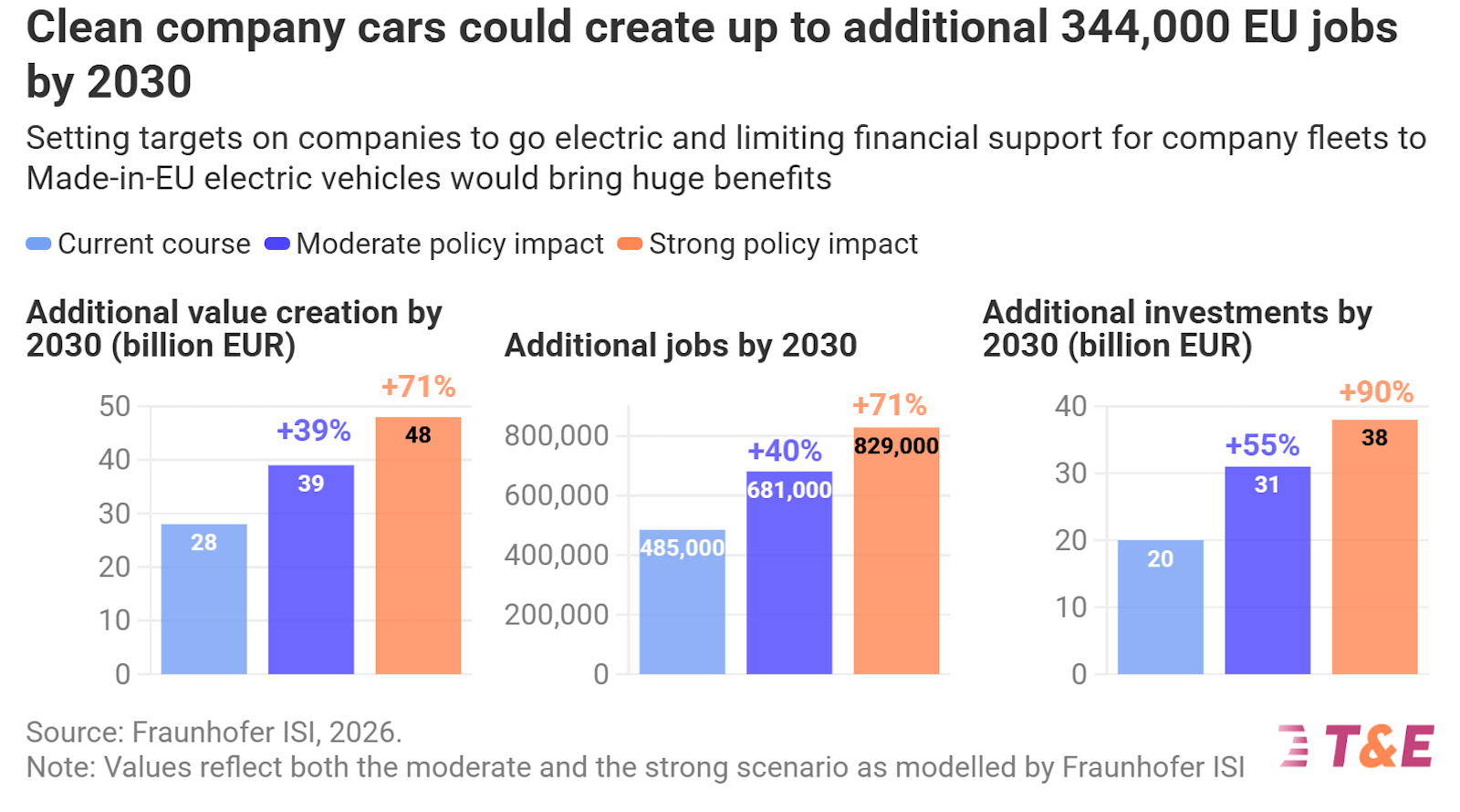
A new analysis from T&E examines the economic implications of accelerating electric vehicle adoption within large corporate fleets across the European Union. The study models scenarios based on the Clean Corporate Vehicles Regulation, which establishes a minimum requirement that 45% of new car sales in large corporate fleets be electric by 2030.
Under a strong scenario where combustion-engine vehicles are more rapidly phased out of company fleets, the research projects that 69% of new cars in large corporate fleets could be electric by 2030. This accelerated transition would create approximately 344,000 additional jobs across the EU economy and automotive sector, with economic gains potentially reaching €48 billion and new investments climbing to €38 billion. A more moderate scenario still produces substantial benefits, generating roughly 196,000 jobs and corresponding economic growth.
The analysis highlights that strictly limiting government financial support for company cars beginning in January 2028 exclusively to low and zero-emission vehicles manufactured in Europe would serve as a critical driver for these gains. Germany and Poland emerge as the largest beneficiaries in the projections. Germany could see demand for 134,000 additional jobs, representing 39% of the new EU employment generated, while Poland could capture approximately 38,500 positions, with 82% concentrated in battery production and related supply chain activities.
The study notes that battery manufacturing in Poland could more than double from 31 gigawatt-hours to 81 gigawatt-hours by 2030 under the strong scenario. T&E representatives emphasize that securing these outcomes depends on policymakers maintaining the regulatory framework’s Made-in-EU requirements and preserving the 2028 implementation date. They argue that weakening these provisions would undermine incentives for automotive manufacturers to establish local production capacity.
Article Attribution | Read More at Article Source
Article summary produced by Claude AI