

Marine energy technologies, which harness the kinetic power of tides, currents, and waves, are receiving continued support from the US Department of Energy despite political headwinds facing other renewable sectors. Unlike wind turbines, these devices remain largely hidden beneath the water’s surface, making them less susceptible to aesthetic objections that have driven opposition to offshore wind farms.
The Department of Energy estimates significant potential contributions from marine energy to the nation’s electrical grid, with wave energy alone capable of generating 1,170 terawatt-hours annually and tidal energy contributing approximately 220 terawatt-hours per year. However, the marine energy industry remains in early stages of development, with most current activity focused on testing, demonstration, and pilot projects. The US has positioned itself as a global leader in this field since 2010 through various initiatives, including a wave energy test facility in Hawaii and the recently launched PacWave South open ocean test facility off the Oregon coast.
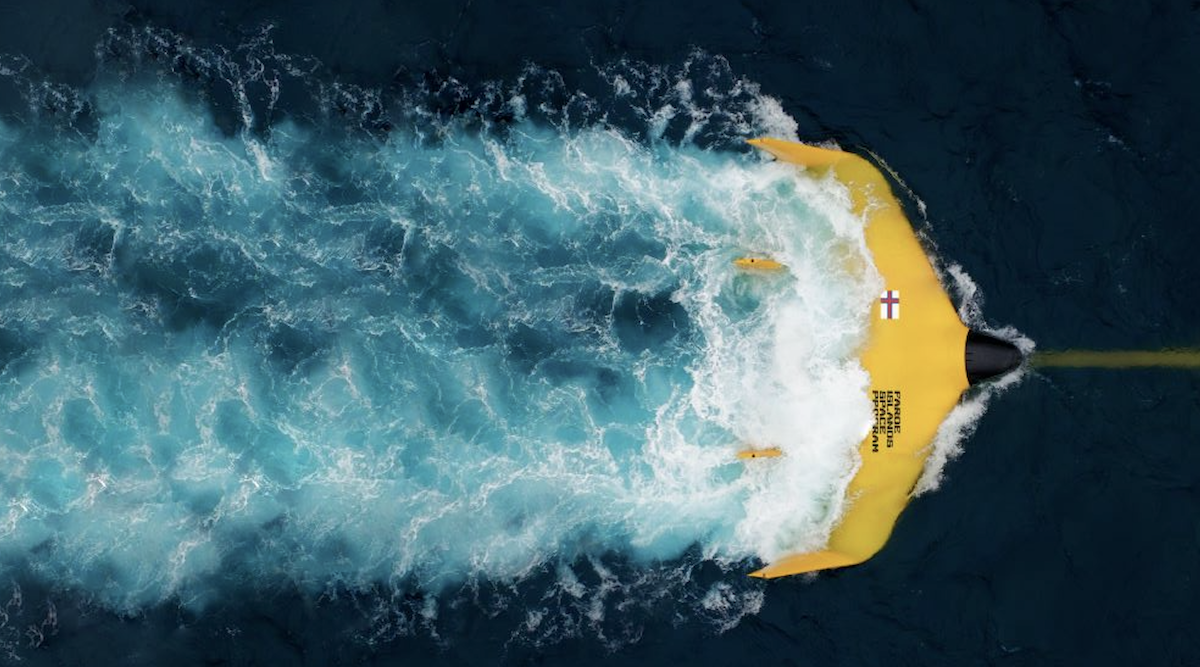
Tidal energy development in the US has concentrated on locations where other renewable resources are inadequate, including demonstration projects in New York City’s East River and sites in Maine and Alaska. Meanwhile, international companies are advancing tidal technologies for deployment in regions where wind and solar face practical or political constraints. Swedish startup Minesto has developed underwater kite-like devices designed to optimize energy extraction from low-flow tidal streams, with active projects underway in the Faroe Islands, Wales, and Taiwan. The company recently announced plans to bring its technology to the Maldives through a partnership with UK investment firm Morteza Capital, supported by a Nordic development fund.
The Maldives represents a strategic location for tidal energy expansion given its geography of dispersed low-lying islands, heavy reliance on imported diesel fuel, and constraints on wind and solar development due to tourism-dependent economy priorities. Marine energy’s inclusion in the current administration’s renewable energy framework, while wind and solar face policy restrictions, underscores shifting political dynamics in the energy sector.
Article Attribution | Read More at Article Source
Article summary produced by Claude AI