

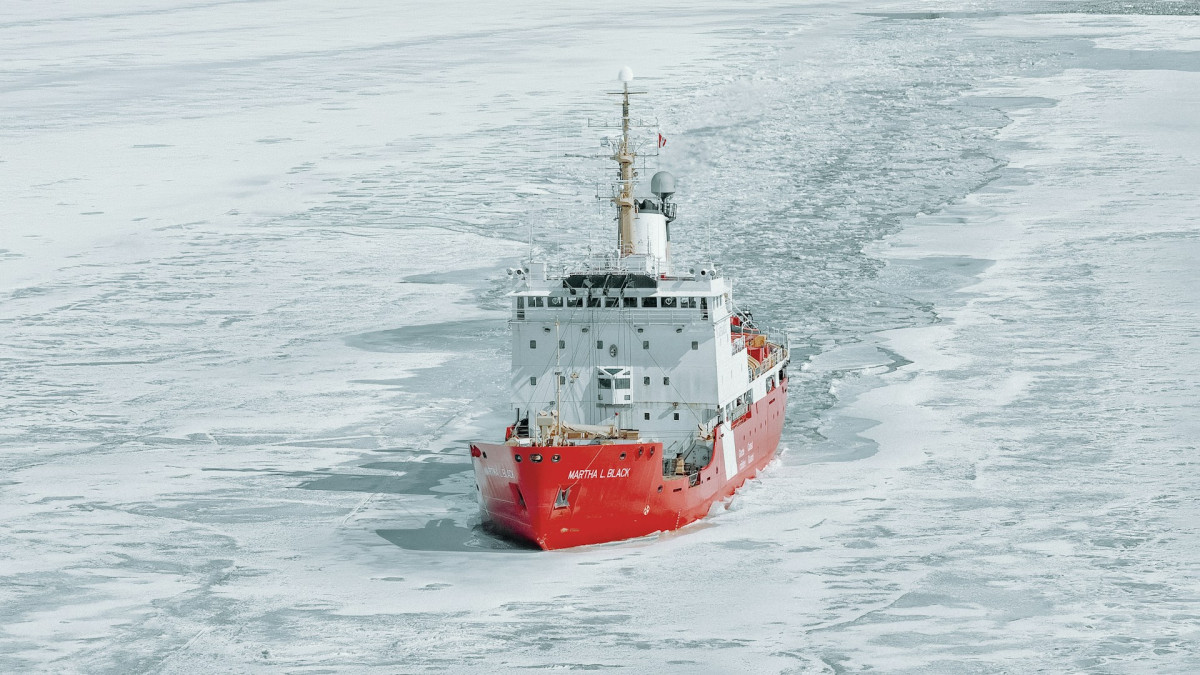
A group of sanctioned Russian tankers became stranded near the Vilkitsky Strait, a 55-kilometer-wide passage between Siberia and Bolshevik Island, after encountering packed ice in the frozen waters. The incident underscored complications in Russia’s push to capitalize on the Northern Sea Route (NSR) to China, a corridor that Moscow views as strategically vital for avoiding Ukrainian threats and Western interdiction of its shadow fleet operations. Environmental analysts noted that melting Arctic sea ice does not necessarily simplify navigation, as breaking ice can accumulate in narrow straits and impede vessels lacking proper ice-class certification.
Russia has heavily promoted the NSR as a commercially viable pathway, with President Vladimir Putin recently announcing that 37 million tons of cargo moved along portions of the route in 2025 and predicting the volume would nearly double by 2030. However, shipping data reveals a more complex picture. By mid-October, approximately 20 million barrels of crude oil and liquefied natural gas had transited the full length of the NSR to Asian markets, representing a 50 percent increase compared to 2025 but still constituting roughly 1 percent of Russia’s total seaborne oil exports. Maritime analysts attributed this modest share to Russia’s limited fleet of Arctic-capable vessels and infrastructure constraints imposed by Western sanctions affecting the procurement of spare parts and maintenance services.
Beyond Russian operations, other nations have begun testing the Arctic corridor. South Korea reported its first container ship traversed the route in October, while China completed multiple scheduled container services to Europe along the NSR during the year. These developments signal broader international interest, though questions remain about Russia’s governance of the passage and potential toll structures for commercial vessels.
The expanding Arctic activity has prompted Western strategic responses. The European Union unveiled a new Arctic strategy, while NATO expanded its Arctic Sentry mission and the United States announced plans to increase military presence in the region. Environmental organizations, meanwhile, have raised concerns about shipping-related ecological risks, particularly from aging tankers in Russia’s shadow fleet operating under challenging conditions in Arctic waters.
Article Attribution | Read More at Article Source
Article summary produced by Claude AI