

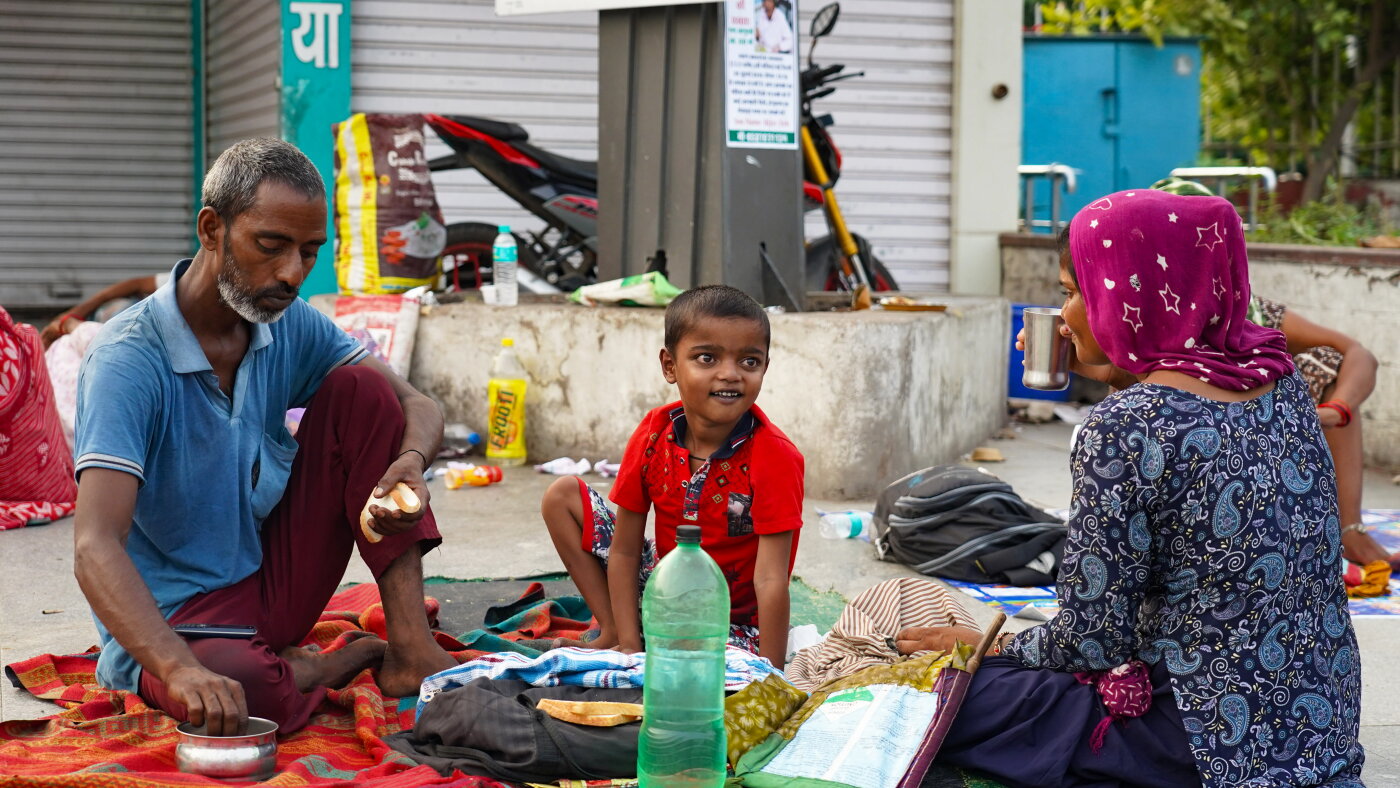
Thousands of patients and their families travel to New Delhi’s major public hospitals seeking medical treatment they cannot access or afford in their home regions. Families accompanying patients during extended treatment periods—sometimes spanning weeks or months—face a significant financial barrier: the cost of temporary housing in the city. For those unable to afford accommodations, sleeping on sidewalks and in public spaces near hospitals including AIIMS and Safdarjung Hospital has become a common practice.
The hospitals provide subsidized medical treatment for low-income families, yet many still struggle with housing costs during their stays. Families describe complex routines of moving between the sidewalk during the day for appointments, consultations, and medical procedures, then returning to sleep on pavement at night. Some family members remain at sleeping sites to watch belongings while others accompany patients for medical care. In certain cases, patients themselves lack hospital beds and must sleep outdoors despite receiving daytime treatment.
Over time, informal communities have developed around the hospitals. Makeshift cooking facilities, volunteer food distribution, nearby shops selling medicines, and tea stalls that operate around the clock have created support networks. These spaces serve as gathering points where families exchange information about medical providers, treatment options, and resources. One tea stall operator reported witnessing numerous families sleeping outside daily, too many to count.
While AIIMS’ website indicates its Medical Social Service Unit assists with financial support and arranges accommodation through traditional charitable lodging facilities and low-cost housing options, the specifics regarding financial assistance for lodging remain unclear. When NPR requested information about accommodations and the sidewalk dwelling community, the hospital did not respond. The contrast between the hospitals’ provision of critical medical care and subsidized treatment for poor families, juxtaposed against the visible population unable to afford nearby housing, underscores ongoing challenges in comprehensive patient support services.
Article Attribution | Read More at Article Source
Article summary produced by Claude AI