

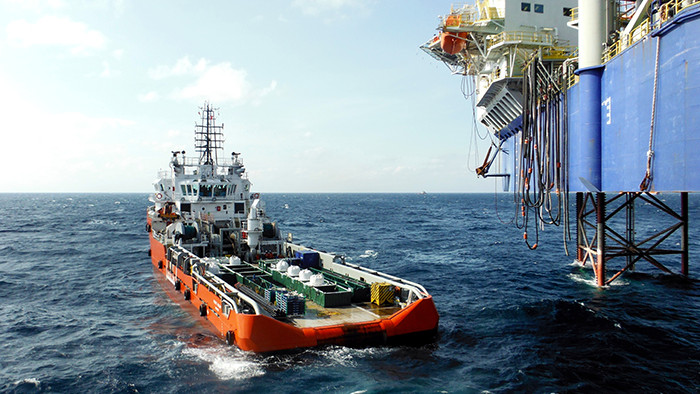
Southeast Asia’s upstream merger and acquisition activity is entering a new phase characterized by strategic entry rather than exits, according to research from Rystad Energy. The region has approximately $9.6 billion in upstream assets available for sale through the remainder of this year and 2027. This represents a significant shift from the 2020-2024 period, when major international oil companies focused primarily on divesting non-core assets and dealing with production sharing contract expirations. Assets valued at around $6.7 billion changed hands in 2025 under this new acquisition-focused dynamic.
The competitive intensity in the market is reflected in rising transaction valuations. Recent deals for development assets have reached $9.8 per barrel of oil equivalent, compared to six-year averages of $6-7 per boe, while pre-final investment decision resources are commanding over $3 per boe against historical averages of $1.5 per boe. The available $9.6 billion in assets is distributed relatively evenly among energy majors at $3.6 billion, independents at $3.7 billion, and national oil companies at $1.4 billion, with smaller sellers accounting for the remainder.
The motivation behind these sales varies by operator type. Major international oil companies are divesting assets in countries with limited growth potential to concentrate on core basins, while entering frontier acreage through partnerships rather than taking on full risk. Independent operators, which hold recent pre-final investment decision discoveries, require capital beyond their own balance sheets to advance projects to final investment decision. National oil companies are taking a more selective approach, having built domestic portfolios that now permit them to rationalize aging assets while exploring opportunities elsewhere.
The available opportunities are concentrated in specific geographic areas. Nearly 45 production sharing contracts span 12 provinces and contain approximately 2.8 billion barrels of oil equivalent in net resources and about 145,000 barrels of oil equivalent per day of production. However, the distribution is uneven, with 72 percent of resources still in the pre-final investment decision stage and only 18 percent currently producing. Major pre-final investment decision gas positions are located in Sarawak, the Andaman Sea, and the Kutei Basin, while Vietnam’s Ken Bau represents the single largest resource available with 3.7 trillion cubic feet of recoverable resources.
The producing assets segment, though smaller in volume, commands significant premiums near $8 per boe and remains highly competitive. Chevron’s North Malay Basin stake in Peninsular Malaysia represents a noteworthy opportunity reflecting broader industry contraction, with Chevron’s Southeast Asian resource base declining from nearly 3 billion barrels of oil equivalent in 2020 to approximately 300 million barrels of oil equivalent presently. This shift is creating acquisition opportunities for national oil companies, with Petronas expected to lead future domestic divestments followed by Pertamina, while state-linked regional operators emerge as natural buyers within their respective jurisdictions.
Article Attribution | Read More at Article Source
Article summary produced by Claude AI