

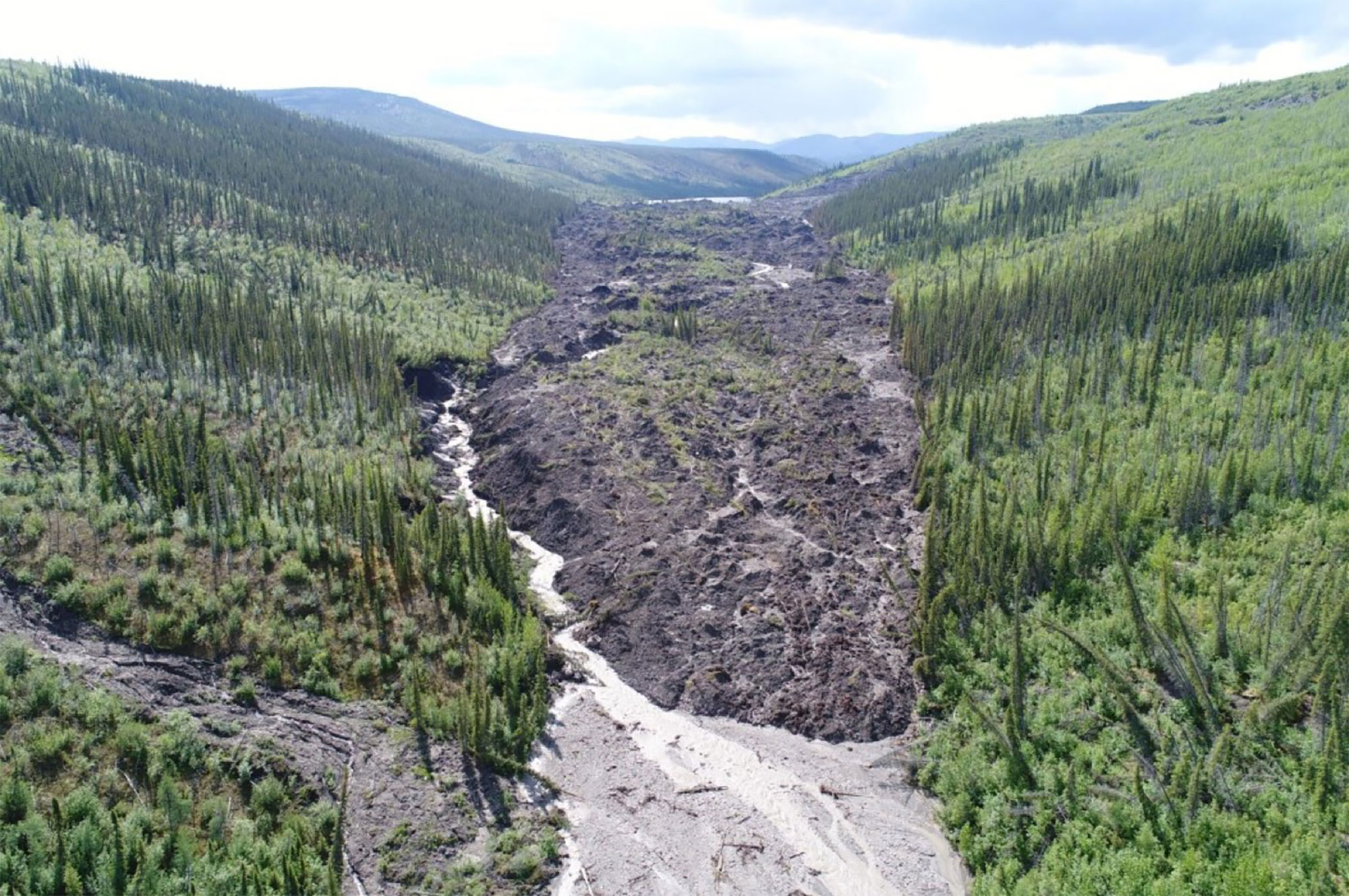
Researchers studying the Canadian Arctic have documented a previously unknown type of landslide phenomenon occurring in the Northwest Territories. These events, termed permafrost detachment slides, differ from conventional landslides in that they result from the degradation of permanently frozen ground rather than from water and debris flowing downhill. Two documented instances in the region moved approximately 30 million cubic yards of earth, with one extending three-quarters of a mile and another stretching 2 miles.
The underlying mechanism behind these slides traces back to wildfires that swept through the area in 1995. When flames consumed vegetation that naturally insulated the permafrost, the ground lost thermal protection during Arctic summers. Over two decades, this loss of shade allowed warming to penetrate deep into the frozen soil layers. As subsurface temperatures gradually increased, tension cracks formed and water accumulated at the surface, further weakening the permafrost structure. The ground initially subsided slowly at rates measured in feet annually before suddenly releasing catastrophically in 2017 and 2018. The presence of massive frozen blocks within the slide material indicates the failure originated from the base of the permafrost upward.
These newly documented landslides raise broader concerns about Arctic climate dynamics. Permafrost zones across the Northern Hemisphere span an area roughly two and a half times larger than the continental United States. With Arctic temperatures rising four times faster than the global average, extensive thawing is accelerating landscape changes and releasing significant quantities of carbon. When permafrost thaws, microbes consume organic material trapped within it for centuries, expelling methane and carbon dioxide. This process potentially establishes a feedback mechanism where released greenhouse gases drive additional warming, which in turn accelerates further permafrost degradation.
The situation is complicated by multiple interrelated processes. As vegetation advances northward, shrubs and other plants trap snow that would otherwise insulate frozen ground, hastening permafrost decline. Simultaneously, increased plant growth provides fuel for more frequent wildfires. When these fires burn through peat deposits, they create particularly persistent “zombie fires” that smolder underground through winter and reignite seasonally. Scientists remain focused on quantifying the carbon release from these detachment slides and understanding how they might amplify existing climate feedback systems.
Article Attribution | Read More at Article Source
Article summary produced by Claude AI