

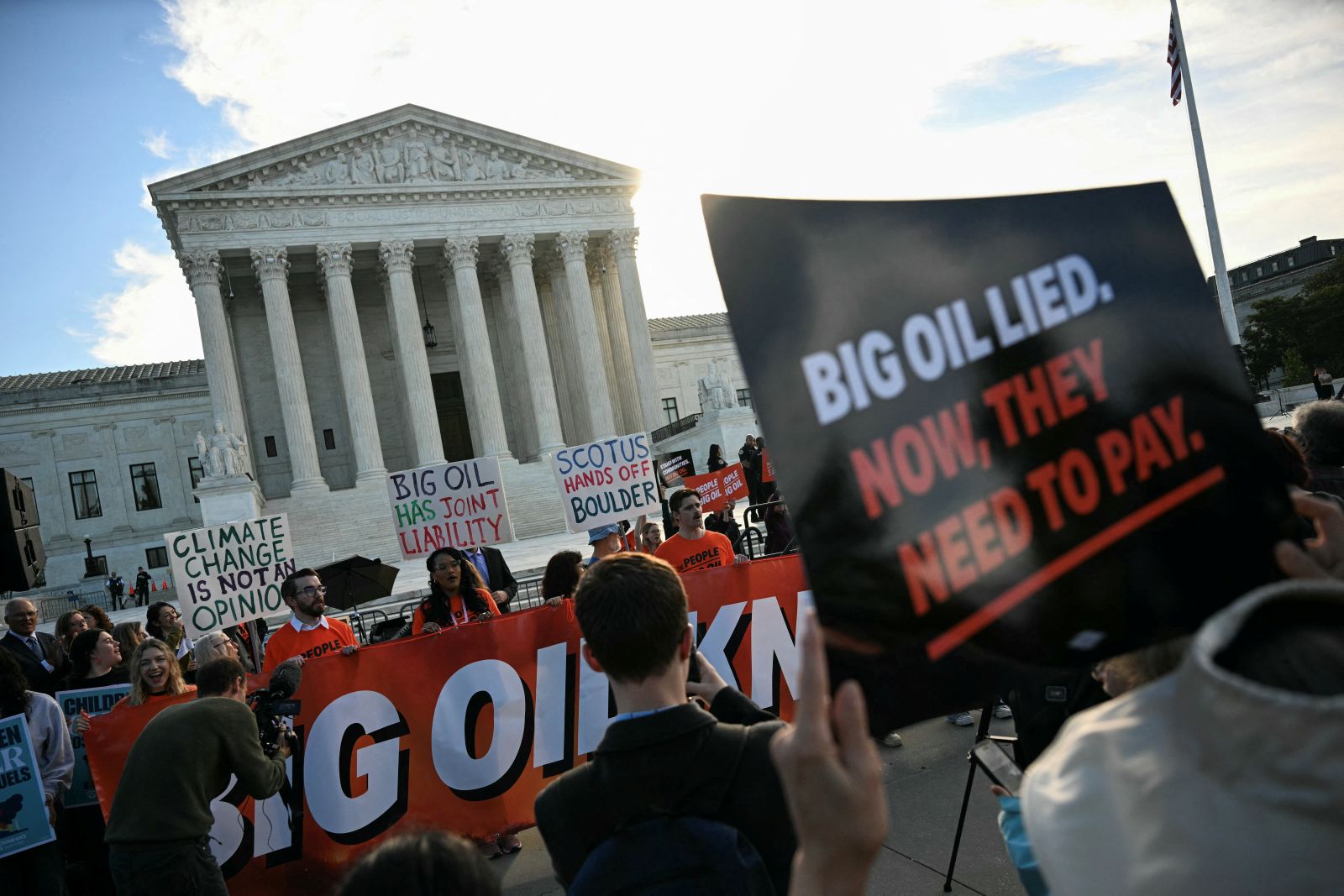
The Supreme Court commenced its 2026-2027 term by taking up a significant climate case in which the city of Boulder, Colorado is suing Exxon Mobil and Suncor, a Canadian oil company, to recover costs associated with climate change impacts. The case represents one of numerous lawsuits filed by municipalities across the country that are attempting to hold fossil fuel companies financially accountable for the consequences of climate change. The court’s ruling has potential implications for the entire body of similar litigation and the broader question of whether oil companies bear legal responsibility for damages attributable to their products.
During two hours of oral arguments, the eight justices who participated in the case demonstrated consensus that determining legal liability for climate change impacts presents a complex and consequential challenge. The oil companies contend that such matters should be addressed by Congress and the White House rather than state courts, while Boulder argues the case should proceed in Colorado courts. Justices from across the ideological spectrum repeatedly pressed attorneys about the case’s framing, though they showed limited agreement regarding how to simplify the underlying legal questions. The discussion appeared to focus substantially on potential consequences for oil companies, while giving limited attention to impacts on communities experiencing climate-related harms.
The fossil fuel companies’ legal representatives framed the case as an unprecedented effort to use state law to regulate global conduct, arguing that allowing state courts to assess damages could effectively impose greenhouse gas emissions regulations across multiple jurisdictions. Justice Kavanaugh suggested such rulings could potentially bankrupt certain companies. However, Boulder’s position differs from an emissions reduction approach. The city seeks compensation based on allegations that oil companies misled the public about the harms of their products, comparable to tobacco litigation from the 1990s in which states recovered healthcare costs without prohibiting cigarette sales.
Boulder’s attorney emphasized that the city is not attempting to halt fossil fuel production but rather to require companies to internalize costs by compensating for damages once consumers are properly informed. Additional legal questions raised during arguments included matters concerning state regulatory authority under the Constitution and the scope of the Clean Air Act. Different judicial rationales for the ultimate decision could produce varying effects on other climate-related lawsuits, as these cases rest on different legal foundations. States and municipalities are pursuing multiple types of lawsuits to recover climate-related costs, creating significant stakes for how the Supreme Court resolves this foundational question about liability and accountability.
Article Attribution | Read More at Article Source
Article summary produced by Claude AI