

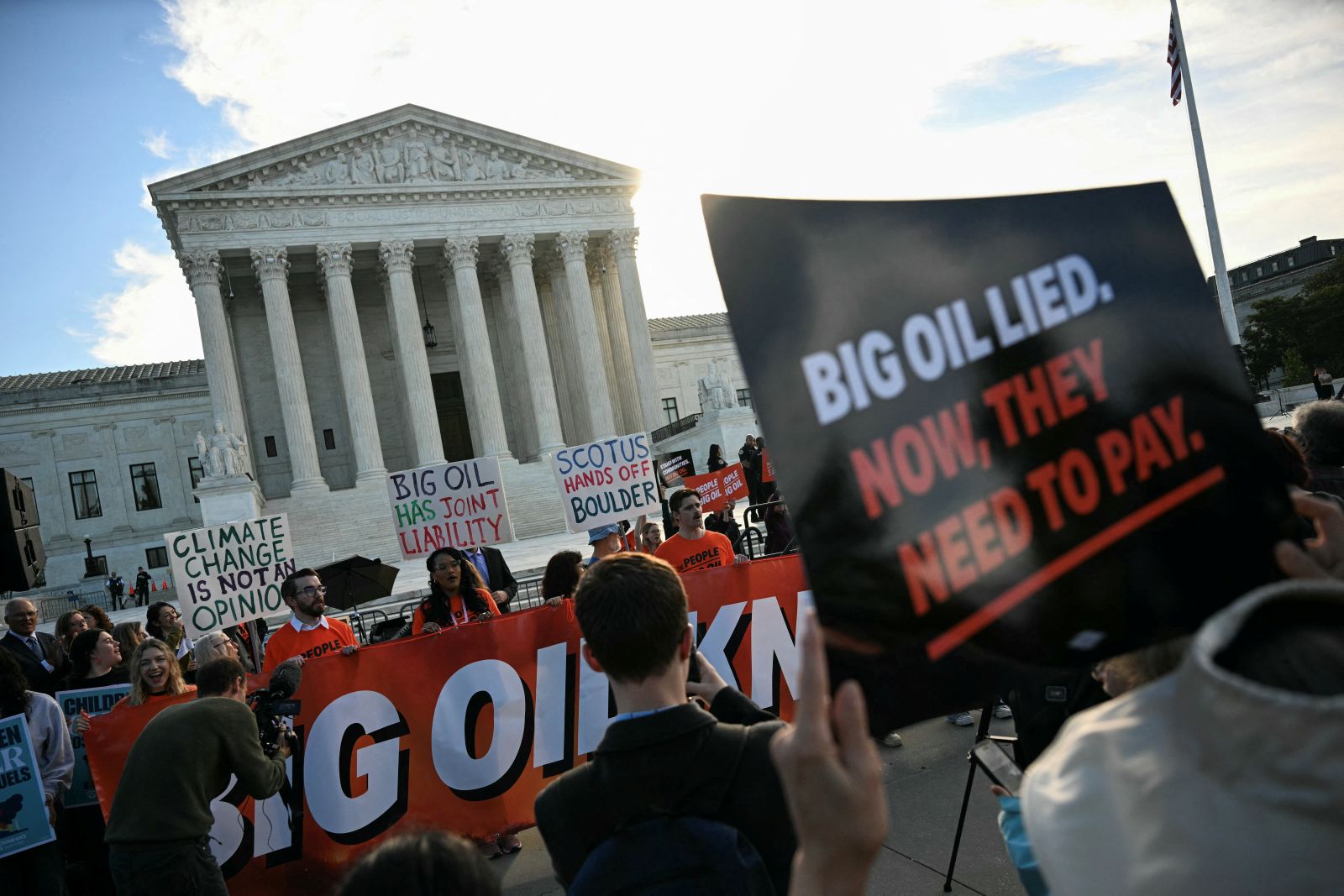
The Supreme Court convened at the start of its 2026-2027 term to consider a significant climate liability case filed by Boulder, Colorado, against Exxon Mobil and Suncor. The dispute centers on whether fossil fuel companies should compensate municipalities for expenses related to climate change impacts. Dozens of comparable lawsuits have been filed across the country by local governments pursuing similar claims against energy producers.
During oral arguments, justices across the ideological spectrum grappled with fundamental questions about legal accountability for climate-related damages. Oil company representatives contended that state courts should not handle such matters, arguing instead that the federal government and Congress are the appropriate venues for addressing climate policy. The companies maintained that allowing states to adjudicate these claims would effectively enable state-level regulation of global conduct, potentially affecting operations worldwide. Justice Brett Kavanaugh suggested the financial consequences for energy firms could be severe, potentially causing bankruptcy in some instances.
Boulder’s legal team framed the case differently, comparing it to 1990s litigation against tobacco companies seeking reimbursement for public health costs. Rather than seeking to halt fossil fuel production, Boulder argues that oil companies should face financial consequences for allegedly deceiving the public about the harms associated with their products. Under this framework, companies could continue operating but would be required to internalize costs of damages through compensation payments once consumers possess accurate information about climate impacts.
Justices explored multiple legal theories and constitutional questions throughout the extended arguments, including state regulatory authority and the application of existing environmental statutes. The court’s ultimate reasoning could significantly influence how other pending climate-related litigation proceeds, as various suits employ different legal foundations. Legal experts noted that state and local governments are pursuing multiple lawsuit strategies to recover climate-related expenditures. A final decision is expected several months after the arguments conclude, following the Supreme Court’s standard practice for cases heard early in the term.
Article Attribution | Read More at Article Source
Article summary produced by Claude AI