

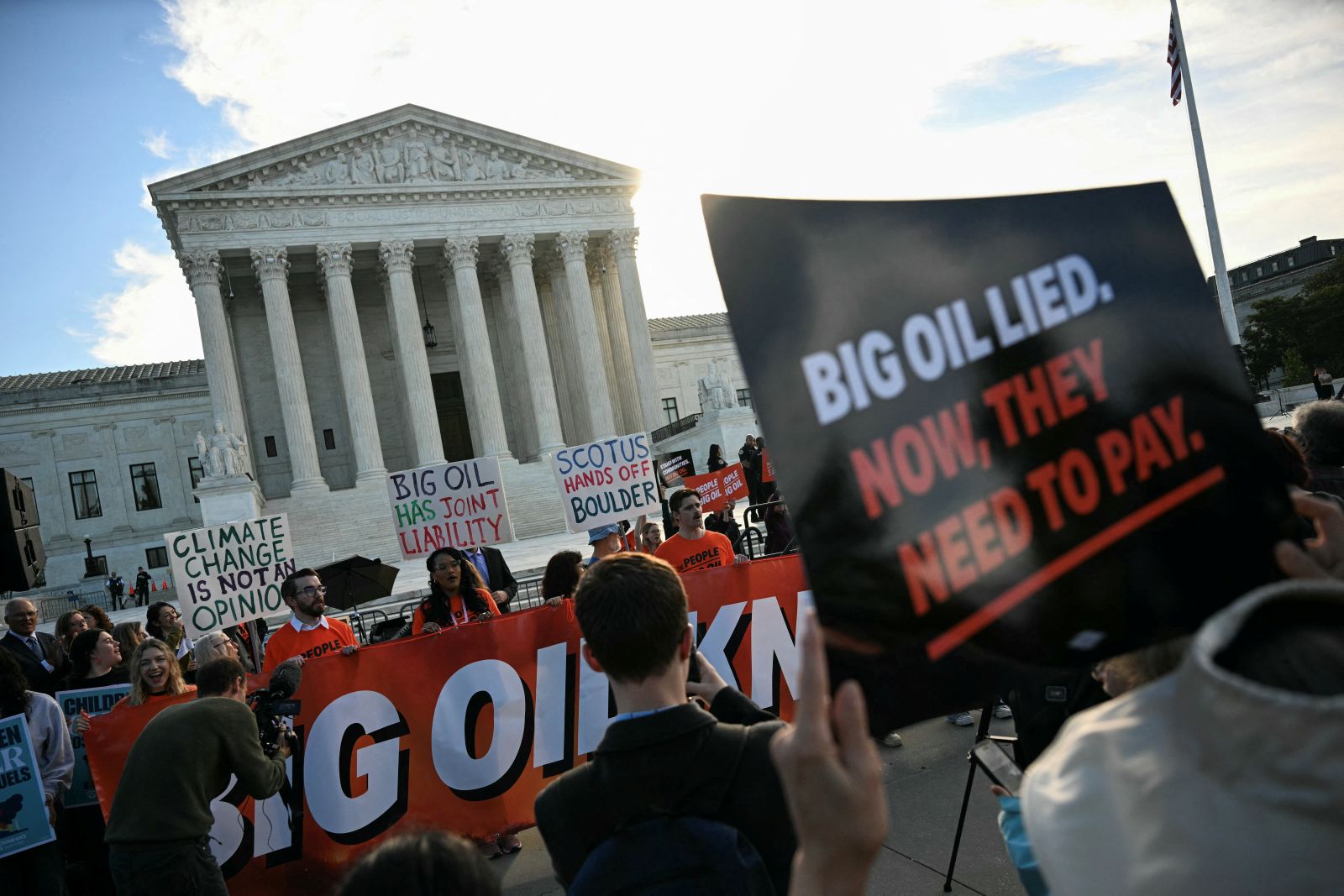
The Supreme Court opened its 2026-2027 term by hearing oral arguments in a climate liability case brought by Boulder, Colorado, against ExxonMobil and Suncor, a Canadian oil company. The litigation seeks compensation from fossil fuel producers for costs associated with climate change impacts. The case has significant implications, as dozens of similar suits by local governments against energy companies are pending across the country. The decision could establish whether oil and gas producers bear legal responsibility for damages stemming from climate change.
Justices across the ideological spectrum grappled with fundamental questions about legal liability and jurisdictional authority. Oil company representatives argued the matter should not proceed in state courts, contending that climate change constitutes a global issue requiring action at the federal level by Congress and the executive branch. They asserted that allowing state courts to address the issue could result in inconsistent regulations and create liability extending far beyond state borders. Boulder, by contrast, sought to return the case to Colorado courts to proceed with litigation.
A key point of contention centered on the nature of Boulder’s claim. Oil company attorneys framed the lawsuit as an attempt to regulate greenhouse gas emissions through state courts, warning that permitting such suits could effectively bankrupt energy producers. Some justices appeared sympathetic to this characterization. However, Boulder’s representatives maintained the case focused on deception rather than regulating production, likening it to tobacco litigation from the 1990s where cigarette manufacturers faced liability for concealing health risks without being prohibited from manufacturing products.
During questioning, Justice Kavanaugh expressed concern that damages awards could prove financially devastating to energy companies. He questioned whether requiring payment for climate-related harms was materially different from regulating emissions. Justice Kagan, meanwhile, drew parallels to the tobacco litigation strategy, where companies paid damages and modified marketing rather than ceasing production entirely.
The court’s decision remains uncertain, though justices indicated the case raises complex jurisdictional and constitutional questions. Multiple legal frameworks could inform the ruling, each producing different outcomes for pending climate suits. The justices typically publish decisions months after hearing arguments.
Article Attribution | Read More at Article Source
Article summary produced by Claude AI