

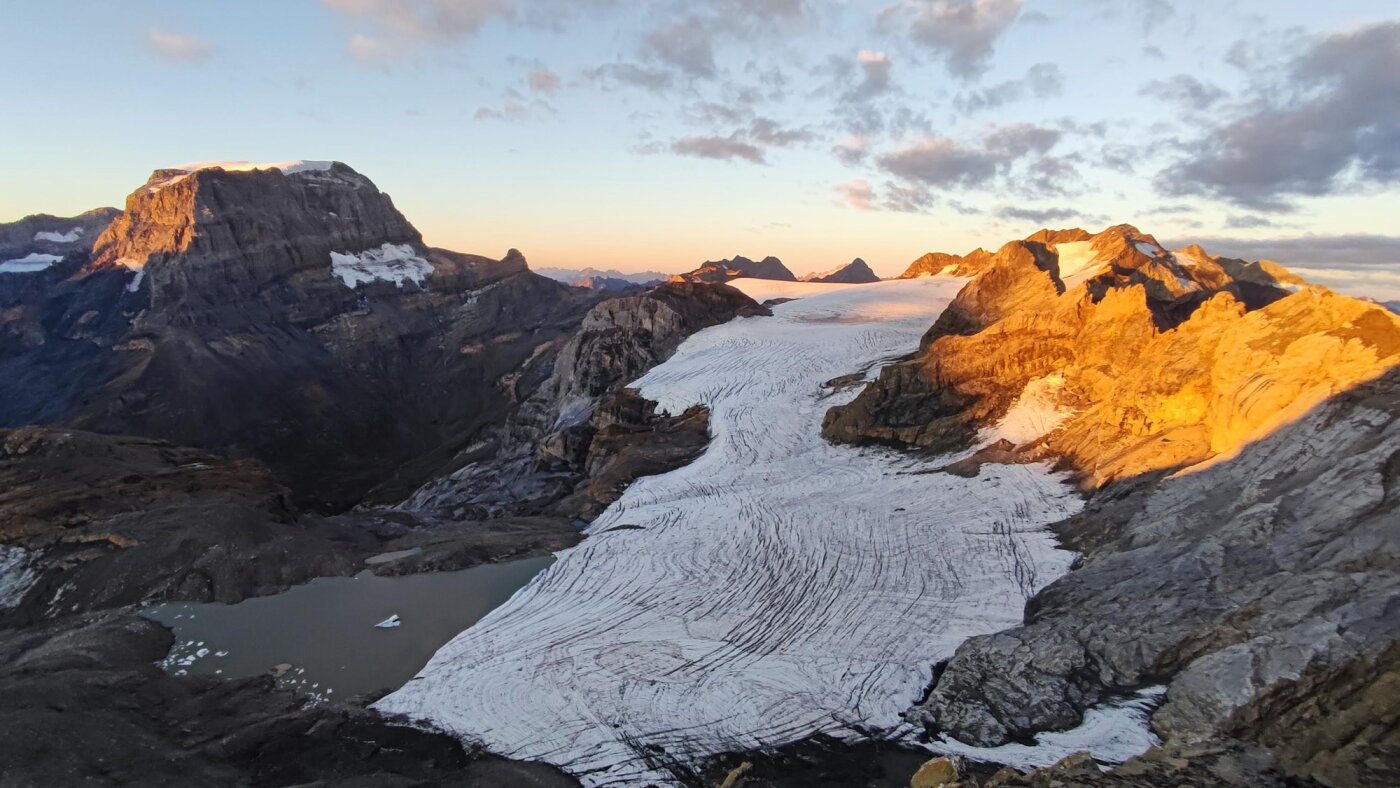
Switzerland experienced significant glacier retreat during 2026, with ice losses exceeding 5% according to data from GLAMOS, the country’s glacier monitoring network, and the Swiss Academy of Sciences. While this represents a slightly lower percentage than the 6% loss recorded in 2022, researchers noted that individual major glaciers, including the Rhône and Aletsch, experienced record-level melting this year. The decline reflects a broader global pattern of accelerating glacier shrinkage attributed to rising temperatures.
Matthias Huss, who leads the monitoring program, documented extensive ice loss during field observations in the Alpine regions. Landscapes previously covered by meters of ice now expose bare rock and enable alpine plants to establish themselves in newly exposed terrain. Huss characterized some affected areas as having become barren, with only scattered ice blocks remaining on heated stone surfaces.
The consequences of glacier loss extend beyond the Alps themselves. These ice fields serve as crucial water storage systems for Europe, releasing gradually melting snow that feeds major waterways including the Rhine and Danube. During the recent summer, low river levels disrupted freight transport and forced temporary shutdowns of nuclear power facilities dependent on river water for cooling. Scientists warn that continued glacier disappearance could threaten Europe’s agricultural productivity and food security, particularly as smaller glaciers have already vanished over the past 50 years.
Glacier stability also plays a protective role in mountain environments. The ice and alpine permafrost act as binding agents that help prevent geological instability. Recent events illustrate these risks: the Swiss village of Blatten experienced a devastating landslide the previous year, destroying hundreds of homes and displacing residents who remain in temporary housing. While Huss acknowledges the inherent variability of mountain environments, he identifies climate change and associated ice loss as potential triggering factors for such disasters.
Looking forward, monitoring data suggests that if current warming trends continue, Switzerland’s glaciers could disappear entirely by the end of this century. Huss emphasizes the importance of recognizing these observable changes as evidence of climate change and argues the situation demands immediate action.
Article Attribution | Read More at Article Source
Article summary produced by Claude AI