

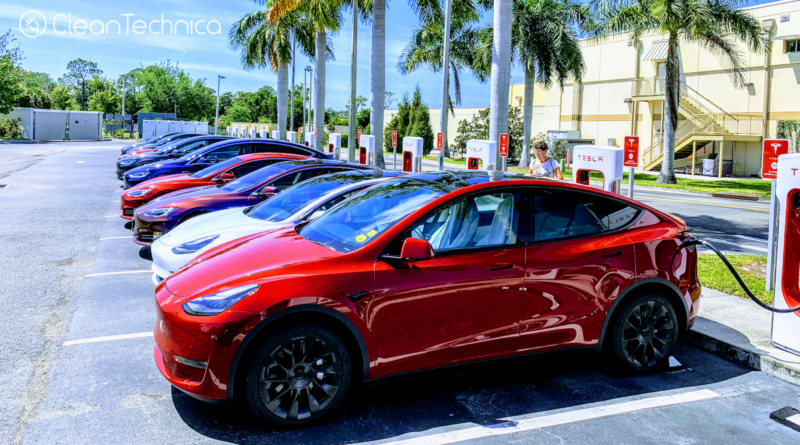
Tesla has activated vehicle-to-home (V2H) bidirectional charging capability for all Model 3 and Model Y vehicles manufactured in the US on or after October 1, 2026. Some earlier vehicles built as far back as April may also have the technology available if equipped with the required hardware. Owners can verify capability through their vehicle’s settings menu by checking for enabled Powershare Support. The technology requires specific equipment depending on the vehicle model: Model 3 and Model Y owners need a Powerwall 3 residential battery along with a Wall Connector or Universal Wall Connector, while the Cybertruck can operate V2H without a Powerwall if a Powershare Gateway is installed. Professional installation is required for all systems.
The Powershare system delivers a maximum of 11.5 kilowatts of backup power. Based on typical daily household consumption of 30 kilowatt-hours, a fully charged Model 3 or Model Y battery can sustain a home for approximately two days. Installation requires homeowners to own their property, park their vehicle within 20 feet of the installation location, and have electrical panel ratings below 225 amperes. Beyond emergency backup, connected vehicles can generate revenue for owners by helping stabilize the electrical grid and absorbing excess renewable energy.
Meanwhile, the European Union has concluded a comprehensive four-year vehicle-to-grid research initiative called EV4EU. The study validated bidirectional charging technology through testing in Portugal, Slovenia, Greece, and Denmark. Results demonstrated significant benefits including a 14 percent reduction in household charging costs in Portugal and a 22 percent increase in renewable energy integration. Testing across various environments—from residential installations to public charging networks and parking facilities—confirmed that bidirectional charging can effectively function as a grid flexibility tool. The research also developed open-source software for charging operators and explored virtual power plant management systems that optimize energy resources and access energy markets. Researchers concluded that successful bidirectional charging implementation requires considering driver mobility requirements and battery longevity alongside technical capabilities.
Article Attribution | Read More at Article Source
Article summary produced by Claude AI