

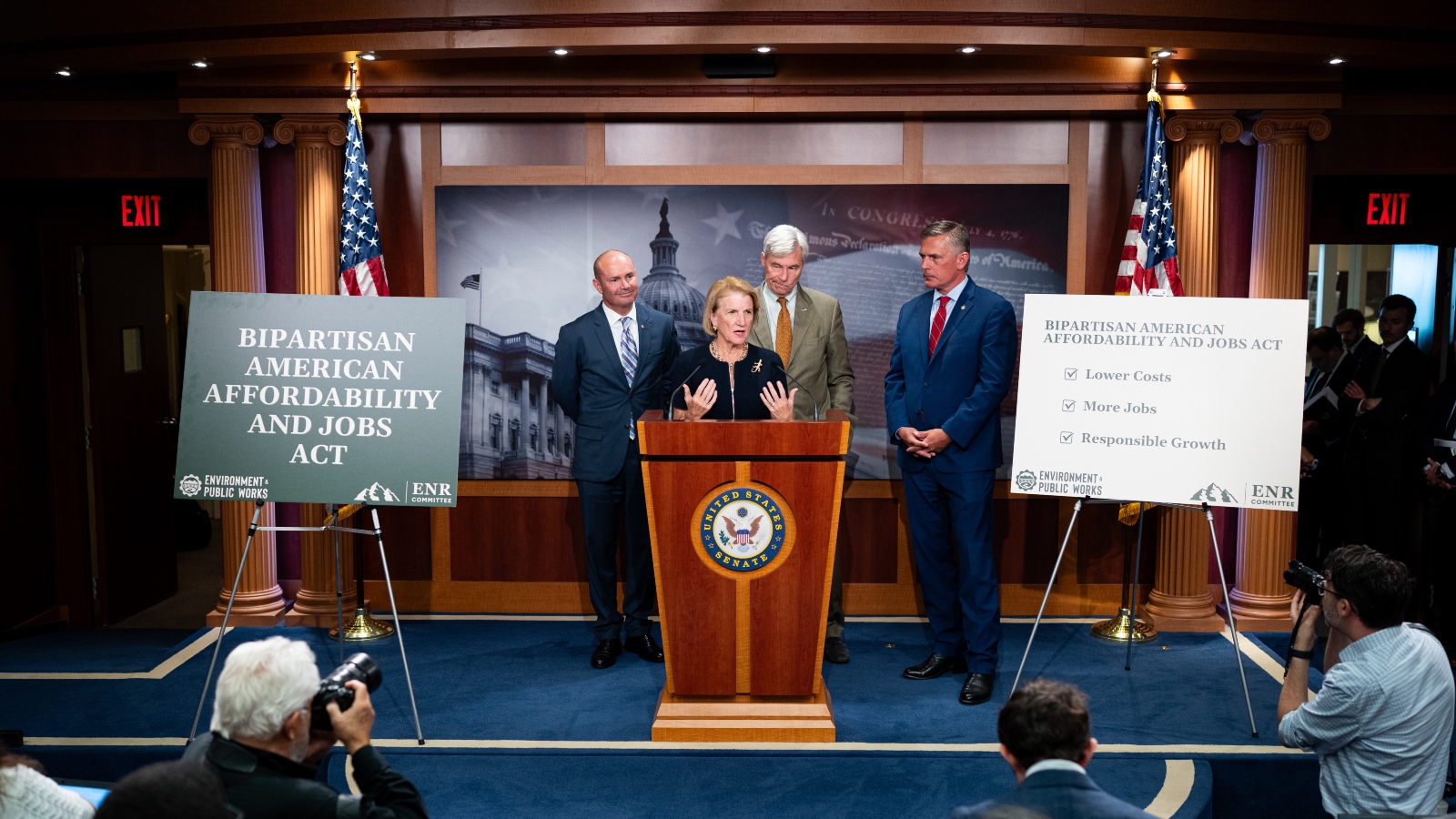
A sweeping bipartisan Senate bill known as the Bipartisan American Affordability and Jobs Act has created significant tension within environmental and climate advocacy circles. The 400-page legislation emerged from months of negotiations among four senators—Democrats Sheldon Whitehouse and Martin Heinrich alongside Republicans Mike Lee and Shelley Moore Capito—and aims to accelerate construction of power plants, transmission lines, and gas infrastructure by streamlining the permitting process.
The bill achieves its objectives by weakening enforcement of several foundational environmental statutes and reducing timelines for federal agency approval while limiting opportunities to challenge projects already in the approval pipeline. Supporters argue the measure is necessary to rapidly expand renewable energy capacity, which they contend will ultimately facilitate a transition away from fossil fuels. Proponents maintain that accepting some environmental trade-offs is justified if it enables substantial clean energy buildout. Climate experts including those affiliated with research organizations have characterized the choice as requiring difficult compromises on an issue of planetary significance.
Opponents within the environmental community characterize the legislation as an unacceptable compromise that disproportionately affects tribal nations, marginalized communities, and endangered species. They contend that weakening environmental protections creates unacceptable risks regardless of clean energy benefits. The disagreement reflects a fundamental tactical split: activist-oriented groups traditionally focus on blocking fossil fuel development, while renewable energy companies and policy specialists emphasize construction of alternative energy infrastructure.
The bill’s current trajectory remains uncertain, pending committee review and House consideration after the upcoming midterm elections. Environmental groups and clean energy interests are expected to engage in substantial advocacy efforts in the coming weeks. Currently, supporters appear to have greater influence within climate policy circles, partly because political conditions have limited near-term prospects for alternative climate legislation.
Article Attribution | Read More at Article Source
Article summary produced by Claude AI