

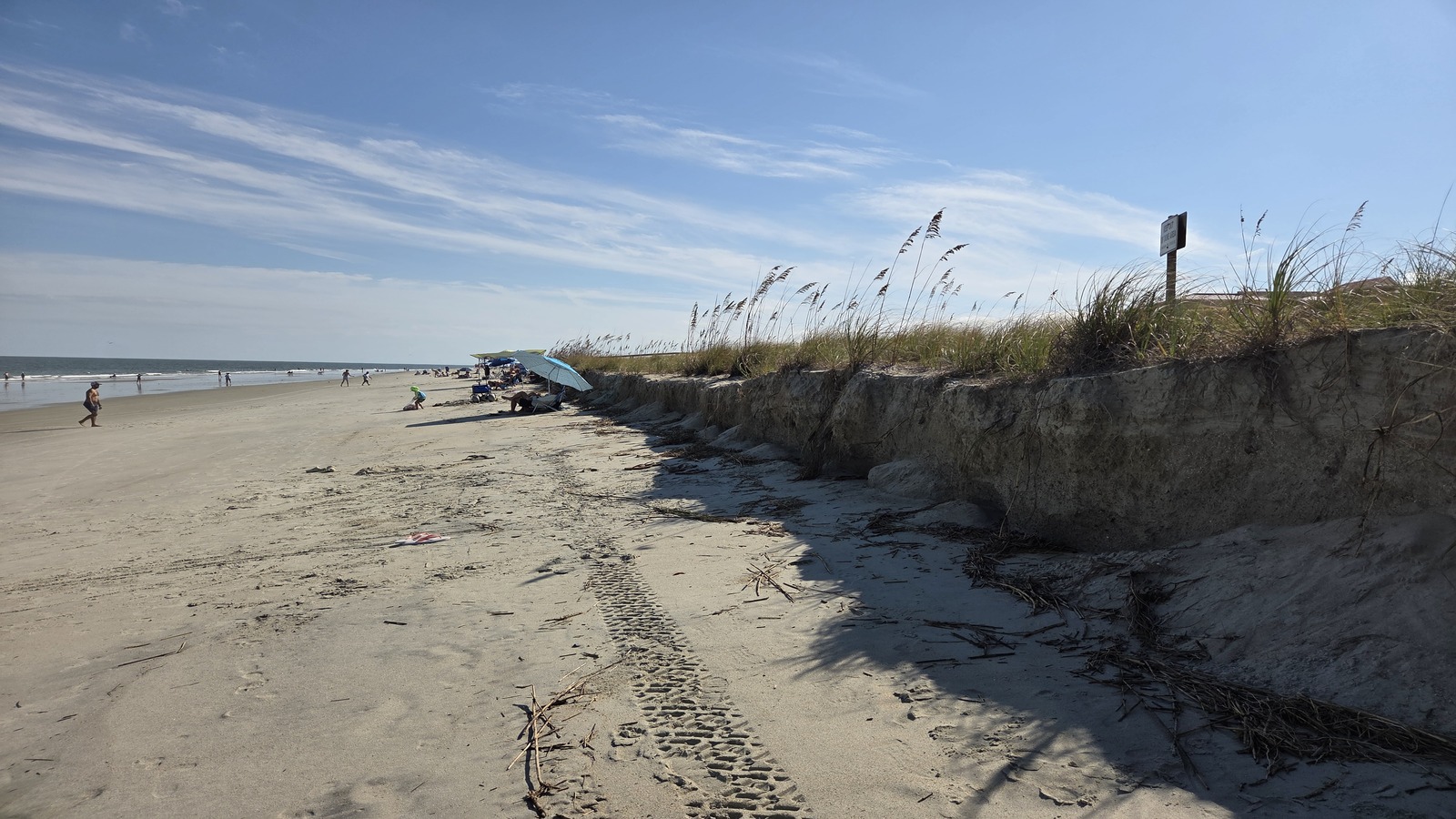
Tybee Island, a barrier island located off Georgia’s coast south of the Savannah River mouth, has experienced significant sand loss over decades due to human infrastructure that disrupts the natural movement of sediment. Development on the island, construction of sea walls and jetties, and the creation of shipping channels have all interfered with the process by which barrier islands would naturally accumulate sand from northern sources.
Since the 1970s, the Army Corps of Engineers has addressed this challenge through beach renourishment projects that dredge sand from other areas and deposit it on eroding beaches along the eastern seaboard. On Tybee Island specifically, this renourishment cycle occurs approximately every seven years. In the winter of 2019 and 2020, the Corps placed roughly 1.3 million cubic yards of sand on the beach. However, the effectiveness has been limited—more than half of that material has already been lost to erosion. In some areas, such as near the DeSoto Beach Hotel, dramatic cuts into the dune have created cliff-like formations instead of natural gradual slopes, and erosion has damaged sea turtle nesting sites buried within the dunes.
The deteriorating beach conditions have created economic pressures on the island’s businesses. Chair and umbrella rental operations have been forced to relocate, and the hotel has experienced reduced bookings due to the poor state of the adjacent beach. With sea levels rising approximately half an inch annually due to climate change, local officials view the beach and dune system as critical protection against storm surge and ocean intrusion.
Tybee Island was scheduled for another renourishment cycle this winter, but faced funding obstacles. Local and state officials worked to secure their required 40 percent funding match for the federal program’s 20 million dollar cost, but Congress had underfunded the overall program, initially leaving Tybee off the project list. However, in September, the Corps redirected leftover funds from other projects to enable the work to proceed.
The upcoming project will introduce a modified approach. Rather than pumping dredged material from the Savannah River shipping channel offshore, the Corps will deposit it in the shallows near Tybee’s beach. This strategy aims to reduce wave action that erodes the beach and allow sand to move more naturally, potentially extending the interval between renourishment cycles from seven years to approximately ten years.
Article Attribution | Read More at Article Source
Article summary produced by Claude AI