

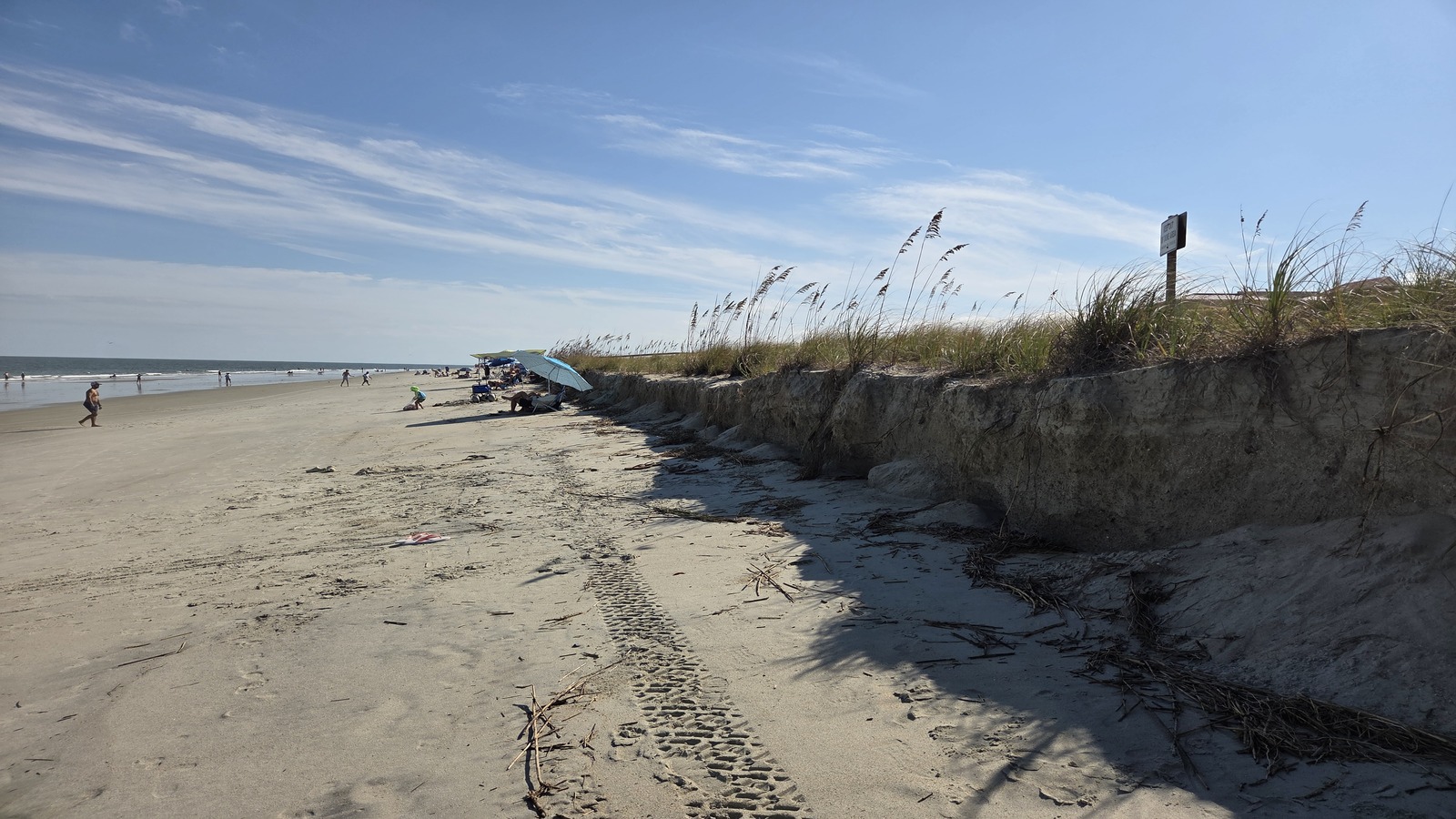
Tybee Island, located south of the Savannah River mouth on Georgia’s coast, has experienced significant beach erosion due to a combination of human activity and natural processes. Development on the island, construction of seawalls and jetties, and creation of shipping channels have disrupted the natural movement of sand between barrier islands, accelerating erosion rates across coastal regions.
The Army Corps of Engineers has addressed beach erosion along the east coast since the 1970s through periodic sand replenishment projects. Tybee Island typically receives this treatment every seven years. However, the results have been disappointing. Following a major replenishment effort in the winter of 2019 and 2020 that placed 1.3 million cubic yards of sand on the beach, more than half of that material has already eroded away. In some locations, erosion has created dramatic features, such as a five-foot cliff face near the DeSoto Beach Hotel where the dune has been substantially removed, exposing vegetation and root systems.
The consequences extend beyond landscape changes. Sea turtle nests buried in dunes have been damaged by tidal action and storms, while local businesses including chair and umbrella rental operations have been displaced. The DeSoto Beach Hotel has experienced booking losses due to beach conditions. City officials emphasize that the beach and dune system provide critical protection against storm surge and encroaching seas, particularly as sea levels rise approximately half an inch annually due to climate change.
Funding challenges have complicated renourishment efforts. Although local authorities and the state of Georgia secured sufficient funds to cover 40 percent of a required $20 million project cost, federal program underfunding prevented Tybee from being included in the original budget cycle. Following advocacy by city officials and Georgia’s congressional delegation, the situation changed when beach projects in New Jersey came under budget this year, allowing the Corps to redirect surplus funds to Tybee.
The upcoming renourishment project, scheduled to begin this winter, will employ a modified approach. Instead of dredging sand from the Savannah River shipping channel and depositing it offshore, the Corps will place material in shallow waters adjacent to Tybee’s beach. Officials project this method will reduce wave action damage and allow sand migration to occur more naturally, potentially extending the time between renourishment cycles from seven years to approximately ten years.
Article Attribution | Read More at Article Source
Article summary produced by Claude AI