

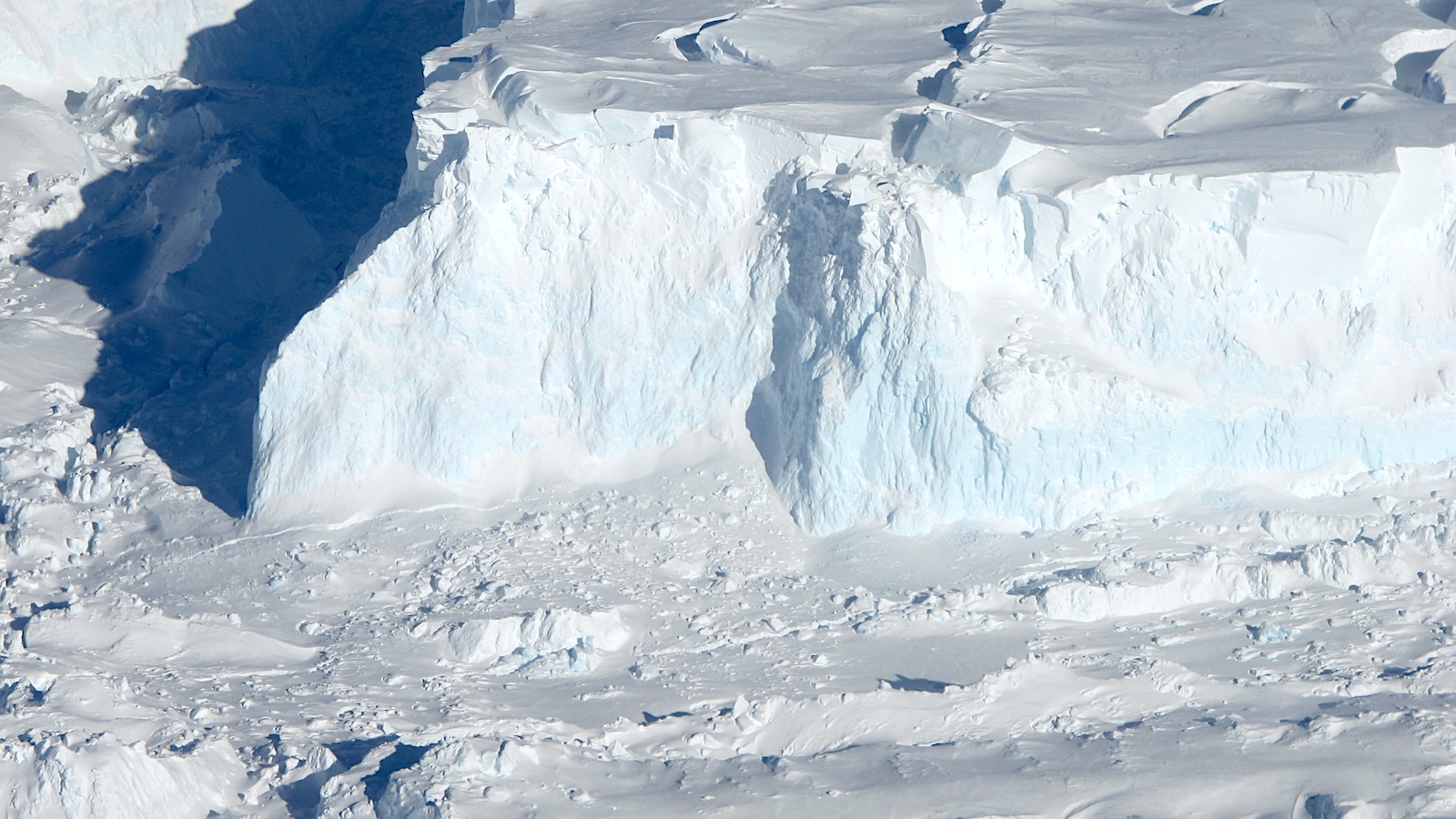
Scientists studying Antarctica’s Thwaites Glacier, a massive ice formation roughly the size of Florida, have identified critical mechanisms that could accelerate its collapse and dramatically increase sea level rise. The glacier currently holds enough ice to raise global sea levels by approximately 2 feet, and serves as a structural support for the West Antarctic ice sheet, which if fully released could elevate sea levels by as much as 10 feet. A breakthrough study published in Nature Communications earlier this month represents the first comprehensive model to account for subsurface processes occurring beneath the glacier.
The key finding centers on the grounding zone, where the glacier’s base meets the seafloor. Researchers discovered this boundary is not stationary but oscillates with tidal movements, allowing warm ocean water to penetrate underneath and create cracks and channels that accelerate melting. Previous computer simulations had failed to incorporate this dynamic process, making them unreliable for predicting future ice loss. By including this mechanism, scientists were able to create a model that accurately reproduces observed satellite data from recent decades.
According to the new research, Thwaites could become permanently detached from the seafloor with a 60 percent probability by the end of the century, potentially as soon as 2038. If current climate conditions persist, the glacier could contribute 3 centimeters of sea level rise by century’s end—double previous estimates. The glacier currently accounts for approximately 4 percent of global sea level rise, a contribution that has already caused coastal communities worldwide, from North Carolina to the Solomon Islands, to experience erosion and forced relocation.
A separate study published in July examined whether cooling ocean temperatures through geoengineering or emissions reductions could reverse glacier damage. The research compared Thwaites with the nearby Pine Island Glacier, another major Antarctic contributor to sea level rise. Results indicated that while Pine Island could potentially recover within a decade under cooler conditions, Thwaites would continue losing ice for at least 150 years despite ocean cooling, suggesting the glacier may be past a recovery threshold. However, researchers emphasized that limiting warming to each fraction of a degree remains critical for slowing ice loss and protecting other Antarctic glaciers, allowing communities more time to adapt to inevitable changes.
Article Attribution | Read More at Article Source
Article summary produced by Claude AI