

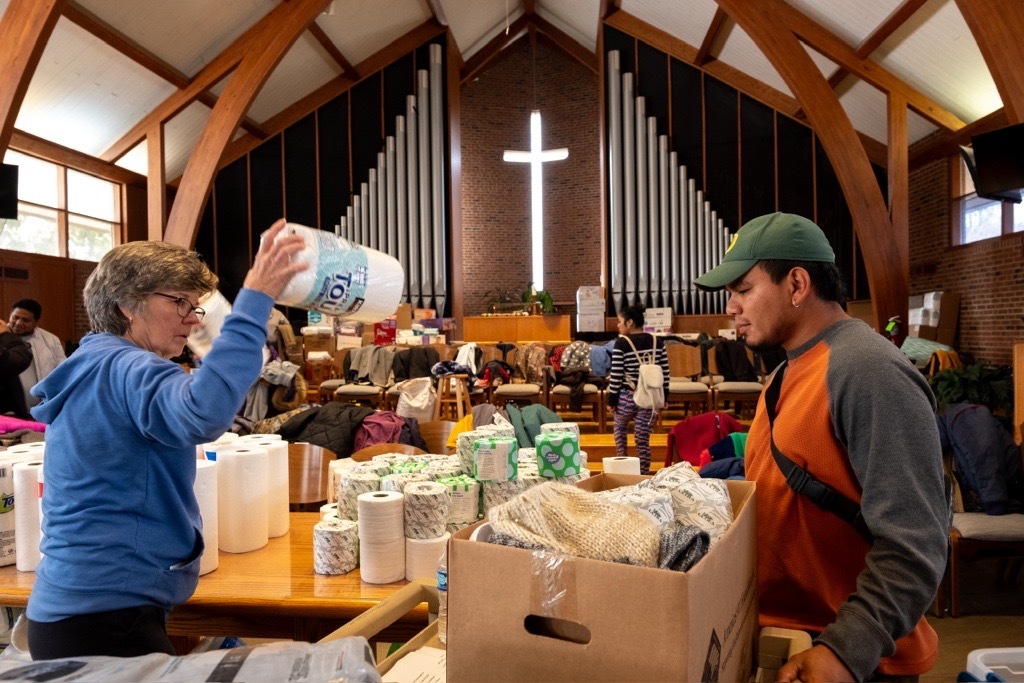
In the aftermath of Hurricane Helene, residents across western North Carolina developed informal support networks through community spaces, sharing resources and skills to survive without power, water, and internet access. These grassroots efforts—operating from churches, community centers, and fire departments—have now evolved into a more structured approach to disaster preparedness. Local leaders and organizations are working to formalize these systems into permanent infrastructure designed to strengthen community resilience against future emergencies.
The city of Asheville has allocated $2 million to enhance existing resilience hubs, with City Manager D.K. Wesley indicating a potential long-term commitment of up to $10 million. Individual facilities are taking concrete steps: the East Asheville Library is installing solar panels, the Asheville Tool Library offers power tool training, and the Old Fort Train Depot recently hosted planning discussions for extreme weather responses. These initiatives reflect a nationwide trend as communities nationwide invest in resilience infrastructure to address power outages, severe weather, and other crises.
A significant component of this effort involves establishing microgrids—localized power systems that can operate independently from the main electrical grid. The state Department of Environmental Quality is funding 26 microgrid installations across western North Carolina with a $5 million grant. Twenty-four systems will serve community centers, food banks, and fire departments, while two mobile units can be deployed where needed most. The first completed installation at Beacon of Hope in Marshall provides backup power to a facility serving approximately 1,600 families weekly with food assistance.
Beyond technological solutions, communities are strengthening existing social networks that proved valuable during the disaster. Radio enthusiasts have formalized weekly check-ins using two-way communications systems that function without cellular or internet infrastructure. These networks allow residents to maintain contact and share information during extended outages. Experts note that effective resilience depends on building connections and coordinated planning before emergencies occur, enabling communities to support one another more effectively when crises happen. However, expanding these programs faces challenges, as additional state and federal funding remains unavailable despite growing interest nationwide.
Article Attribution | Read More at Article Source
Article summary produced by Claude AI