

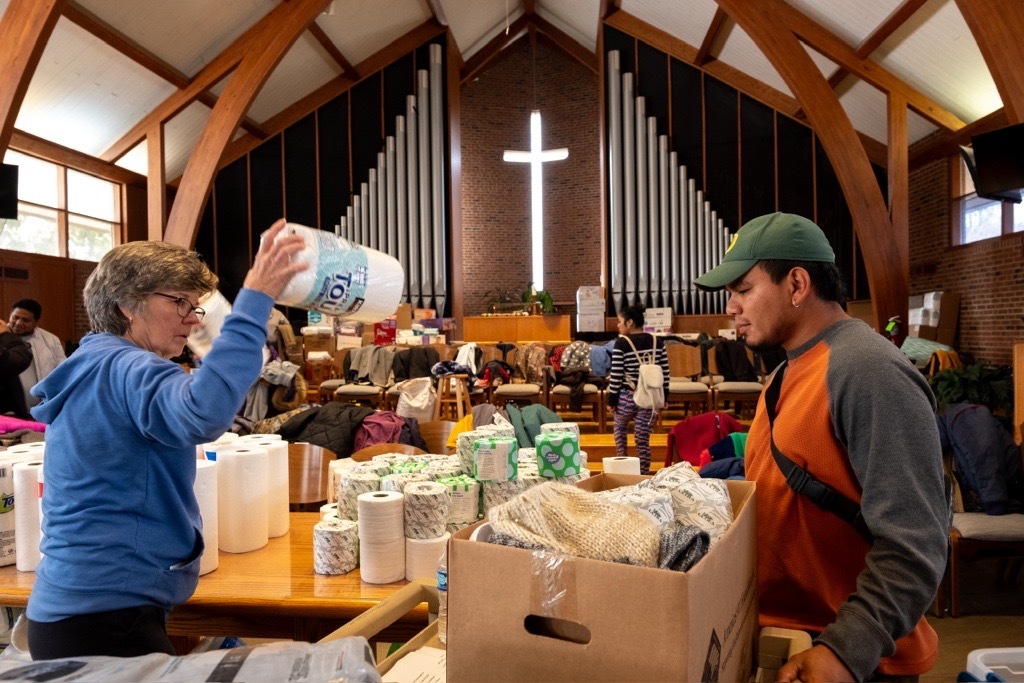
Communities in western North Carolina are working to institutionalize the informal disaster response networks that emerged following Hurricane Helene, transforming temporary relief efforts into permanent resilience infrastructure. In the immediate aftermath of the hurricane, community spaces including churches, fire departments, and libraries served as informal distribution centers for supplies and coordination hubs for mutual aid. Local leaders now aim to formalize these arrangements into designated resilience hubs that can serve multiple functions during emergencies and daily operations.
City officials in Asheville have allocated $2 million to establish and strengthen existing hubs, with the city manager committing to potential long-term spending of up to $10 million. Several facilities are already implementing upgrades, including solar panel installations at the East Asheville Library and equipment training programs at the Asheville Tool Library. These efforts reflect a national trend toward community-based disaster preparedness infrastructure.
A significant component of the resilience strategy involves deploying solar microgrids across the region. A state grant of $5 million is funding the installation of 26 microgrids planned for western North Carolina, with 24 serving essential community facilities such as food banks and fire departments, and two mounted on trailers for flexible deployment. The first installation at Beacon of Hope, a laundromat and food bank in Marshall, can store 68 kilowatt-hours of solar power, enabling critical operations to continue for extended periods without external power sources. However, expansion of the program faces obstacles due to limited additional state and federal funding.
Communities are also strengthening informal communication networks independent of commercial infrastructure. Amateur radio operators have established regular check-in sessions using general mobile radio service systems that function without cell networks or internet connectivity, creating backup communication channels for emergencies. These multifaceted approaches represent efforts to build community resilience through a combination of infrastructure improvements, resource networks, and communication systems designed to function during extended service disruptions.
Article Attribution | Read More at Article Source
Article summary produced by Claude AI