

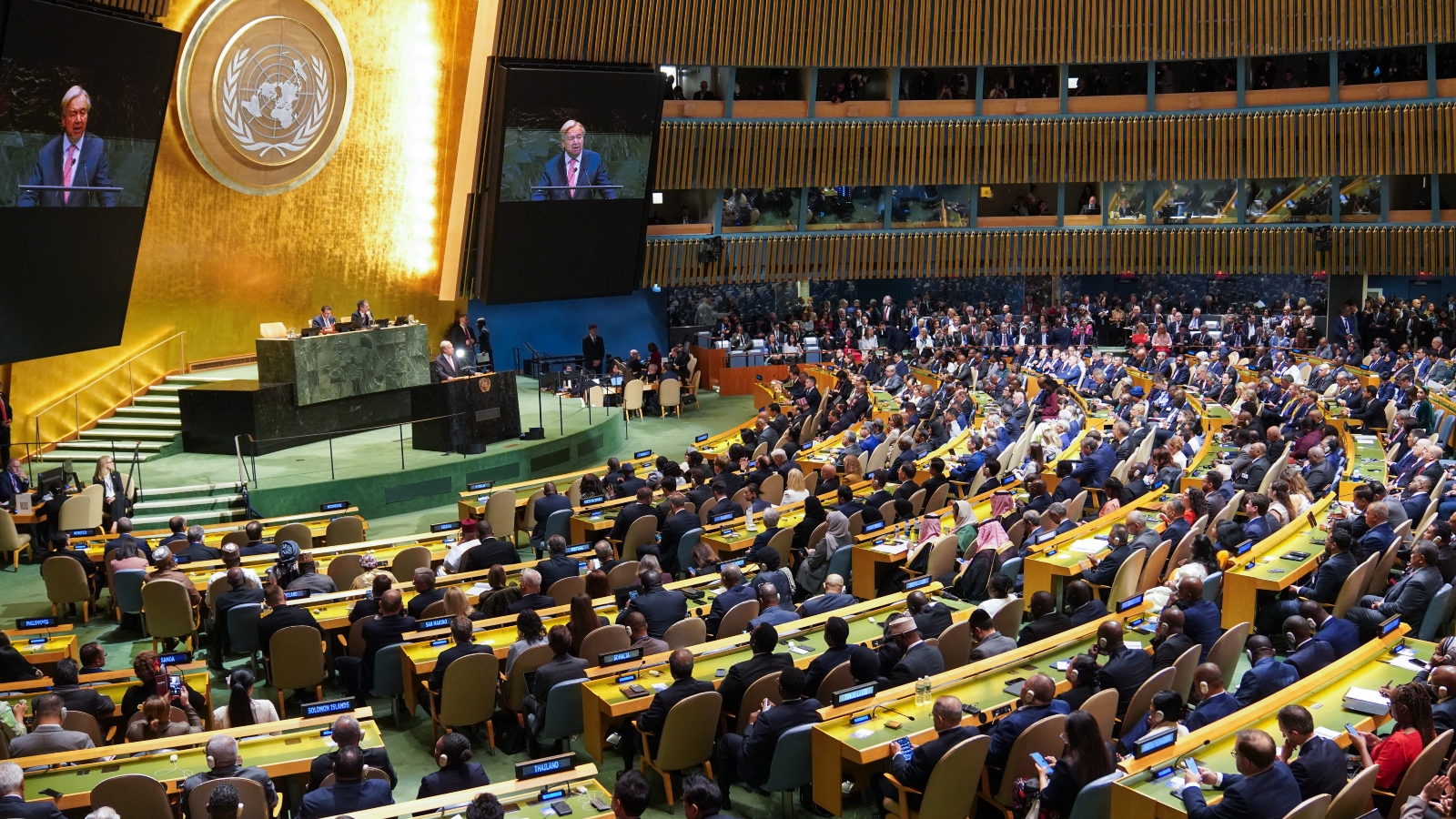
World leaders at the United Nations General Assembly approved a unanimous resolution addressing sea level rise, securing a notable diplomatic achievement on Thursday. The declaration represents a significant milestone for international cooperation, particularly because it includes language on climate change and climate financing for developing nations, even as the current U.S. administration has generally opposed international climate agreements and aid commitments.
The agreement carries substantial implications for low-lying island states that face existential threats from rising seas. Nations such as Tuvalu and the Marshall Islands could experience near-total inundation within the coming century as warming temperatures cause ice sheets and glaciers to melt. The declaration clarifies that sovereign states will retain their political status and continue to control their maritime zones—the areas extending from coastlines where countries exercise exclusive authority over fishing, energy development, and economic activities—even if their physical landmass submerges. This principle builds on a landmark International Court of Justice ruling from the previous year establishing that statehood need not be lost if constituent territory disappears.
The agreement emerged from advocacy by the Alliance of Small Island States, an influential coalition of vulnerable nations. Officials highlighted the significance of converting previously accepted legal presumptions into formal international endorsement. One notable aspect involved U.S. cooperation, as the State Department did not block the resolution despite the Trump administration’s broader opposition to climate agreements. Legal experts suggest this cooperation reflects shared interests, as developed nations including the United States could also experience maritime border shifts and resource implications from sea level rise.
The declaration includes language affirming that developed nations and historical emitters bear responsibility for providing expanded access to adaptation financing for vulnerable island states. Such funds could support protective infrastructure like seawalls or mangrove restoration, as well as population relocation efforts. However, the agreement itself does not increase actual funding. Current adaptation financing remains approximately $130 billion annually, significantly below expert estimates of necessity, though countries committed in 2024 to reach $300 billion in annual aid by 2035. Much of this financing takes loan form, creating challenges for island nations already carrying substantial debt burdens.
Article Attribution | Read More at Article Source
Article summary produced by Claude AI