

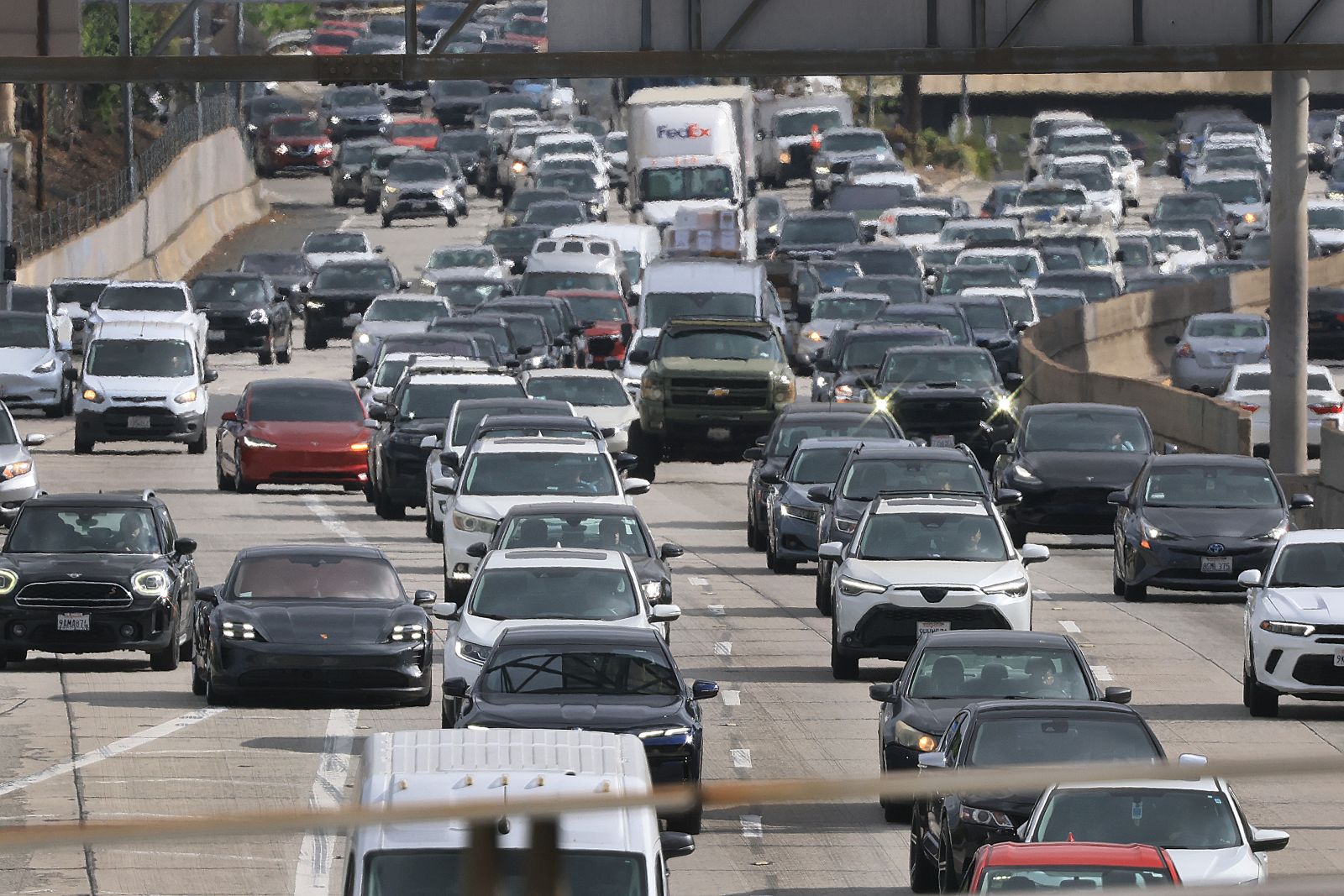
The Trump administration announced a final plan to reduce federal fuel-efficiency requirements for vehicles, effectively eliminating meaningful federal policy on automotive carbon emissions. This move follows Congressional action that previously eliminated penalties for automakers who violate emissions standards. With the federal government largely stepping back from emissions regulation, California has emerged as the primary governmental authority setting fuel-efficiency baselines for the automotive industry.
California’s regulatory authority stems from a special exemption granted by Congress in the 1950s, when severe smog problems in Southern California prompted the state to establish its own vehicle emissions standards before the federal government created national standards through the Clean Air Act. Though California cannot directly mandate fuel efficiency, its emissions standards effectively achieve similar results, as reducing fuel consumption is the primary method for lowering greenhouse gas emissions from gasoline-powered vehicles. Other states have adopted California’s standards, and together these jurisdictions accounted for 40 percent of new car sales in 2022. Rather than produce vehicles with different specifications for different markets, many automakers have chosen to comply with California’s stricter standards nationwide.
The Trump administration has actively challenged California’s regulatory powers. Congress voted to block California’s plan to phase out gas-powered cars by 2035, after the EPA requested the action. In response, California filed a lawsuit against the Trump administration. The state is now seeking to maintain its previous emissions standards, which would have expired in 2026. Though a federal judge blocked a Trump administration effort to overturn these standards in early September, significant regulatory uncertainty remains.
Car manufacturers face competing pressures as they navigate changing regulations and consumer preferences. While some customers prefer fuel-efficient vehicles, particularly hybrid models, which reached 16 percent of sales by mid-2026, the automotive industry has expressed concern that aggressive efficiency standards conflicted with consumer demand for electric vehicles. Some automakers maintain long-term commitments to electric vehicle development despite current market challenges and reduced government incentives. Analysts note that market forces alone are unlikely to drive the emissions reductions needed to address climate change, making California’s remaining regulations particularly important. The ultimate resolution of California’s stricter emissions rules will likely depend on court decisions regarding the legality of congressional and Trump administration actions that challenged the state’s special regulatory authority.
Article Attribution | Read More at Article Source
Article summary produced by Claude AI