

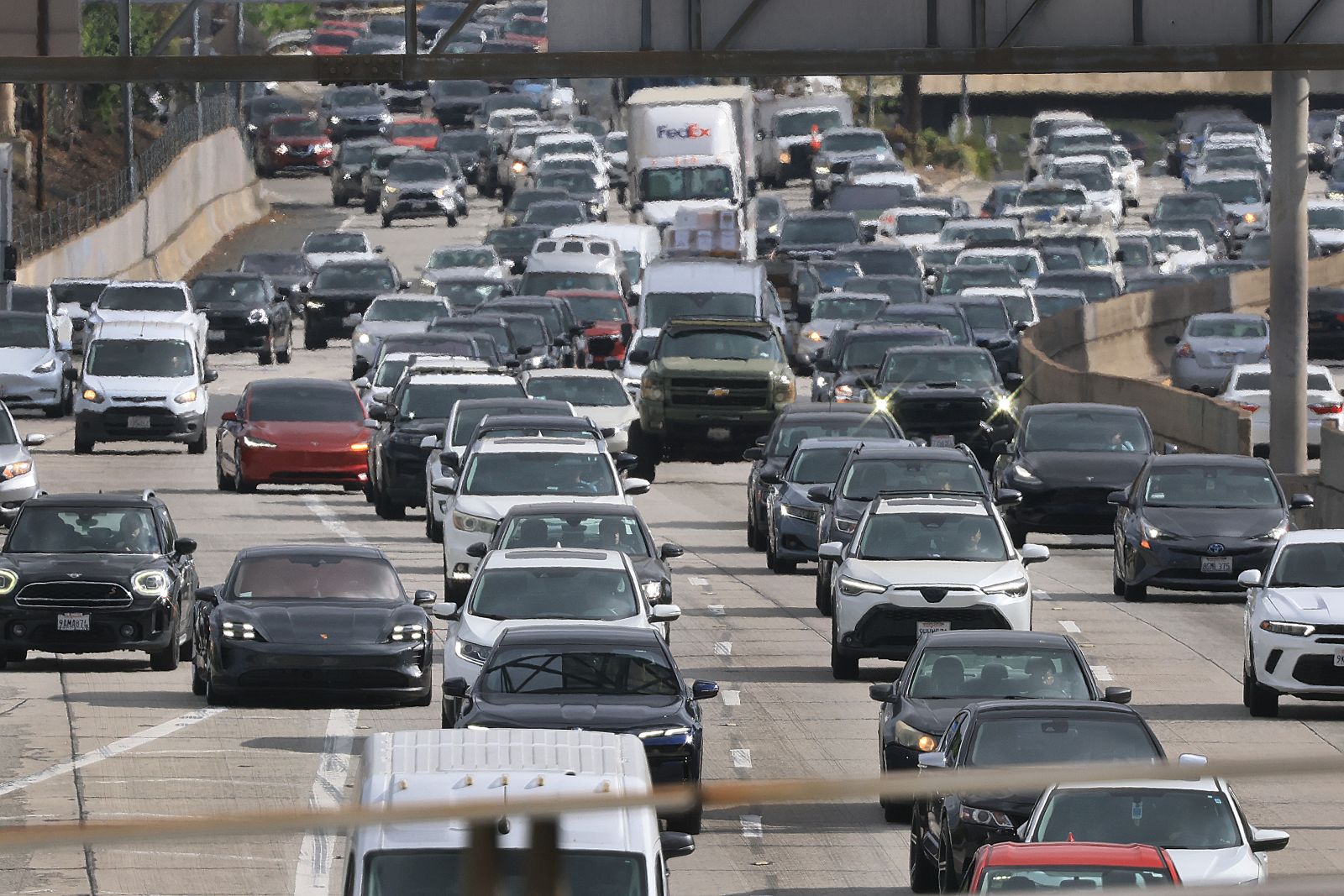
The Trump administration announced a final plan earlier this week to relax federal fuel-efficiency standards for automobiles, effectively completing the elimination of meaningful federal policy on vehicle emissions despite cars accounting for approximately 16 percent of United States greenhouse gas emissions. Congress had previously removed penalties for automakers that violated federal standards, and the administration has pursued additional reductions in federal climate authority across multiple agencies.
California remains positioned as the principal governmental entity capable of enforcing vehicle emissions standards due to a special exemption granted by Congress decades ago. The exemption originated from Southern California’s severe air pollution in the 1950s, which prompted the state to establish its own vehicle emissions standards before the federal government created national standards through the Clean Air Act. This historical precedent allows California to regulate tailpipe emissions more strictly than federal requirements and to mandate compliance without directly establishing fuel-efficiency standards. Because fuel consumption reduction represents the primary mechanism for lowering greenhouse gas emissions from gasoline-powered vehicles, California’s emissions regulations effectively function as fuel-efficiency mandates.
California’s regulatory influence extends significantly beyond state borders. Nineteen other states have adopted California’s emissions standards, and the District of Columbia uses them as well. Rather than manufacturing separate vehicle models for different regulatory environments, many automakers choose to meet California’s standards nationwide, even when federal requirements prove less stringent. In 2022, states using California’s vehicle emissions standards accounted for 40 percent of new vehicle sales across the United States.
The Trump administration has actively attempted to restrict California’s regulatory authority. Both houses of Congress voted previously to block California’s initiative to phase out gas-powered vehicles by 2035, which was only achievable through California’s special regulatory powers. A federal judge blocked a subsequent congressional effort in early September to overturn California’s previous emissions standards, which would have otherwise expired in 2026. California has pursued legal action challenging these administration actions, with state officials characterizing the efforts as retaliation.
Market factors may independently influence automaker decisions regarding fuel efficiency and emissions, with hybrid vehicles reaching record adoption rates and some manufacturers maintaining long-term investments in electric vehicle platforms despite reduced federal incentives. However, analysts generally agree that market dynamics alone will likely prove insufficient to achieve the rapid emissions reductions required to address climate change, making California’s regulatory framework critically important despite ongoing legal challenges to its authority.
Article Attribution | Read More at Article Source
Article summary produced by Claude AI