

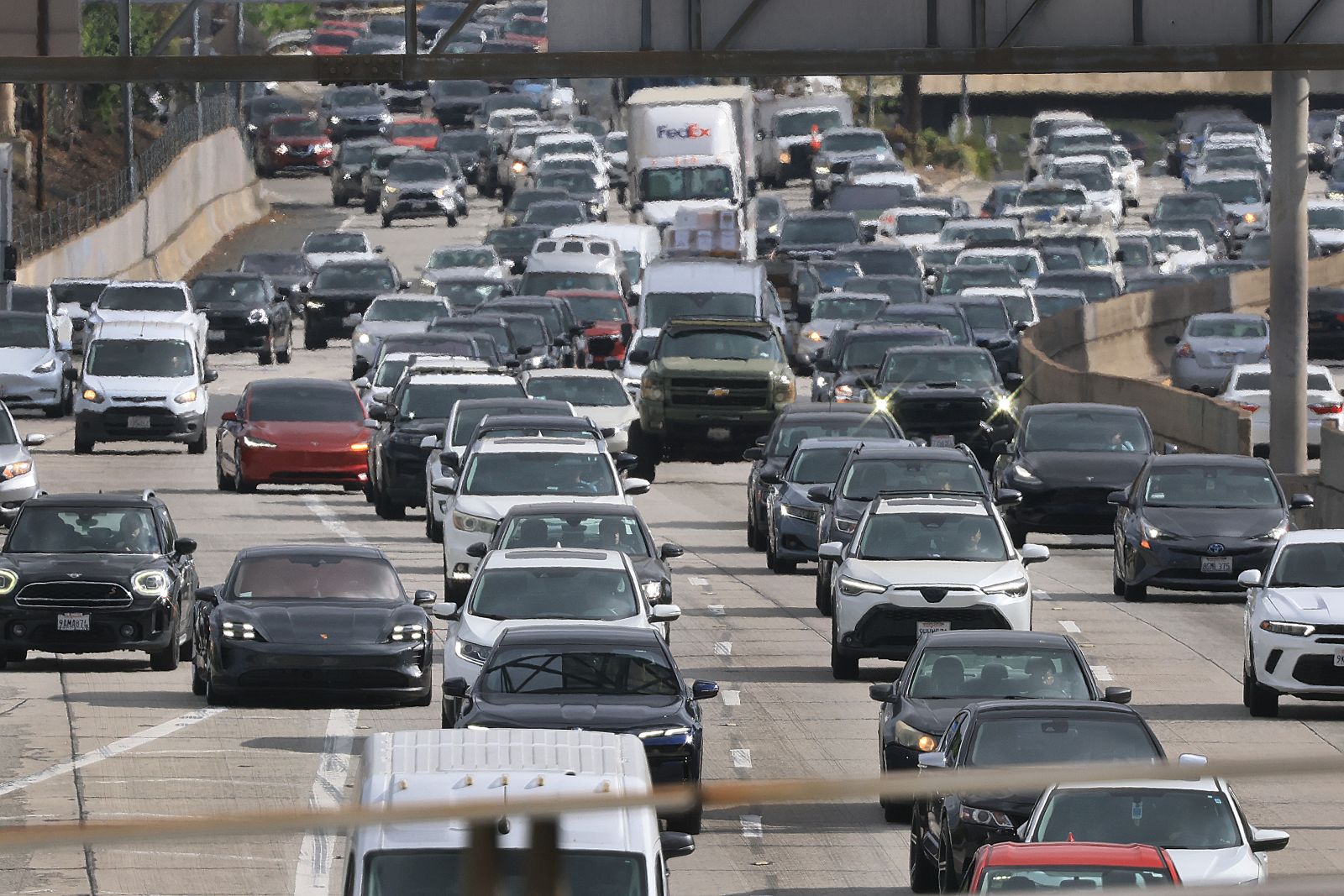
The Trump administration announced a final plan to reduce federal fuel-efficiency requirements for vehicles, effectively removing meaningful national policy on automobile emissions, which represent approximately 16 percent of U.S. greenhouse gas emissions. Congress had previously eliminated penalties for automakers violating standards, further weakening federal authority. These developments have shifted regulatory responsibility to California, which retains the authority to set its own vehicle emissions standards under a special exemption granted decades ago.
California gained its unique regulatory power in response to severe air pollution in Southern California during the 1950s, predating the federal Clean Air Act. While the state cannot directly mandate fuel efficiency, its emissions standards effectively encourage reduced fuel consumption in gasoline-powered vehicles. California’s regulations extend beyond state borders, as 19 other jurisdictions have adopted the state’s standards, and many automakers opt to make all vehicles comply with California requirements rather than produce different models for different markets. In 2022, states following California’s standards accounted for 40 percent of new car sales nationwide.
The Trump administration has actively challenged California’s regulatory authority. Congress blocked California’s earlier effort to phase out gas-powered cars by 2035 after the administration’s EPA requested intervention, prompting California to file suit against federal authorities. A federal judge blocked a congressional attempt to overturn California’s previous emissions standards in early September. California now seeks to maintain enforcement of these existing standards, which would have expired in 2026, while pursuing litigation to restore its more ambitious phase-out plan.
Automakers have remained largely silent on their response to current regulatory uncertainty, though market conditions are introducing additional variables. Hybrid vehicles have reached record market penetration at 16 percent of passenger vehicle sales by summer 2026, while some manufacturers continue investments in electric vehicle platforms despite reduced consumer demand and rolled-back federal EV incentives. Legal analysts suggest California’s case for restoring its stricter emissions rules is strong, given that Congress employed an unusual procedural maneuver that both the Government Accountability Office and Senate parliamentarian found unlawful. The outcome will likely depend on judicial determinations regarding the legality of congressional and administration actions.
Article Attribution | Read More at Article Source
Article summary produced by Claude AI