

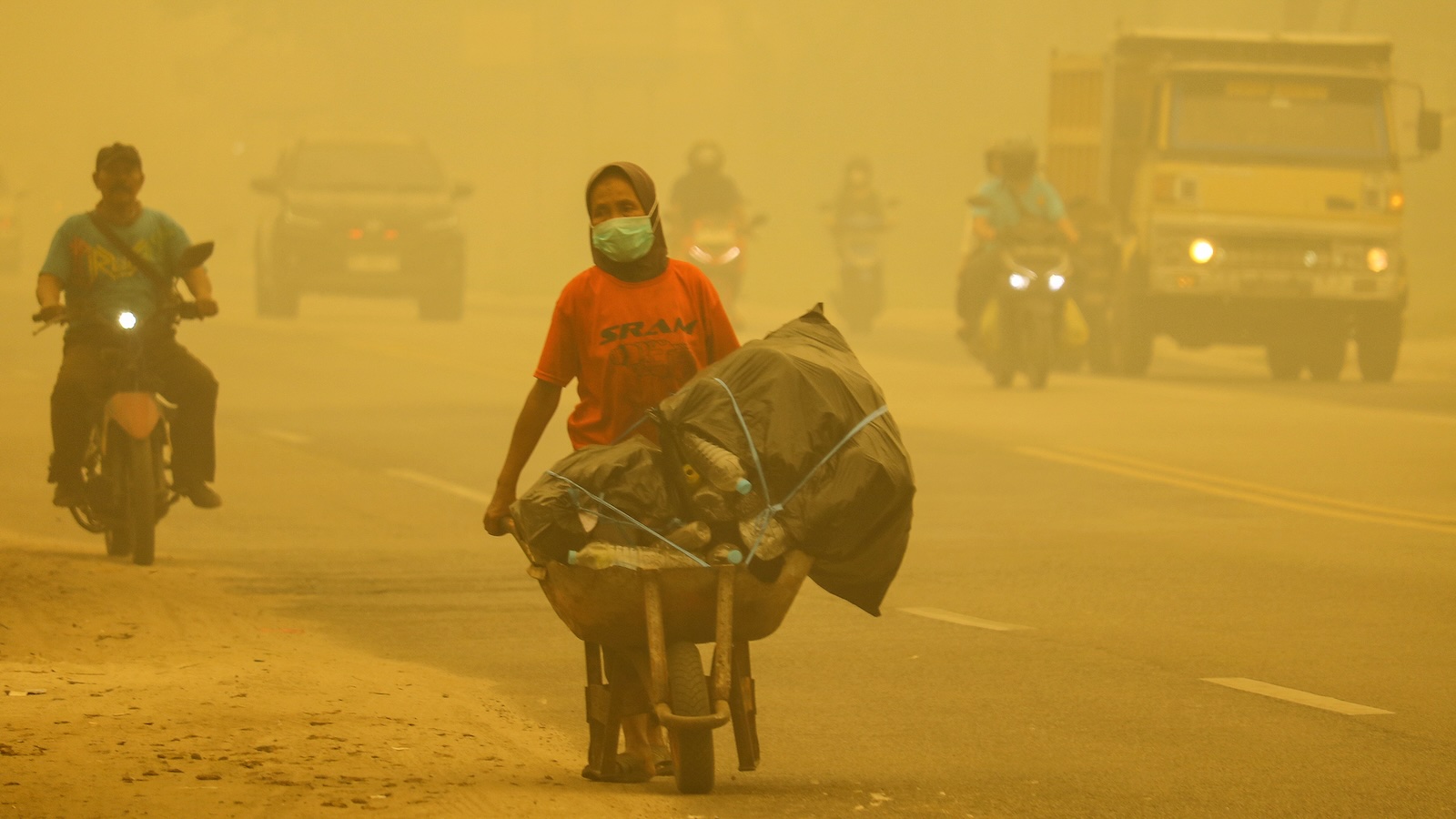
Indonesia is experiencing its most severe wildfire season in ten years, with over 4.6 million acres burned since August across major island regions including Kalimantan and Sumatra. The resulting smoke has blanketed large areas and spread to neighboring countries, creating significant public health challenges. Government data indicates that more than 300,000 Indonesians have sought medical treatment for acute respiratory problems, with air quality conditions on some days exceeding unhealthy thresholds by more than thirteen times. The country’s building infrastructure, typically designed to maximize air circulation rather than filter or block it, has left populations particularly vulnerable to the toxic haze.
The fires represent the latest in a series of environmental crises affecting Indonesia, a nation that is both heavily populated and disaster-prone. The country recently experienced catastrophic flooding and landslides, and its capital city of Jakarta faces ongoing subsidence issues as it sits partially below sea level. Scientists attribute the current wildfire outbreak primarily to a severe El Niño event that has created extended drought conditions, particularly affecting the country’s extensive peatlands. Peat soil, composed of partially decomposed plant matter, becomes highly flammable when dried and can smolder underground for months when ignited.
The fires are predominantly caused by deliberate burning practices, with farmers and agricultural companies using fire as an inexpensive method to clear vegetation and debris for crop cultivation. President Prabowo Subianto has characterized these actions as environmental terrorism and pledged to investigate those responsible, responding to significant public outrage and nationwide protests. The government had anticipated potential fire risks months earlier and prepared prevention strategies in coordination with international partners.
Peat fires present particular management challenges due to their tendency to burn underground, making satellite detection difficult even as they release substantial carbon emissions and smoke. Former and current forestry officials have noted that even seemingly extinguished peat fires frequently reignite spontaneously. Indonesia demonstrated progress in addressing deforestation and fire management during the previous decade through policy measures including peatland drainage restrictions implemented in 2014, though deforestation rates have begun increasing again since 2022.
Article Attribution | Read More at Article Source
Article summary produced by Claude AI