

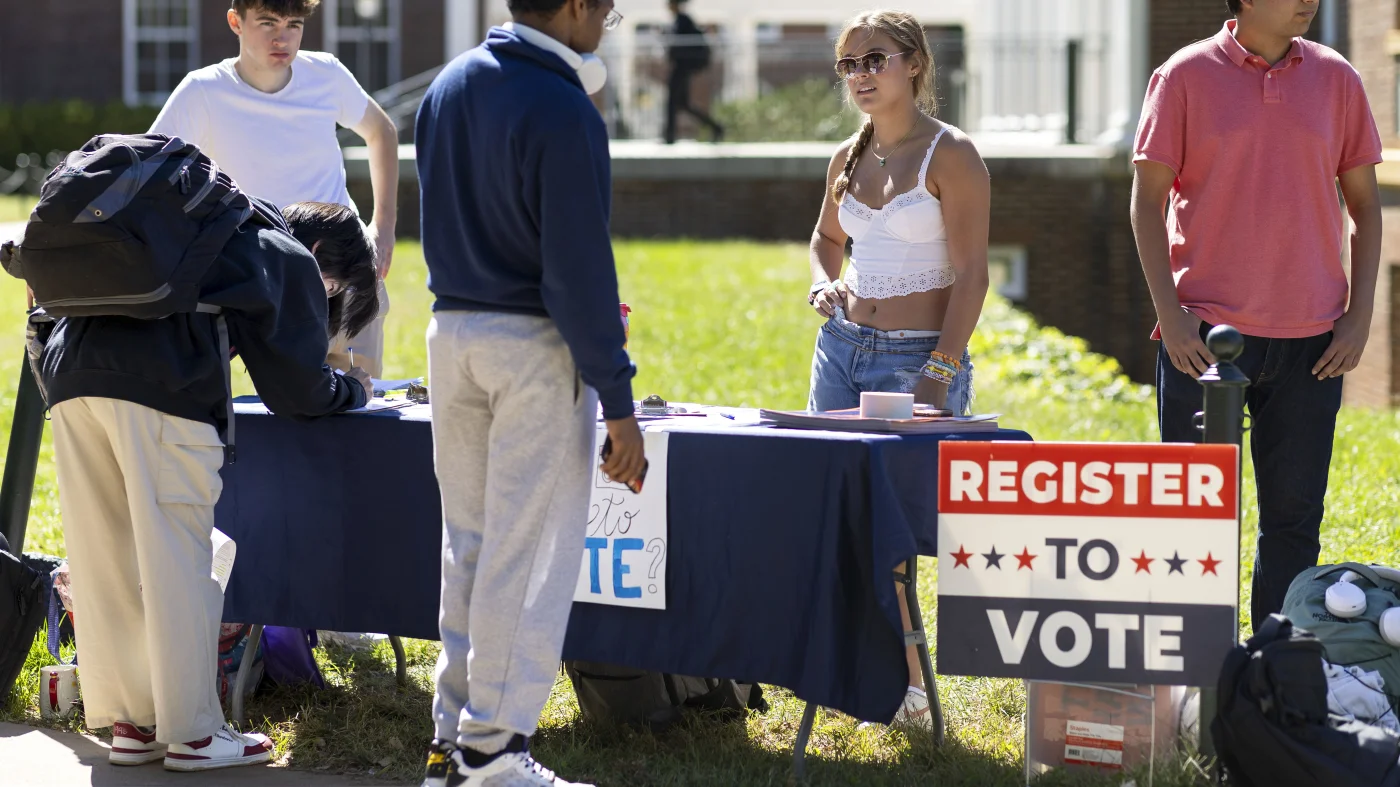
The question of whether students attending college away from home should be permitted to register and vote in their college communities has resurfaced amid legal challenges to recent Montana voting restrictions.
A 1979 Supreme Court ruling established that eligible students have the right to register in the communities where they reside during the academic year. However, decades later, some continue to dispute this practice. The issue gained renewed attention following changes Montana’s legislature enacted to its voter residency requirements. After a student advocacy group filed suit, a state judge temporarily blocked the new restrictions, leaving previous rules in place for students seeking to register for upcoming elections.
According to experts on voting rights, the Montana case highlights widespread misunderstandings about student voting eligibility. Michael Hanmer, a University of Maryland government professor whose research focuses on student voters, explains that voting eligibility in the U.S. is tied to residency, which states and localities define. Federal law requires that residency standards be applied uniformly across different groups to prevent discrimination. Students, like other new residents, must be treated consistently rather than subject to different standards.
Students and other individuals with multiple residences can typically choose which location serves as their legal “domicile” for voting purposes. Yael Bromberg, an attorney specializing in voting rights, describes domicile as a person’s singular, fixed, permanent principal home where they intend to return. For students uncertain about their post-graduation residence, determining domicile requires individualized assessment.
Montana’s revised law imposed new restrictions on “temporary” residents enrolled in educational programs, requiring them to intend making the state their permanent home to register. State officials argue this does not apply to college students, but a Missoula County judge found the restriction likely violates Montana’s constitution. Experts suggest similar laws face significant legal obstacles. Hanmer notes that while states may impose certain requirements on all new residents, such as obtaining new identification, these requirements must apply uniformly rather than targeting specific groups like students.
Article Attribution | Read More at Article Source
Article summary produced by Claude AI