

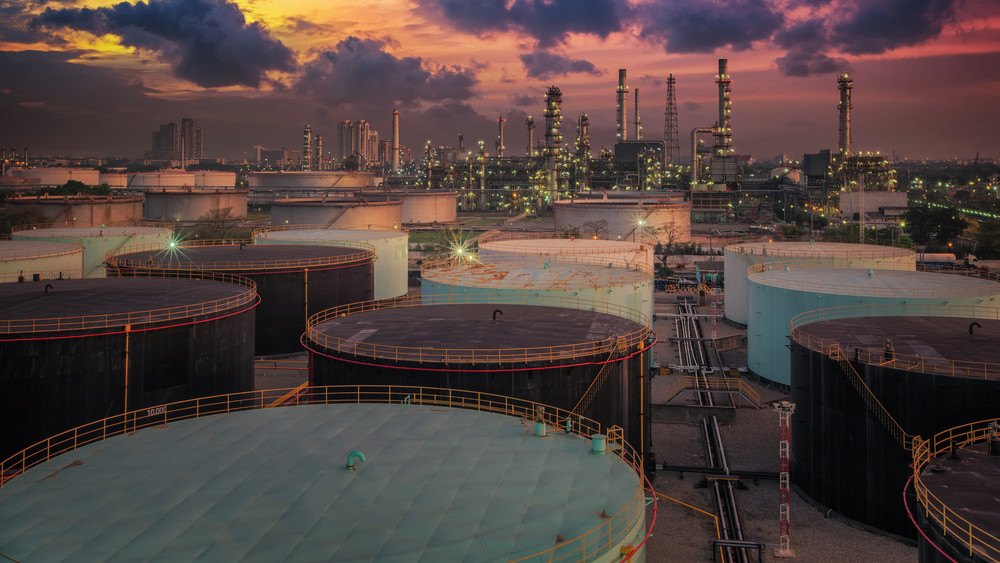
The United States is producing crude oil at unprecedented levels, with 2026 output tracking to average 13.8 million barrels per day, surpassing the prior year’s record. However, this has not prevented diesel prices from reaching historic peaks, and distillate inventories have fallen to unusually low levels. The Energy Information Administration projects these stockpiles will remain below the five-year average through much of 2027, potentially dropping below 100 million barrels for the first time in over two decades.
The apparent contradiction between record crude production and tight diesel markets stems from fundamental constraints in petroleum refining. Crude oil must be processed through refineries before becoming usable products like diesel, gasoline, or jet fuel. A typical 42-gallon barrel of crude yields roughly 19 to 20 gallons of gasoline and 11 to 13 gallons of ultra-low-sulfur distillate. Refineries cannot simply increase diesel output at will, as production ratios are determined by chemistry, crude quality, refinery design, and installed equipment. In 2025, distillate represented approximately 30 percent of total U.S. refinery output, while finished gasoline accounted for nearly 46 percent. While operators can make modest adjustments to product mix, fundamentally redesigning production would require capital investment and time.
Additional constraints limit refinery flexibility. During the third quarter, U.S. refineries operated at roughly 96 percent capacity as companies capitalized on strong margins. When utilization reaches these levels, minimal idle capacity remains available for activation. Furthermore, refineries cannot operate indefinitely at maximum rates, as regular maintenance and inspections are necessary, particularly during fall turnaround season. Total U.S. refining capacity has also declined modestly, with operable atmospheric crude-distillation capacity at approximately 18.2 million barrels per day at the start of 2026, down roughly 250,000 barrels per day from the prior year.
Global supply disruptions have intensified diesel scarcity across multiple regions simultaneously. Russian fuel exports have contracted due to Ukrainian attacks on refining infrastructure. Middle Eastern refinery operations and shipping have been disrupted by the Iran conflict, while China suspended most fuel exports in October as domestic refiners worked to rebuild depleted inventories. Europe has been particularly affected, having reduced refining capacity from approximately 17.5 million barrels per day in 2009 to roughly 14.4 million barrels per day currently. As several major suppliers faced simultaneous constraints, international competition for available diesel intensified, driving prices higher globally. U.S. refiners responded by exporting record volumes to capture premium international prices, with net distillate exports reaching five-year highs for much of 2026.
Domestic diesel prices ultimately reflect both local supply conditions and global market dynamics. The Trump administration considered restricting diesel exports to potentially lower domestic prices and increase domestic supplies, though President Trump announced this week that no export ban would be imposed. While such restrictions might reduce prices temporarily, trade-offs would complicate broader economic considerations.
Article Attribution | Read More at Article Source
Article summary produced by Claude AI