

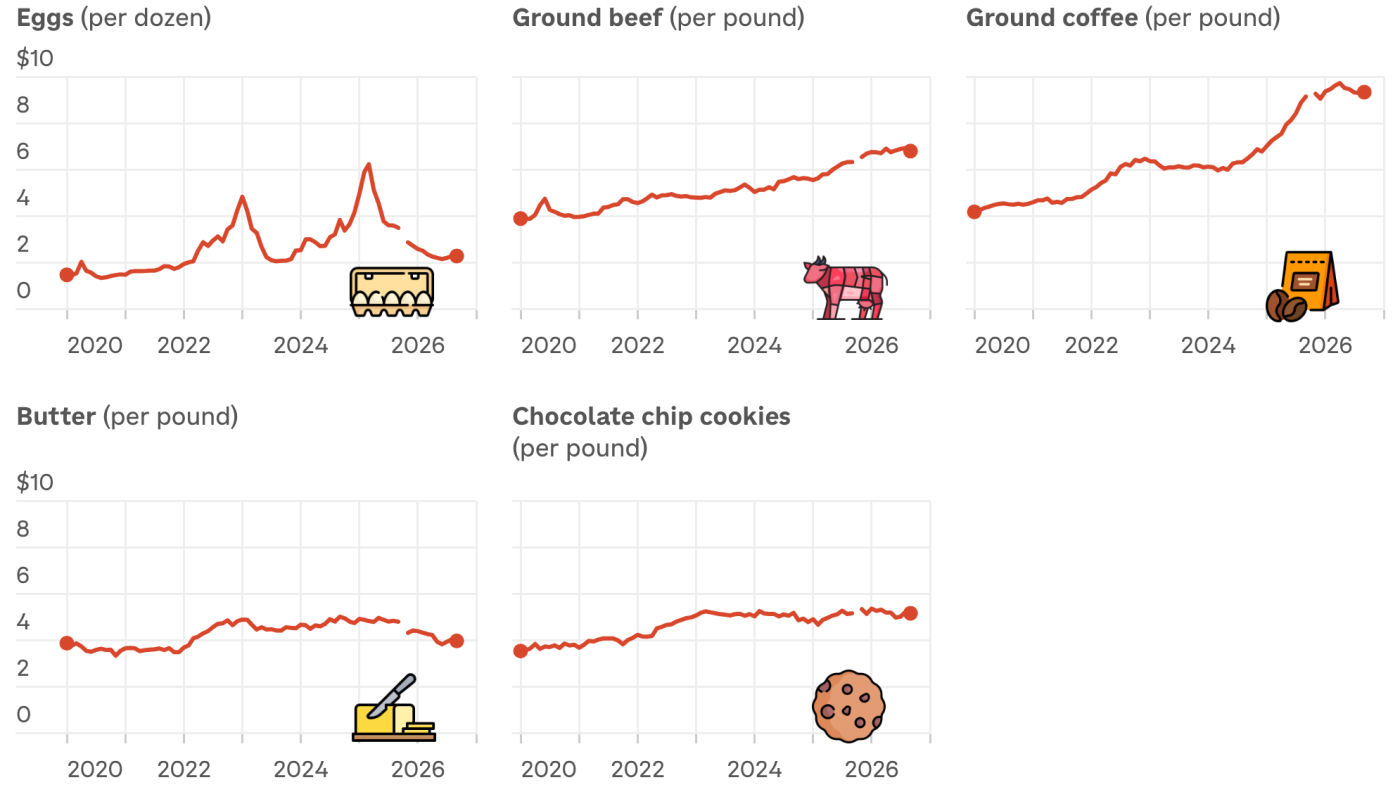
Grocery prices have experienced significant volatility over the past several years, beginning with substantial increases during pandemic lockdowns in April 2020 and accelerating again in 2022 when food inflation reached 11.4% annually. While the rate of price increases has moderated since 2023, overall grocery costs have not returned to pre-pandemic levels, creating a baseline of elevated prices that consumers remain acutely aware of. Current price movements are now driven by various systemic factors including labor costs, tariffs, and energy prices, with President Trump pledging to address grocery affordability in his second term despite mixed results so far.
Individual food items tell distinct stories shaped by commodity-specific challenges. Ground beef prices have climbed 85% over the past decade, reaching $6.79 per pound last month, primarily due to droughts that have reduced U.S. cattle herds to their smallest size in 75 years. Compounding these pressures are rising equipment and fuel costs, limited grazing land, and a consolidated meatpacking industry that farmers contend reduces their profitability. The number of cattle farms continues to decline, exacerbated by high barriers to entry for new farmers and ranchers.
Egg prices demonstrate extreme volatility tied to avian flu outbreaks. Disease-related culling of poultry flocks has historically driven sharp price spikes, with eggs reaching a record $6.23 per dozen in March of last year before dropping to $2.27 per dozen last month. Tariffs on foreign goods have further complicated the picture by increasing packaging material costs for egg cartons. Coffee prices remain elevated at 44% above levels from two years prior, driven by weather disruptions in major producing countries like Brazil, Vietnam, and Costa Rica, though some Trump administration tariffs on coffee were removed in recent months.
Butter presents a contrasting narrative, declining 17.3% over the past year to average $3.96 per pound in September. Strong demand fueled by new dietary guidelines promoting fat consumption has been outpaced by abundant supply, as U.S. dairy farms expanded herds to increase milk production for other dairy products like Greek yogurt and cottage cheese, inadvertently creating butter oversupply.
Article Attribution | Read More at Article Source
Article summary produced by Claude AI