

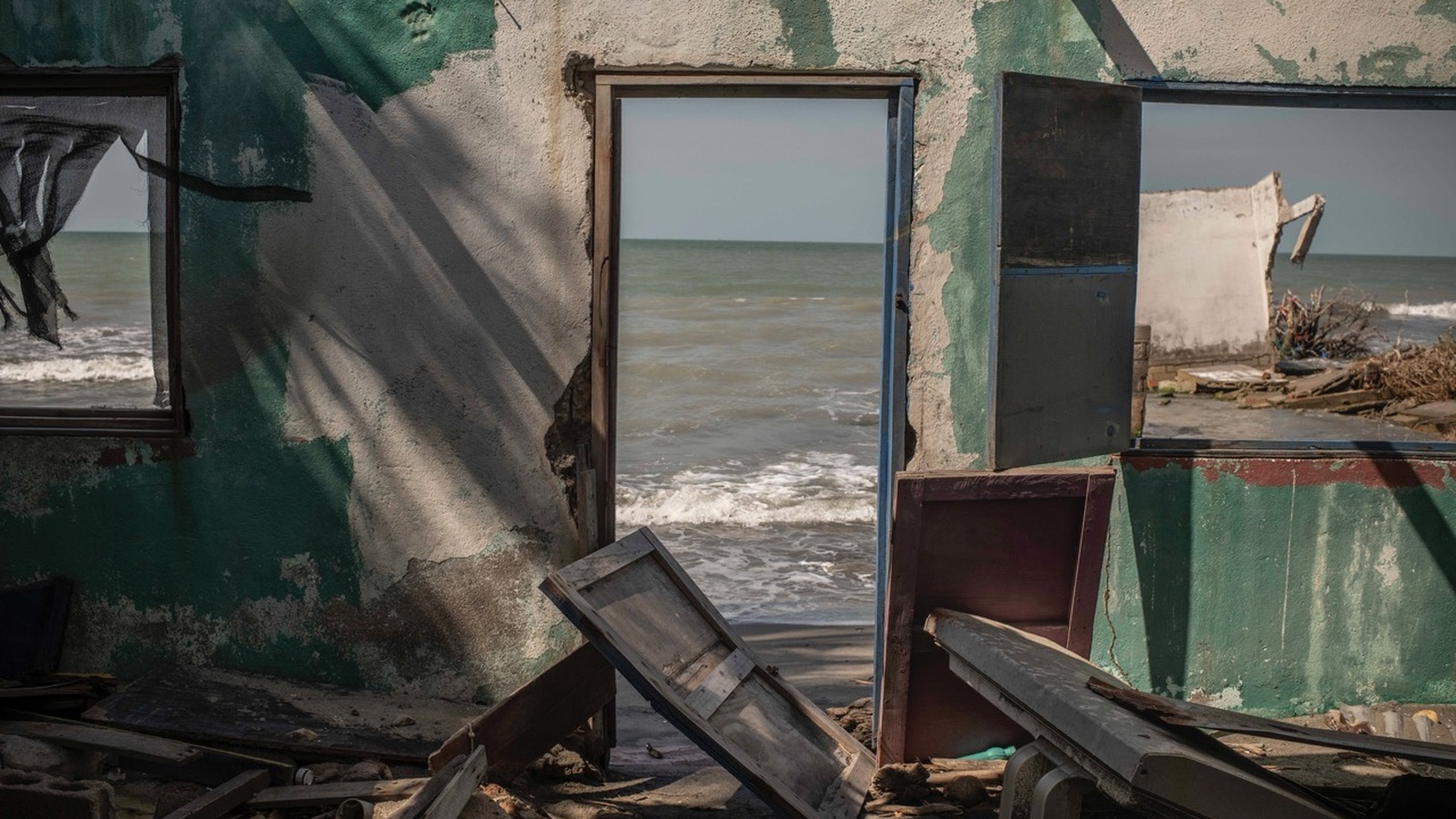
El Bosque, a small fishing village in Tabasco, Mexico, became the first community in the country officially recognized as displaced by climate change in 2023. Coastal erosion and storm surge flooding had damaged or destroyed more than half of approximately one hundred homes in the peninsula settlement located between the Gulf of Mexico and the Usumacinta River. Following advocacy by environmental justice organizations and media attention, President Andrés Manuel López Obrador pledged to relocate residents. In November 2024, fifty-one families received newly constructed homes in Nuevo Bosque, a purpose-built neighborhood 7.5 miles inland near the city of Frontera.
While the relocation was initially celebrated as a success, residents now face significant challenges adapting to life away from the coast. The primary livelihood of El Bosque residents centered on garrulear, a traditional fishing-related practice involving women helping fishermen with their catch at night. This work provided income, food, and crucial social bonding for the community. The inland location has made this work impractical; transportation costs of approximately $14 for a round-trip taxi ride limit visits to the original settlement to roughly once weekly, even during peak fishing season.
Residents report experiencing emotional distress related to the displacement. One relocated resident described persistent anxiety, sleep difficulties, and grief over losing her former life and community connections. The government had decided against relocating residents closer to the coast, reasoning that such areas would likely face flooding again within years, whereas the current location should remain safe for approximately three decades.
Ecologists warn that El Bosque faces complete inundation within a decade. Rising sea levels driven by climate change have accelerated natural coastal erosion processes in the region. Globally, sea level rise has more than doubled over the past three decades and is expected to rise an additional 15 to 30 centimeters by 2050, according to the Intergovernmental Panel on Climate Change. The state of Tabasco, home to approximately 2.5 million people, faces potential uninhabitability or high vulnerability by century’s end under current projections.
Article Attribution | Read More at Article Source
Article summary produced by Claude AI