

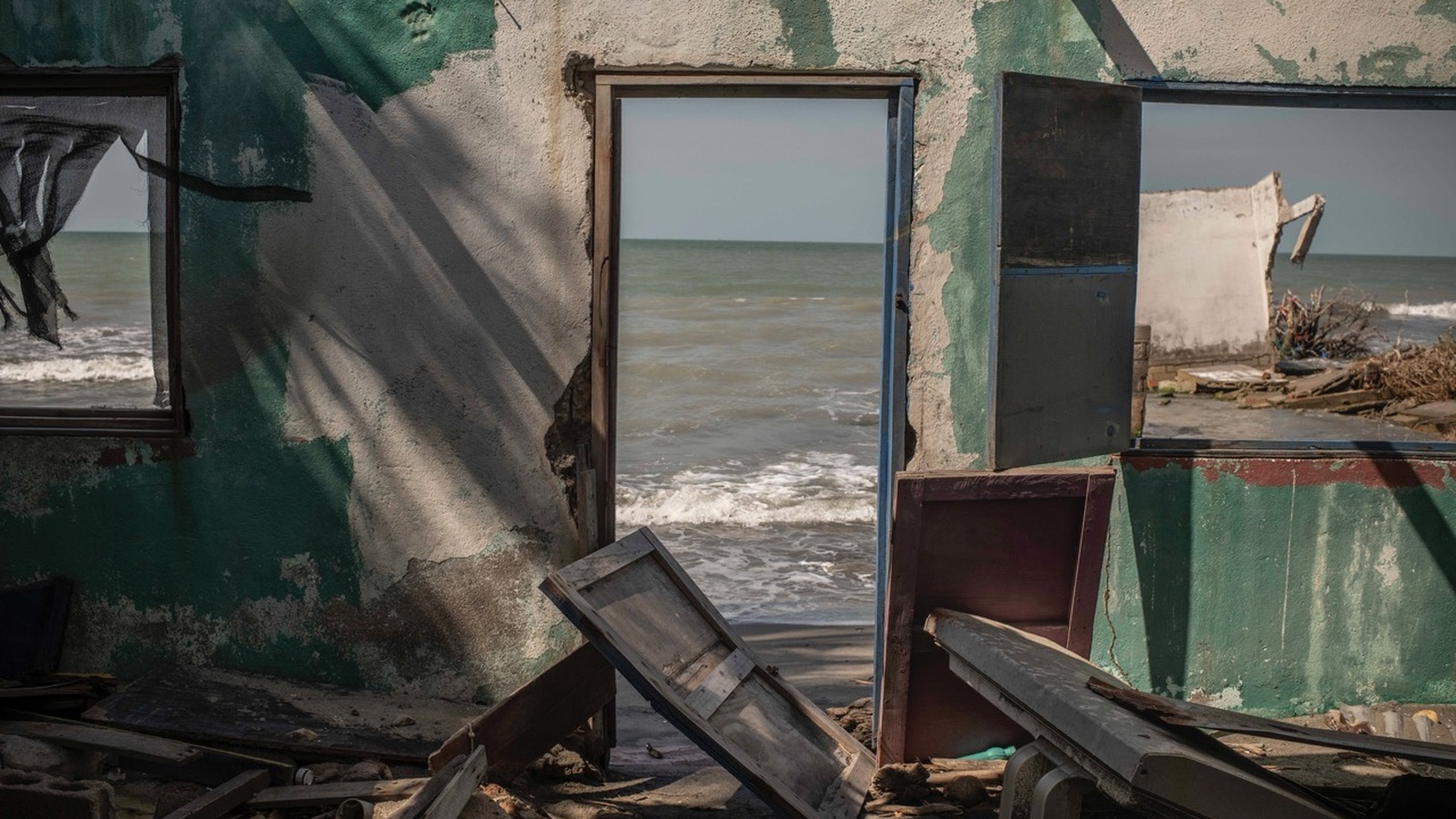
El Bosque, a fishing community in Tabasco state located on a peninsula between the Gulf of Mexico and the Usumacinta River, became the first community in Mexico to be officially recognized as displaced by climate change in 2023. Coastal erosion and flooding from storm surge had damaged or destroyed more than half of approximately one hundred homes in the area. Following advocacy efforts by environmental justice organizations, President Andrés Manuel López Obrador pledged to relocate residents. In November 2024, the government inaugurated Nuevo Bosque, a new neighborhood situated 7.5 miles inland near the city of Frontera, providing purpose-built houses to fifty-one families.
While the relocation was initially celebrated as a success for both residents and the government, the community now faces significant challenges adapting to life away from the coast. Residents report struggling with economic hardship, as traditional fishing practices and the cultural activity of garruleando—women helping fishermen unload catch at night—are no longer accessible in their new location. The cost of transportation back to El Bosque, approximately $14 per trip, limits residents’ ability to maintain these livelihoods and social connections. Some residents relocated were excluded from the program without explanation, adding to community tensions.
According to coastal erosion expert Lilia Gama from Juarez Autonomous University of Tabasco, the original El Bosque settlement faces accelerating destruction. At current rates, the river and sea will likely merge within a decade, submerging the entire community. While this merging would have occurred naturally over time, climate change has significantly accelerated the process. Rising sea levels, driven by melting ice sheets and thermal expansion of warming oceans, pose an expanding global threat. The rate of sea level rise has more than doubled in recent decades, with projections indicating a further rise of 15 to 30 centimeters by 2050. Climate modeling suggests that up to half of Tabasco state, home to 2.5 million people, could become uninhabitable or highly vulnerable by century’s end.
Article Attribution | Read More at Article Source
Article summary produced by Claude AI