

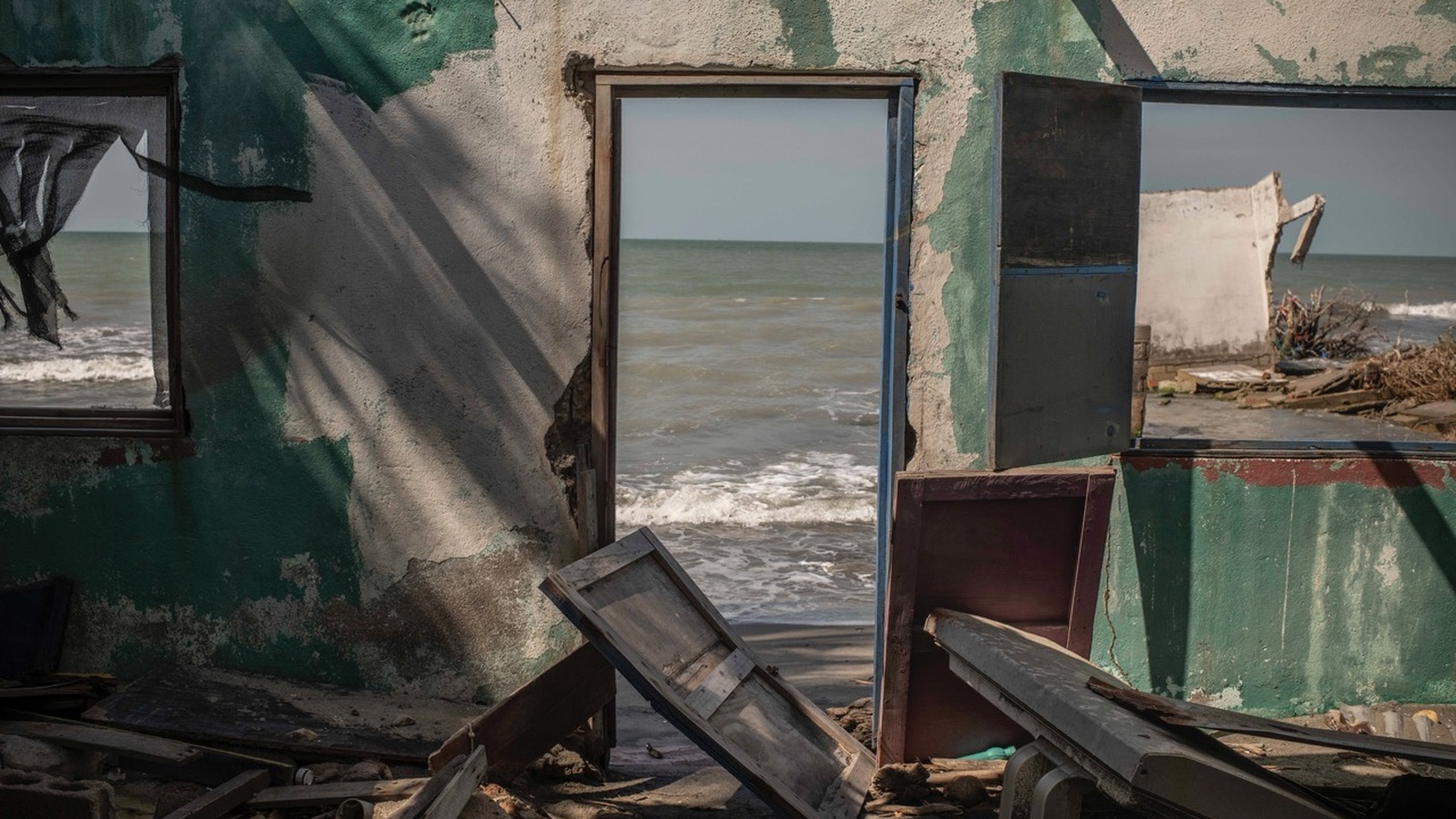
El Bosque, a small fishing community in Tabasco, Mexico, became the nation’s first settlement officially recognized as displaced by climate change in 2023. Coastal erosion and storm surge flooding had damaged or destroyed more than half of the roughly hundred homes in the area. Following a media campaign and administrative claims by environmental justice organizations, President Andrés Manuel López Obrador committed to relocating residents. In November 2024, a new residential area called Nuevo Bosque opened approximately 7.5 miles inland near the city of Frontera, providing purpose-built housing for 51 families.
While the relocation was initially celebrated as a government success and a victory for residents, communities are now experiencing significant challenges adapting to their new circumstances. Many residents, including those who received new homes, report emotional and financial strain. A primary source of hardship stems from economic losses tied to fishing, which was central to both livelihoods and community identity. The practice of garrulear, where women assisted fishermen during nighttime catches and earned income and food, provided important social bonding. Transportation costs of approximately 240 pesos make returning to El Bosque prohibitively expensive, limiting residents’ ability to maintain these traditions.
Residents expressed a preference for relocation closer to the coast to continue fishing daily, but authorities determined that such locations would face renewed flooding within years. The current inland location is projected to remain safe from inundation for approximately 30 years. However, El Bosque itself faces accelerating environmental decline. According to coastal erosion experts, the community will likely be reduced to small sandy islands within a decade as the Usumacinta River and Gulf of Mexico converge, eventually submerging the entire area. Climate change has significantly accelerated this natural process through sea level rise driven by glacier melting and thermal expansion of warming oceans.
Globally, sea level rise has more than doubled over three decades and is expected to increase 15 to 30 centimeters by 2050, endangering close to one billion people in low-lying coastal regions. Modeling suggests up to half of Tabasco’s 2.5 million residents could face uninhabitable or highly vulnerable conditions by century’s end. Questions remain regarding residents excluded from the relocation process, whose selection criteria remain unexplained.
Article Attribution | Read More at Article Source
Article summary produced by Claude AI