

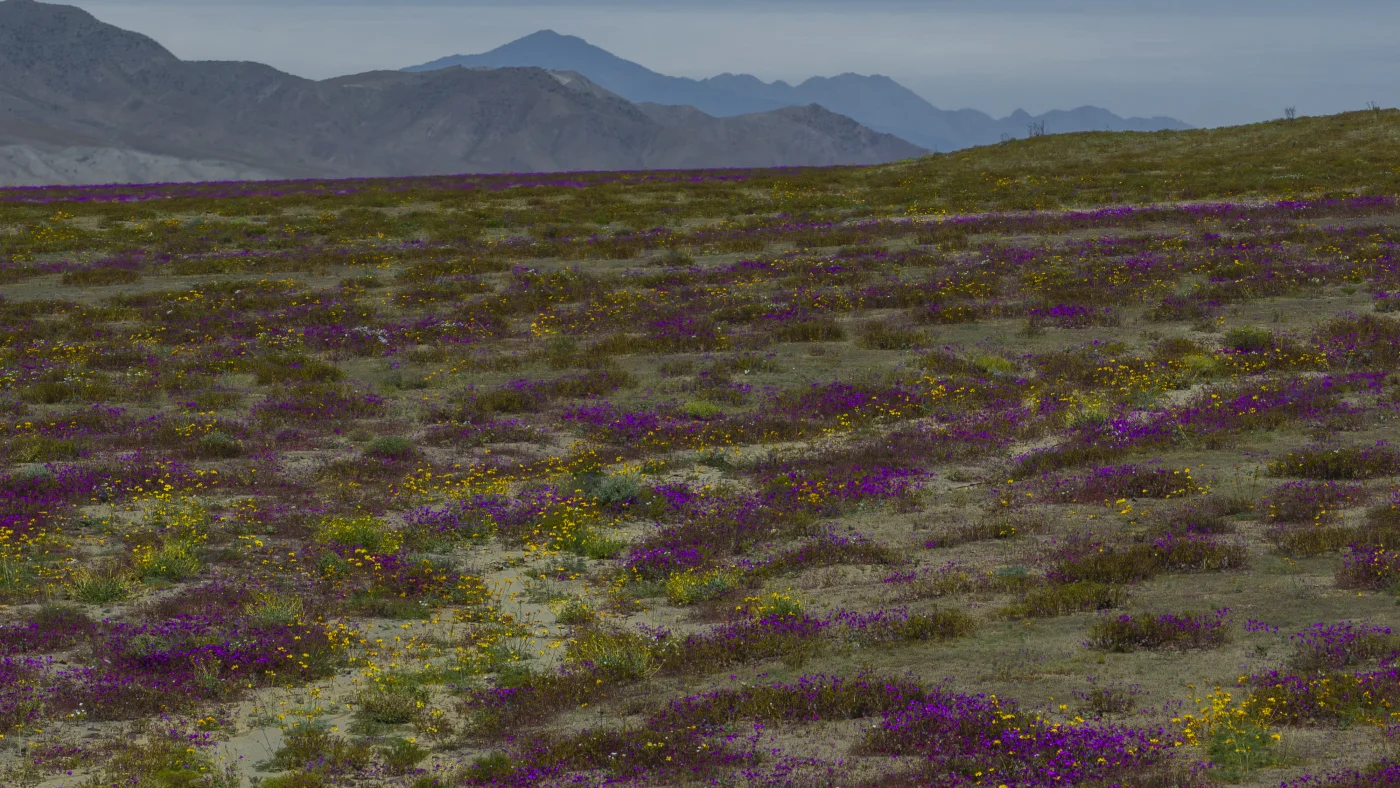
The Atacama Desert in northern Chile is currently displaying its most extensive and colorful flowering event in three decades, a phenomenon locally called Desierto Florido or Desert Bloom. The display was triggered by unusually heavy rainfall during the winter months, with some areas receiving the most substantial precipitation since record-keeping began in the 1950s. The same rains that created this botanical spectacle also caused significant damage to the region, including flash floods that destroyed or damaged dozens of homes and forced hundreds of people to evacuate in July and August.
The exceptional flowering results from rainwater penetrating deeper into the parched soil than it has in decades, activating millions of seeds, bulbs, and tubers that had remained dormant beneath the sand for extended periods. Scientists estimate that over 200 plant species are currently in bloom, with flowers appearing in patches of desert where blooming has never been previously documented. This suggests that some dormant bulbs have remained undisturbed since before detailed study of the phenomenon began in 1997. The initial pale-yellow flowers gave way to soft purple hues as different bulbs germinated, and now the desert landscape is streaked with pink, yellow, lilac, and purple colors across virtually every depression and crevice.
Moisés Grimberg, administrator of Llanos de Challe National Park, describes the desert as a natural seed bank that becomes active under the right conditions. The flowering window is brief, with plants typically completing their life cycles within two to three months. The bloom has attracted substantial tourism interest, with Llanos de Challe receiving 15,000 visitors over recent weeks, compared to its typical annual total of 10,000. National tourism projections estimate around 300,000 overnight trips to the region during the two-month flowering period.
Among the notable species drawing visitors are the garra de león flowers, endemic crimson blossoms found only along a few miles of this coastal stretch. The flowering event supports a temporary but vibrant ecosystem, with insects hatching and subsequently attracting lizards, bats, and larger mammals such as guanacos. Biologists from Chile’s national seed bank are actively collecting specimens to preserve genetic material and study the unique adaptations plants have developed to survive the region’s extreme aridity. Scientists note that such blooms are occurring with increasing frequency due to climate-related changes bringing unseasonal rainfall patterns to the world’s driest non-polar desert.
Article Attribution | Read More at Article Source
Article summary produced by Claude AI