

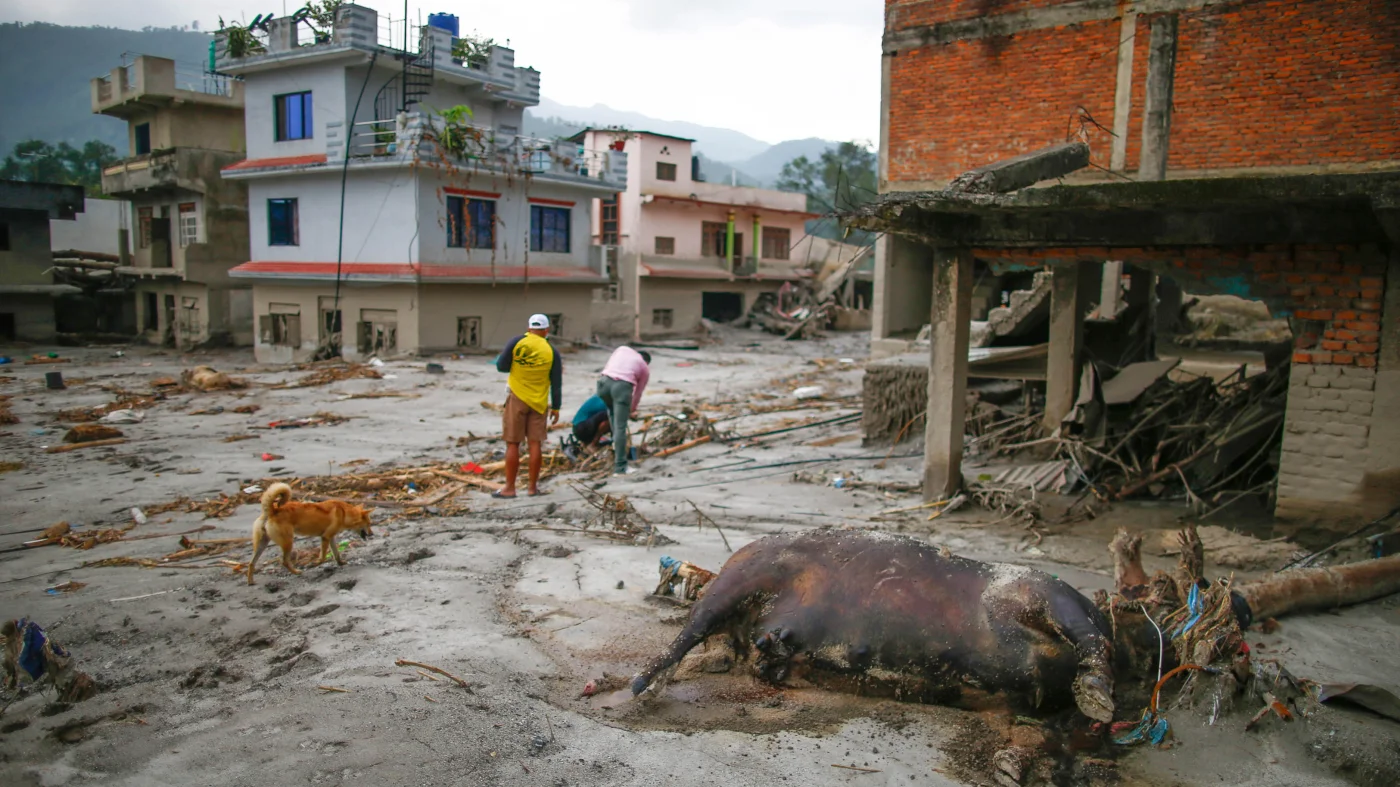
Nepal is confronting the aftermath of catastrophic flooding caused by glacial melt and debris flow along the Trishuli River. The disaster has claimed at least 1,500 lives, left more than 5,000 people missing, and displaced approximately 100,000 residents. The destruction has been extensive, with seven health facilities, 23 schools, 10,000 toilets, and 64 water systems damaged or destroyed, according to UN assessments. Many survivors continue living in temporary shelters or tent encampments as reconstruction efforts continue.
The recovery process has shifted from emergency rescue operations to longer-term rebuilding work, though international attention and aid contributions have diminished as media focus has moved elsewhere. A significant challenge in this phase is that many people coordinating recovery efforts are simultaneously rebuilding their own lives after losing homes and livelihoods. Organizations such as Helen Keller International and Save the Children are working with local communities to address immediate needs and prevent secondary health crises.
Malnutrition has emerged as a growing concern entering the winter season. Data from affected areas show marked increases in moderate acute malnutrition rates among vulnerable populations including young children and pregnant women. Experts attribute this partly to families losing gardens and local food sources and being forced to rely on packaged foods with lower nutritional value. The loss of income-generating opportunities has further limited families’ ability to purchase adequate nutrition.
Physical infrastructure damage presents an ongoing obstacle to aid delivery and community recovery. More than 100 bridges have been destroyed, and mountain roads that connected remote communities have been severed. Makeshift replacement structures, while functional, are fragile and present safety hazards to residents attempting to cross, particularly elderly individuals and those navigating simultaneous two-way traffic. These damaged transportation links have created isolated pockets of affected populations that remain difficult for aid organizations to reach, especially in the upper northern sections of impacted areas.
Article Attribution | Read More at Article Source
Article summary produced by Claude AI