

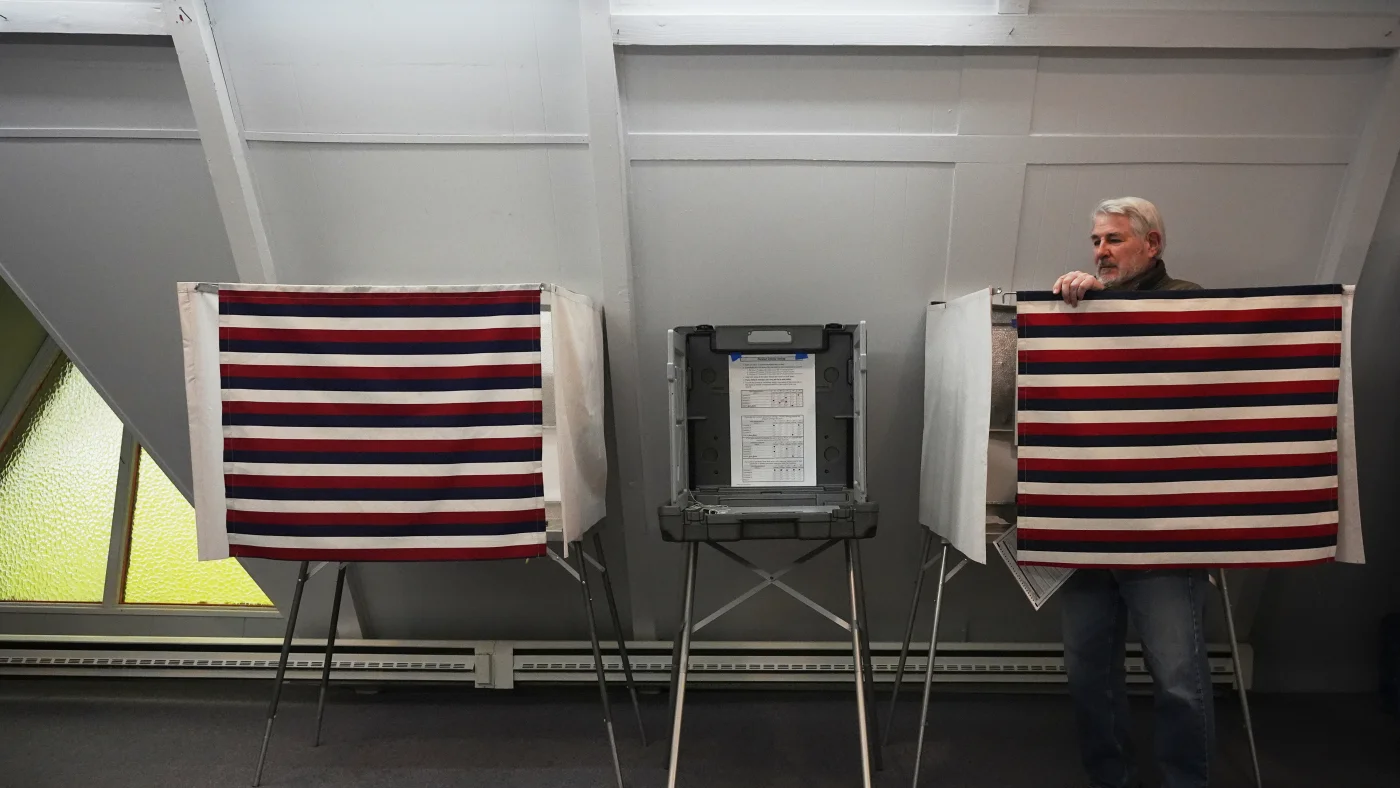
Alaskans have voted down a ballot measure seeking to eliminate the state’s distinctive nonpartisan primary system and ranked choice voting process, according to an overnight call by the Associated Press. This represents the second occasion on which voters have rejected efforts to repeal these electoral reforms, which were initially approved by the state’s electorate in 2020. A comparable repeal attempt had already failed narrowly in 2024.
The voting system drew significant national attention during the recent election cycle, particularly surrounding a contested U.S. Senate general election featuring two candidates sharing the identical name. The race is expected to proceed to ranked choice vote tabulation. Supporters of the system argue it provides greater electoral choice and flexibility for voters across the political spectrum, while critics contend it introduces unnecessary complexity into the voting process and creates potential for manipulation.
Alaska stands among only a small number of states employing nonpartisan primary systems that permit all voters to participate regardless of party affiliation. Unlike California and Washington, which advance the top two candidates to general elections, Alaska’s model allows the top four finishers from the primary round to continue. If no candidate secures an outright majority in the general election, the state employs ranked choice voting methodology to determine the final outcome.
The Senate race centered on questions regarding the candidacy of an independent contender who shared the name of the Republican incumbent. Critics alleged the independent candidate was recruited as a spoiler to fragment support for the Republican, though Democratic officials denied such involvement. Proponents of Alaska’s system have noted that ranked choice voting could mitigate potential confusion, as voters could rank multiple candidates with the same surname.
Nationwide, alternative electoral systems have faced resistance at the ballot box. Massachusetts voters declined to adopt a top-two nonpartisan primary system earlier this election cycle, and multiple other states rejected similar measures during the preceding election cycle in 2024.
Article Attribution | Read More at Article Source
Article summary produced by Claude AI