

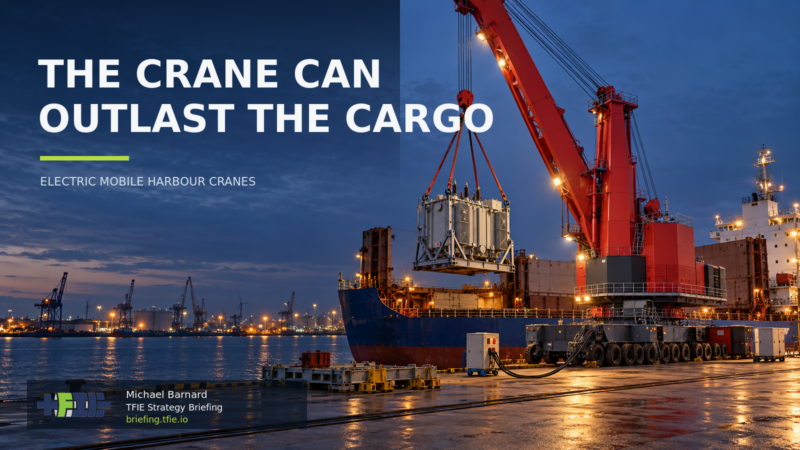
Katoen Natie has commissioned six all-electric mobile harbour cranes at the Port of Antwerp, marking a significant deployment of heavy equipment in a commercial shipping environment. The fleet consists of four 200-tonne cranes and two 150-tonne machines, with a combined lifting capacity of 400 tonnes. The company projects the equipment will reduce diesel consumption by as much as 500,000 litres per year once fully operational.
Electrifying mobile harbour cranes presents distinct engineering challenges compared to fixed container cranes, which have remained in single locations and connected to permanent electrical infrastructure. Mobile harbour cranes must travel along quays, move between different cargo assignments and handle varying types of goods, historically necessitating onboard diesel generators for operational flexibility. Konecranes addressed this challenge by separating lifting and mobility functions, using grid electricity for heavy work while deploying rechargeable batteries to move the cranes between positions. This approach eliminates diesel exhaust at the equipment level and reduces operational noise.
A primary advantage of electric mobile cranes extends beyond environmental performance. Unlike equipment designed for specific cargo types, these machines can handle diverse freight including steel, industrial equipment, transformers, wind components, scrap material and containers. This versatility becomes increasingly relevant as ports face shifting cargo patterns resulting from the energy transition. Traditional port infrastructure supporting coal, oil and gas faces declining commodity volumes, requiring facilities to adapt their handling operations.
Ports are repositioning toward containers, renewable-energy equipment, industrial products and alternative fuels, though demand growth will not uniformly benefit all facilities. Flexible electric equipment reduces risk by maintaining utility across multiple freight scenarios rather than being constrained to specific commodities. A crane capable of lifting a transformer today can handle scrap steel or construction machinery tomorrow, while electrical infrastructure investments can support broader equipment including yard machinery, trucks and shore power systems.
While new equipment remains subject to standard investment criteria including sufficient cargo volume, suitable electrical infrastructure and sound operating economics, the Antwerp deployment demonstrates how ports can lower diesel consumption immediately while preserving operational flexibility amid uncertain freight forecasts.
Article Attribution | Read More at Article Source
Article summary produced by Claude AI