

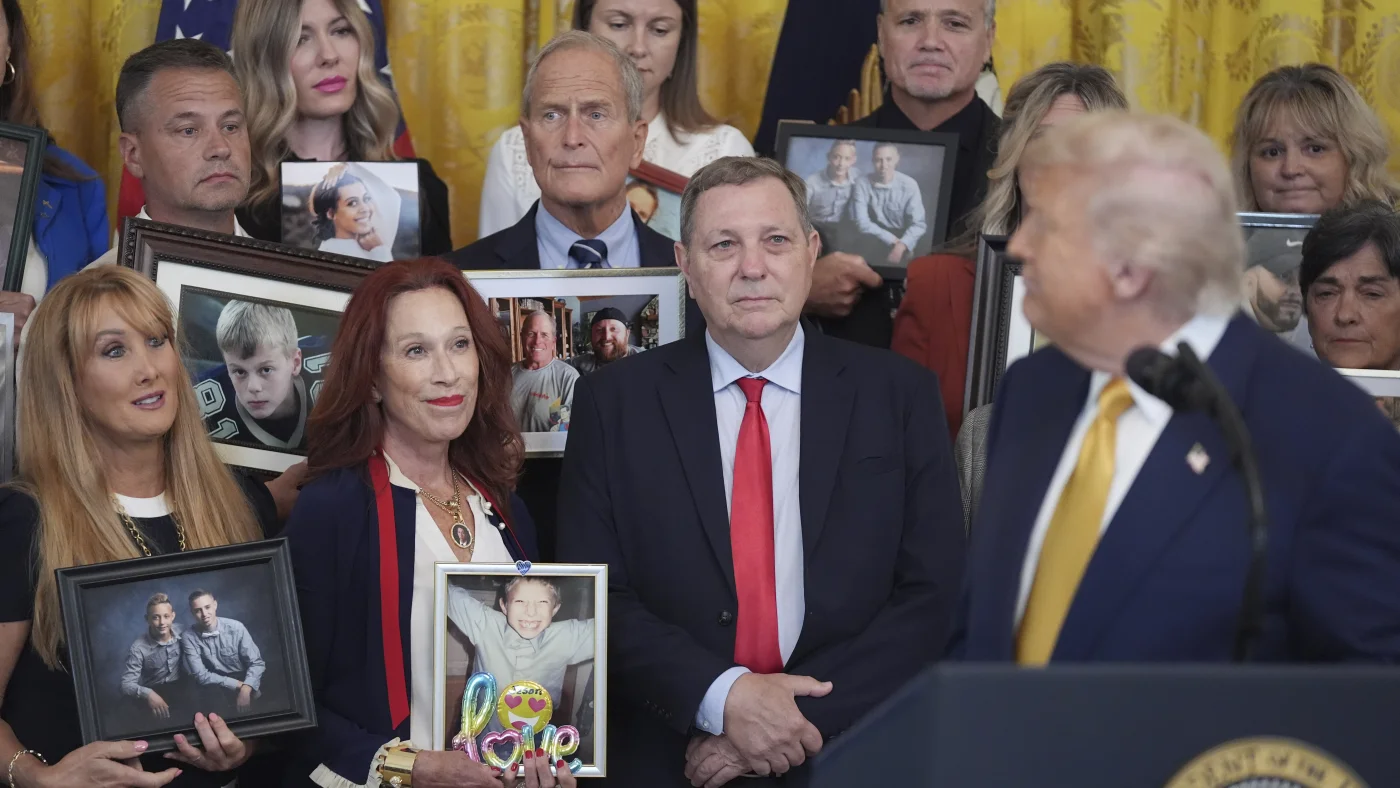
The White House announced significant reductions in fatal drug overdoses, citing data from the Centers for Disease Control and Prevention showing U.S. drug deaths have reached their lowest levels in approximately a decade. Officials attributed the decline to policies implemented under President Trump’s administration, with White House Office of National Drug Control Policy director Sara Carter crediting heightened border security and efforts against drug trafficking organizations. The statement asserted that gains occurred primarily over the last 18 months and represented an approximately 41.5% decrease compared to the peak under the previous administration.
Drug policy researchers and addiction experts challenged the White House’s characterization of the timeline and causation. According to CDC data, reductions in drug deaths began in 2023 and continued for at least 39 consecutive months, contradicting the 18-month timeframe cited by officials. Experts noted that most gains occurred before Trump returned to office, with declines beginning as early as spring 2023 and momentum building nationwide. By the time the Biden administration ended, fatal overdoses had already dropped by roughly one-third, described by addiction specialists as an unprecedented improvement.
Addiction experts credited the Biden administration’s policy responses, including expanded healthcare access, increased availability of naloxone, and a negotiated agreement with China that disrupted the supply of chemical precursors used in fentanyl production. Fentanyl remains the leading cause of drug deaths nationwide despite progress. When asked about Biden-era achievements, White House director Carter dismissed the earlier declines, stating that crediting the previous administration would amount to praising it for overseeing historically high drug death numbers before bringing them down.
Experts expressed concerns about sustaining progress under current policies. Researchers noted that proposed Medicaid cuts could jeopardize addiction treatment access, as Medicaid represents the largest funder of addiction services in the United States. Additionally, questions remain about the effectiveness of military operations targeting suspected smuggling vessels in the Caribbean and eastern Pacific. Both addiction researchers and drug policy specialists emphasized the importance of maintaining accurate timelines to better understand the dynamics of the overdose crisis.
Article Attribution | Read More at Article Source
Article summary produced by Claude AI