

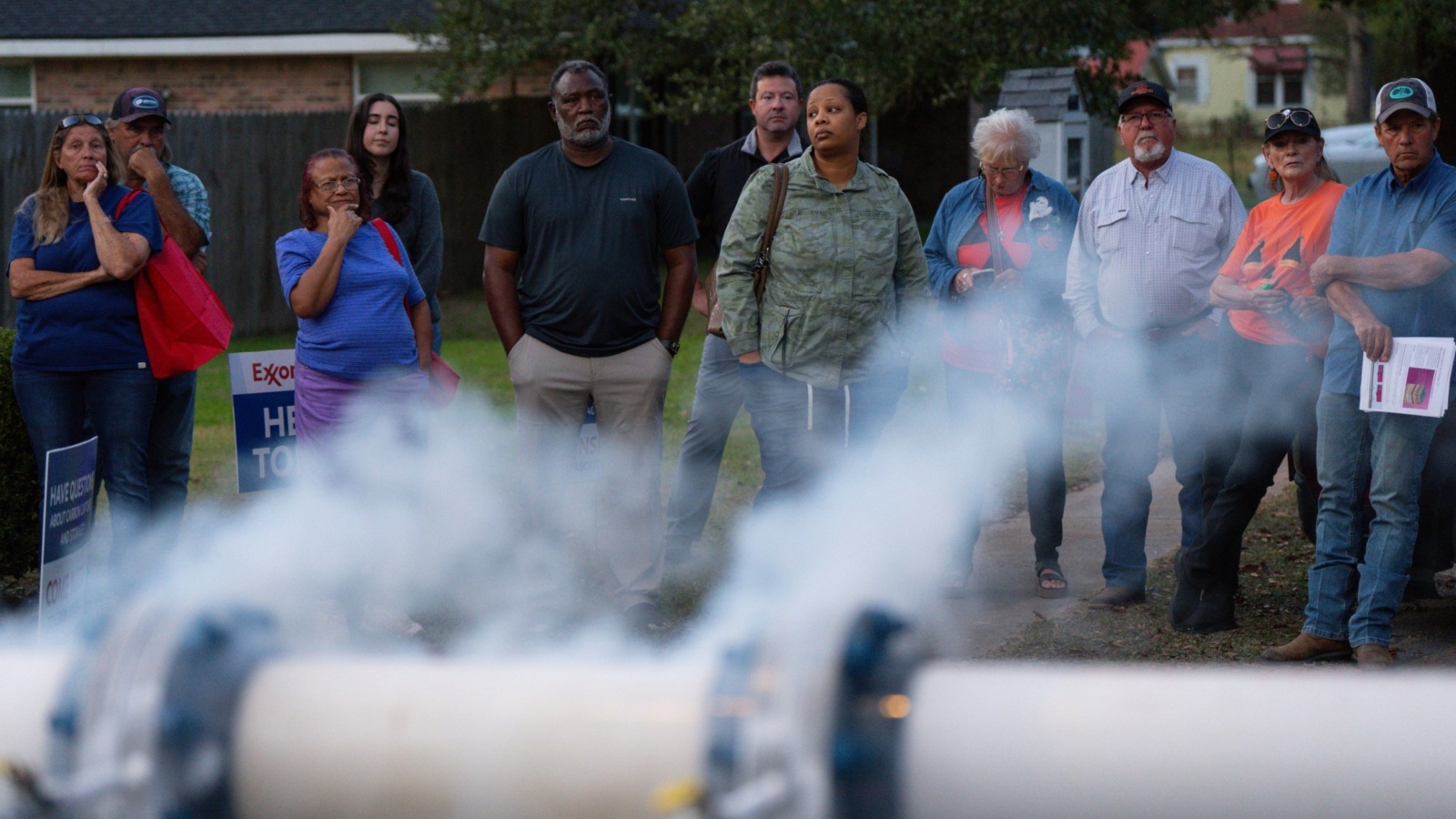
Exxon Mobil is preparing to operate what could be the first carbon dioxide storage project of its kind in Texas, pumping the gas underground to prevent it from contributing to climate change. The Texas Railroad Commission, which regulates the oil and gas industry, approved the project in September after obtaining federal permitting authority late the previous year. State lawmakers and industry representatives have supported carbon capture and storage as a tool for reducing emissions from oil and gas operations.
The unincorporated community of Cheek, located near the proposed injection site, has challenged the permit approval. The area is predominantly Black and composed largely of working-class and elderly residents who question whether the company’s safety measures adequately protect their groundwater and air quality. Community leaders expressed concern that emergency responders lack training to handle potential accidents and that residents do not want to serve as test subjects for an emerging technology. Douglas Cormier, president of the Cheek Texas Community Association, stated surprise at the project’s proximity to homes.
Experts have raised questions about the technology’s effectiveness and safety. A recent investigation found that carbon capture and storage would require more resources than feasible to sufficiently reduce emissions and prevent extreme warming. Some academics, including Harvard University History of Science Professor Naomi Oreskes, have characterized the approach as a distraction from more effective climate solutions. Nearly a third of proposed carbon storage projects in Texas have been canceled or paused.
Proponents argue carbon storage is a necessary component of a comprehensive approach to climate change, noting that federal tax credits support such projects. The region around Beaumont attracts investment due to existing pipeline infrastructure, favorable geology, and nearby industrial facilities seeking to store carbon. Exxon Mobil has secured seven agreements to store carbon dioxide equivalent to emissions from 2 million vehicles.
The case has prompted scrutiny of whether regulators and companies adequately address community concerns. Railroad Commission Chair Christi Craddick publicly criticized Exxon Mobil during the approval process for insufficient community outreach, though she voted to approve the permit. Residents have cited concerns about property values and generational wealth preservation alongside safety worries about the injection project.
Article Attribution | Read More at Article Source
Article summary produced by Claude AI