

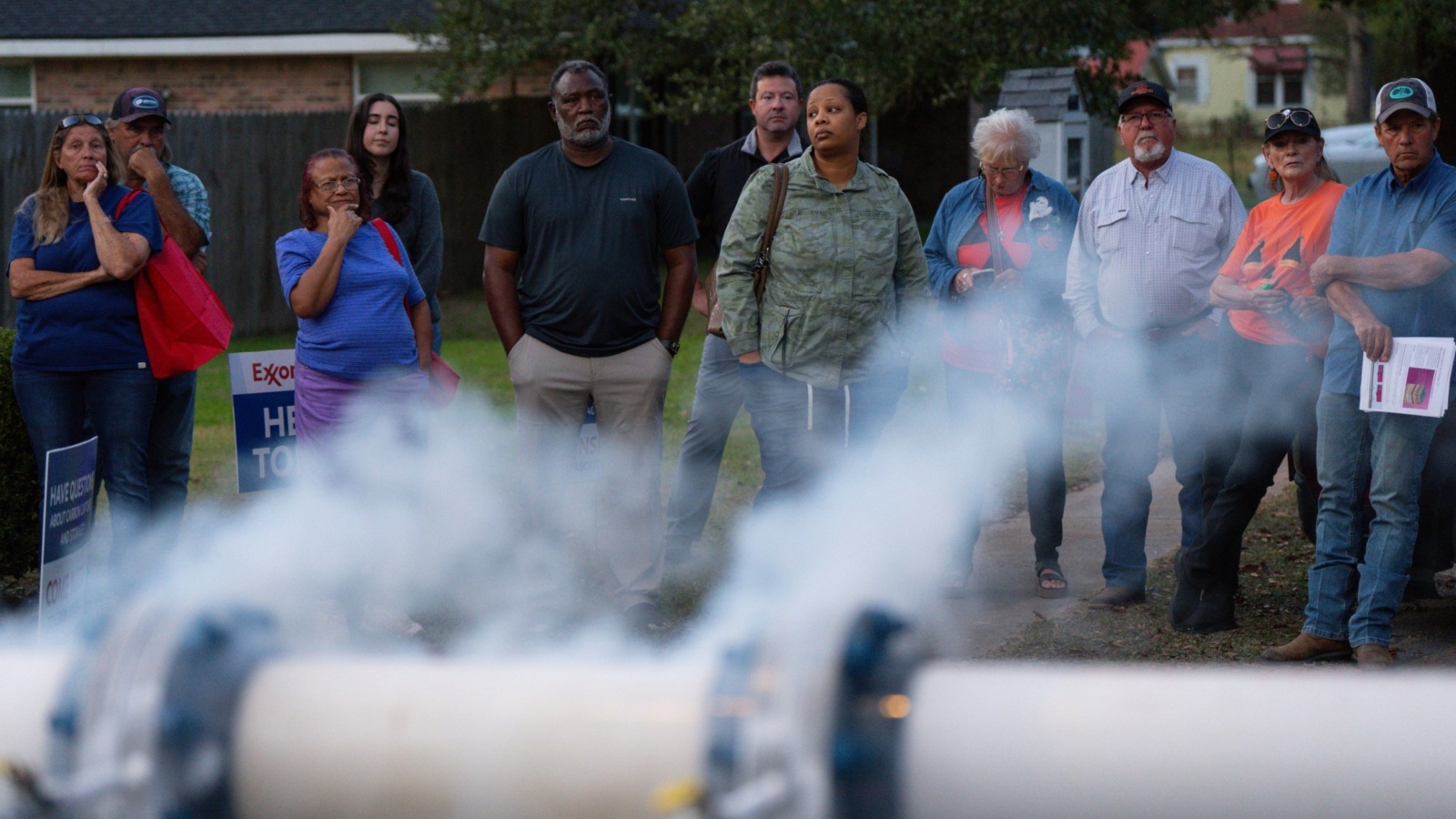
An energy company is preparing to inject carbon dioxide underground near Beaumont, Texas, in what would be the state’s first operational carbon storage project. The initiative has received support from state lawmakers and regulators, with the Texas Railroad Commission approving the permit in September after obtaining federal authority to oversee such projects late the previous year. However, residents of the nearby community of Cheek have requested that the permit decision be reconsidered.
The Cheek area is predominantly Black and composed largely of working-class and elderly residents who have expressed significant concerns about the project’s safety. Community leaders worry that the injected carbon dioxide could contaminate groundwater, escape into the air, or create situations that local emergency responders are unprepared to handle. Douglas Cormier, president of the Cheek Texas Community Association, stated that residents are shocked the project would occur so close to homes. Many residents view themselves as unwilling test subjects for the technology and question whether the company’s safety assurances are credible.
Accross the United States, only a limited number of carbon storage wells have been permitted, and some incidents involving carbon dioxide have already occurred. Experts and community advocates have raised concerns about pipeline accidents and underground leaks. Some researchers, including Harvard University professors, have characterized carbon capture and storage as ineffective for addressing climate change, with investigations suggesting the approach would require more resources than are feasible to meaningfully reduce emissions.
Proponents of carbon storage argue it represents an essential component of a comprehensive climate strategy, with federal tax credits supporting such projects. The East Texas region is considered particularly suitable because of its existing carbon dioxide pipeline infrastructure, favorable geology, and proximity to industrial facilities. The company operating the project has secured seven agreements to store carbon equivalent to emissions from approximately 2 million vehicles.
The situation has raised questions about whether companies and regulators are adequately addressing community concerns as other projects await approval. The Railroad Commission stated it has expertise in protecting drinking water during injection operations, though watchdog agencies have documented a history of the commission failing to safeguard communities from industry risks. Company officials have indicated their commitment to safety measures, emergency training programs, and community communication, though residents have noted limited engagement since they retained legal representation.
Article Attribution | Read More at Article Source
Article summary produced by Claude AI