

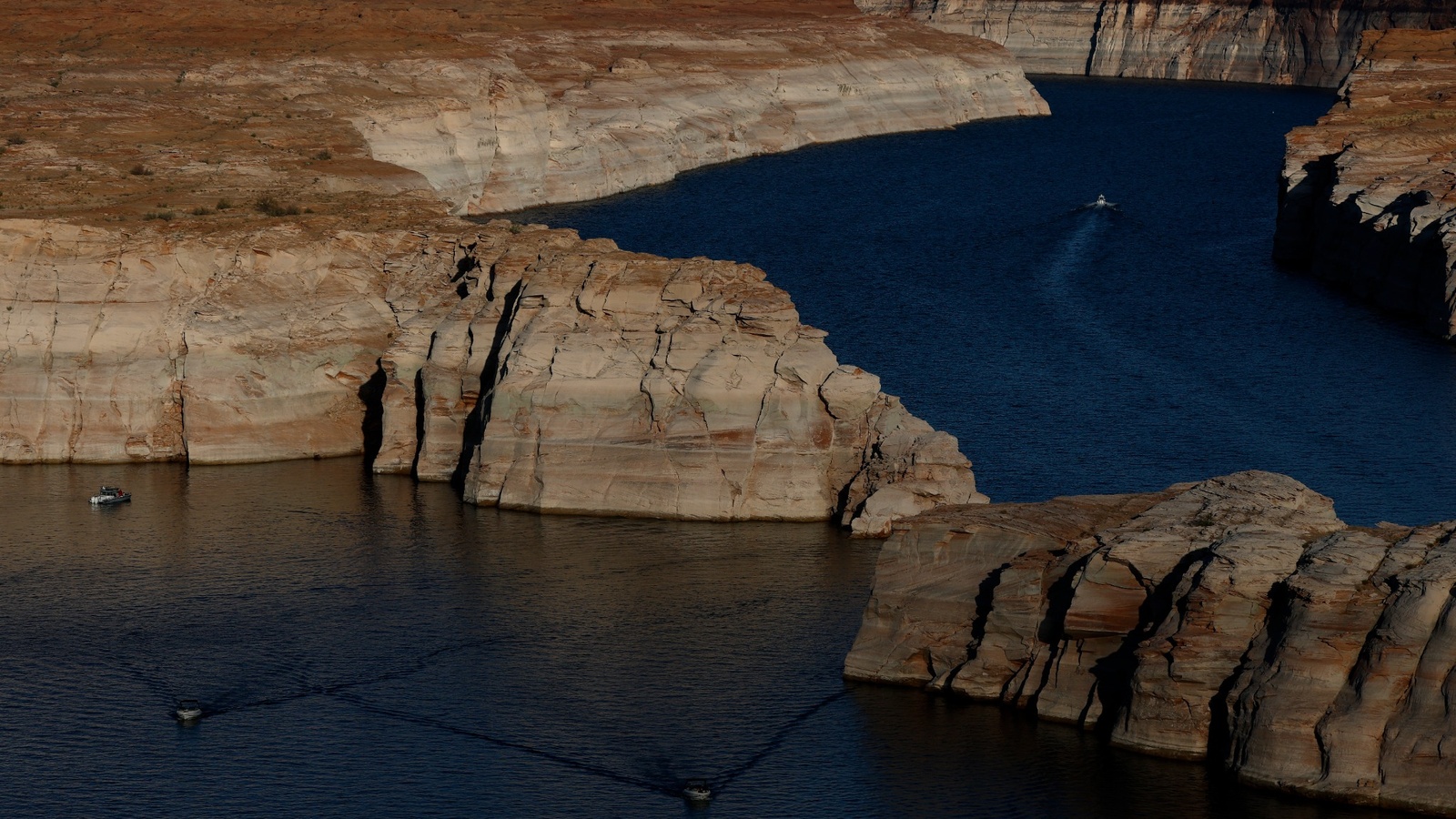
The Colorado River basin is experiencing severe water stress from an extended drought spanning 27 years, the longest dry period documented in 1,200 years. Climate change is reducing snowpack in the Rocky Mountains, which supplies approximately 80 percent of the river’s annual flow, while elevated temperatures accelerate snowmelt timing and increase evaporation from the system’s reservoirs. Last month, Lake Powell dipped to a record low, falling below 150 feet above dead pool—the elevation threshold where water can no longer pass through the Glen Canyon Dam’s bypass tubes to reach Lake Mead downstream.
The crisis has triggered cascading impacts throughout the Southwest. Reduced water levels have diminished hydropower generation from both major reservoirs, complicated environmental management of river ecosystems, and cut water allocations to Arizona, California, and Nevada. Agricultural operations have left fields unplanted, construction projects have stalled due to water supply uncertainties, and the Bureau of Reclamation has reduced environmental water releases meant to support fish populations and maintain habitat features in the Grand Canyon.
Federal and state agencies are exploring multiple solutions, including diverting upstream water to Lake Powell, reducing Lower Basin deliveries substantially, and compensating farmers to keep water in the river. An option previously considered impractical—draining Lake Powell—is now entering serious discussions. Organizations like the Glen Canyon Institute are advocating for a “Fill Mead First” approach involving new diversion tunnels below existing bypass structures to transfer Powell’s water downstream while restoring the submerged Glen Canyon ecosystem and reopening sacred Indigenous sites.
Proponents argue that the dam, once celebrated as an asset providing cheap hydropower and development opportunities, has become a liability under current water constraints. Engineering limitations mean sustained reliance on bypass tubes could damage the structure, while lower-level outlets could increase water flow downstream. Researchers at major universities have characterized this approach as reasonable for serious consideration. Advocates note that solar generation capacity could replace the dam’s roughly 730 megawatts of power production, citing the nearby Gemini solar facility’s 690-megawatt capacity as evidence of feasibility.
Article Attribution | Read More at Article Source
Article summary produced by Claude AI