

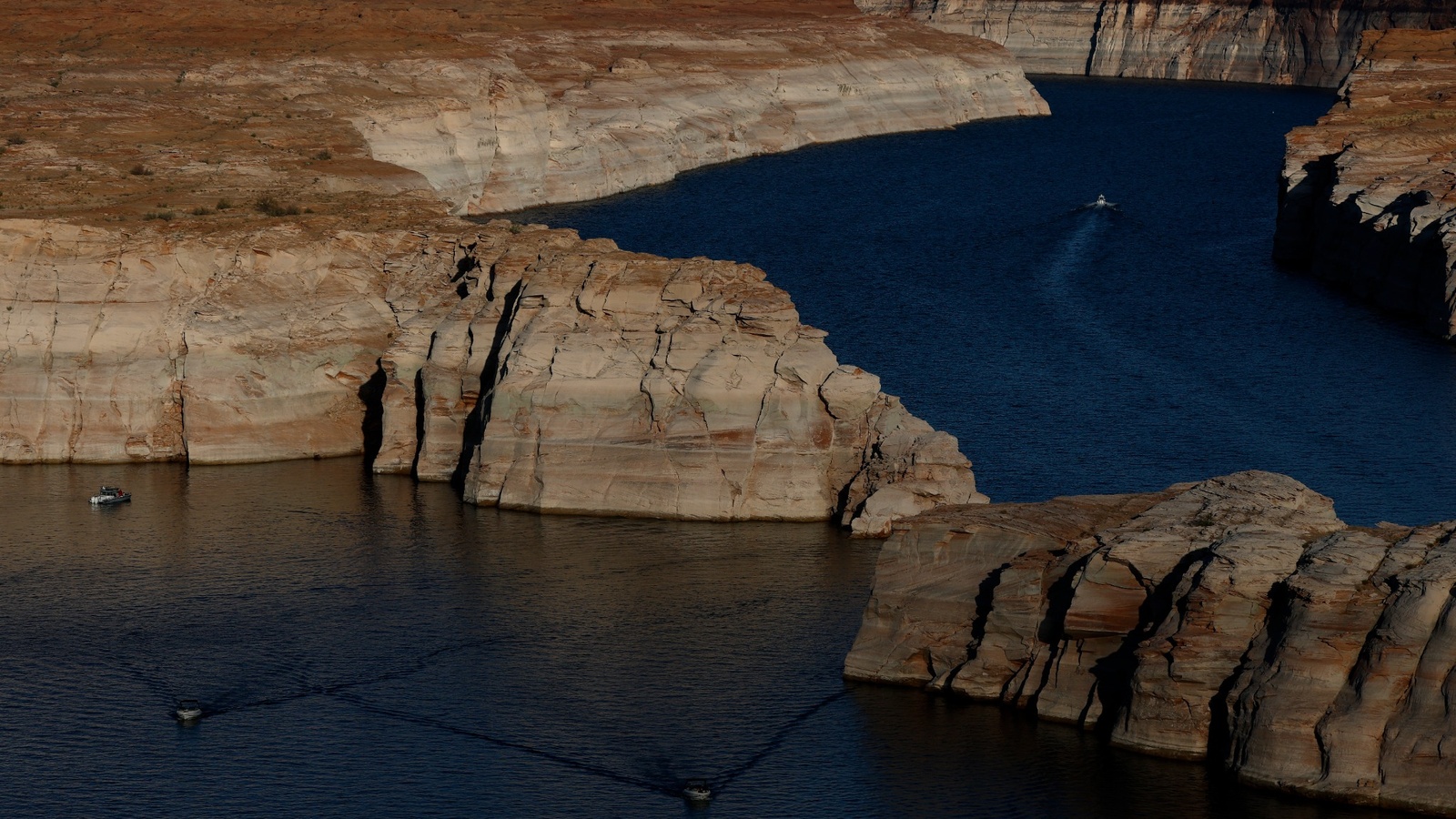
The Colorado River Basin is experiencing its longest dry period in 1,200 years, with water levels in Lake Powell falling to near their minimum operational threshold. Climate change has reduced snowpack in the Rocky Mountains, which supplies roughly 80 percent of the river’s annual flow, while elevated temperatures are increasing evaporation from the system’s 40 reservoirs. The critical water shortage has created cascading effects across the region, reducing hydroelectric generation, constraining water deliveries to Arizona, California, and Nevada, and forcing agricultural operations to leave fields unplanted.
The structural limitations of Glen Canyon Dam have become a central concern in the crisis. If Lake Powell continues to drop, the dam’s penstocks that normally direct water to its turbines will no longer function, forcing reliance on smaller bypass tubes that were not designed for sustained use and cannot handle the full volume of water releases needed. These constraints threaten the ability of upstream states to meet their legal obligations to downstream regions and international commitments to Mexico.
In response to these mounting pressures, water managers and environmental advocates are reconsidering options previously thought impractical. A proposal called Fill Mead First would involve draining Lake Powell through new diversion tunnels positioned near the riverbed while preserving the dam itself. Supporters contend this approach would restore Glen Canyon, a landscape praised by conservationists, while improving downstream water flow and hydroelectric capacity at Lake Mead. The plan has gained attention from research institutions and policy centers, with some experts characterizing lower release structures as a viable component of long-term river management strategy.
Proponents note that the megawatts of electricity lost from Glen Canyon Dam could be replaced by solar generation, citing the recently constructed Gemini solar facility near Las Vegas as a comparable source of power. Lower Basin states, which depend primarily on Lake Mead for their water supplies, have formally requested that federal authorities examine modifications to the dam rather than further reduce their water allocations. The debate reflects a fundamental reassessment of how the Colorado River system should operate under prolonged arid conditions.
Article Attribution | Read More at Article Source
Article summary produced by Claude AI