

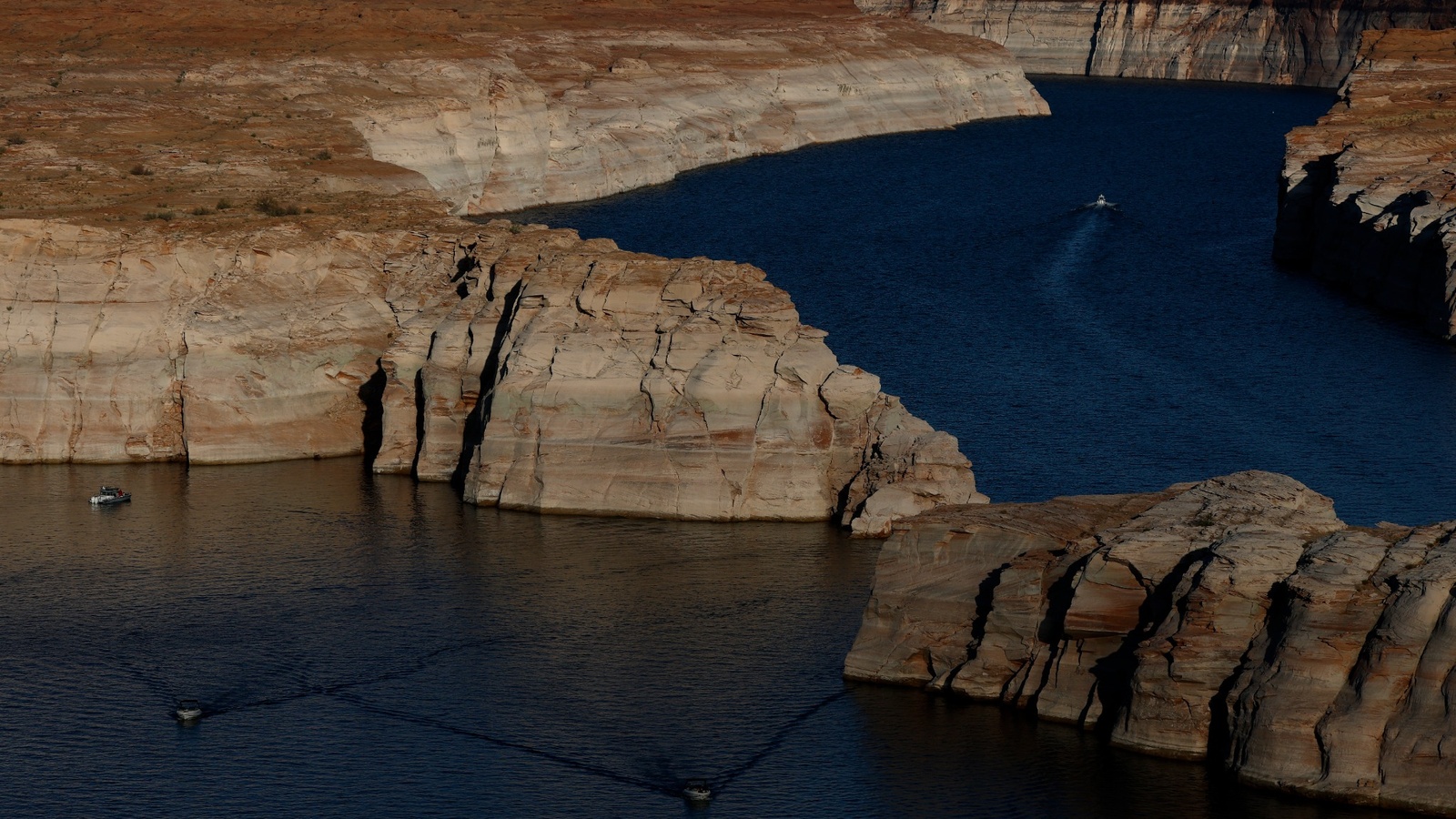
The Colorado River has experienced severely diminished flows due to an extended drought that now spans 27 years, the most significant dry period in over a millennium. Climate change has reduced snowpack in the Rocky Mountains, which typically supplies approximately 80 percent of the river’s annual water, while elevated temperatures have caused earlier snowmelt and increased evaporation across the system’s reservoirs. This situation has created cascading impacts across the region’s economy and environment.
Lake Powell, straddling the Utah-Arizona border, recently dropped to its lowest recorded level, falling below 150 feet from dead pool—the elevation at which water ceases flowing through the Glen Canyon Dam’s emergency bypass tubes to Lake Mead, located 300 miles downstream. The water shortage has curtailed hydroelectric power generation, disrupted agricultural operations through field fallowing, slowed housing development in water-dependent areas, and forced reductions in environmental flow releases that support aquatic species and Grand Canyon habitat formation. Federal and state authorities have pursued various strategies to balance competing interests, including water conservation measures, agricultural payments, and interstate allocation adjustments.
Among potential solutions gaining consideration is the partial draining of Lake Powell—a concept historically deemed impractical and too costly. The Glen Canyon Institute and similar organizations now advocate for the “Fill Mead First” approach, which would involve drilling new diversion tunnels below existing bypass structures to direct Powell’s water toward Lake Mead while circumventing capacity constraints. Proponents argue this would restore the red rock formations of Glen Canyon, revive ecosystems and indigenous sacred sites, and ultimately allow greater downstream water flow while solar power capacity could offset lost hydroelectric output.
The strategy addresses a fundamental structural vulnerability: if Lake Powell drops below minimum power pool levels, the dam’s large turbine pipes become inoperable, leaving only the narrow bypass tubes—originally designed for temporary use—to manage water releases. Recent inspection and maintenance work has suggested these tubes might function if necessary, though questions persist about their durability under sustained high-volume discharge. Water policy researchers and river management experts have increasingly acknowledged that modified outlet structures represent a viable discussion point, marking a shift from prior dismissals of such approaches.
Article Attribution | Read More at Article Source
Article summary produced by Claude AI