

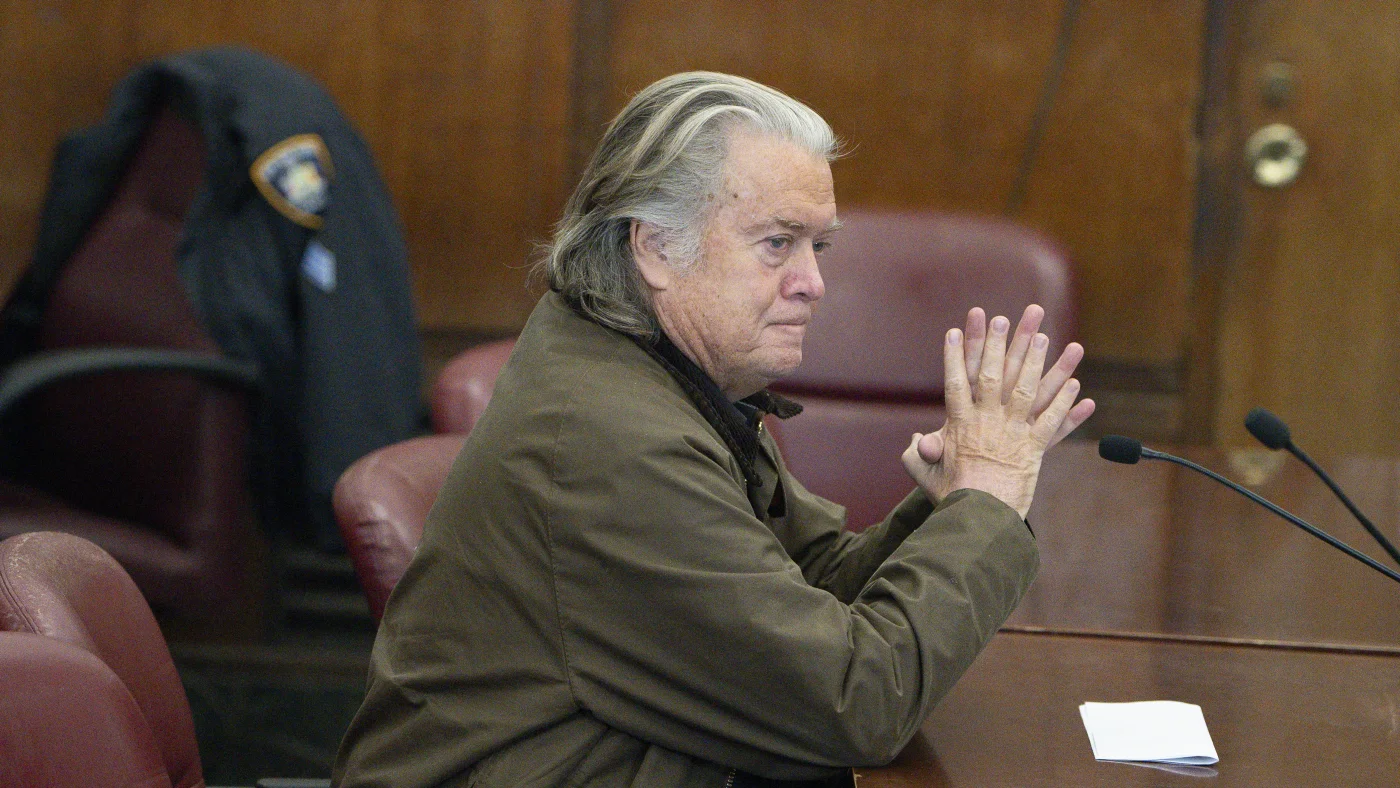
The Justice Department has moved to dismiss the contempt of Congress conviction of Steve Bannon, a former adviser to President Trump, prompting legal experts to warn about the absence of opposing arguments in the case. Bannon had refused to cooperate with a House committee investigating the Capitol siege, was convicted by a jury that deliberated for less than three hours, and had his conviction upheld on appeal. The DOJ now seeks to vacate the conviction “in the interests of justice,” with Bannon’s legal team offering no opposition to the motion.
Legal observers say this represents part of a broader pattern in which the Justice Department has dismissed charges against Trump allies without the traditional adversarial process that characterizes the American legal system. The DOJ previously sought dismissals of convictions for more than a dozen leaders and deputies of far-right groups including the Oath Keepers and Proud Boys, who had faced extended trials involving evidence of weapons gathering and Capitol breach activities. Critics contend that the dismissals bypass the legal system’s designed function of hearing arguments from opposing parties.
Former federal prosecutor Bruce Searby and others have noted the conflict inherent in having no true opposing party to contest the government’s rationale for dropping cases. Representatives’ lawyers previously requested that a federal appeals court appoint an outside attorney to defend the seditious conspiracy convictions, citing precedents in cases involving Michael Flynn and Eric Adams. U.S. District Judge Amit Mehta issued a statement expressing concern that dismissing the Capitol siege charges “diminishes the gravity of that day” and “excuses criminal acts.”
The Justice Department justified the Bannon dismissal on the grounds that he believed he was protected by executive privilege. Deputy Associate Attorney General Michael Weisbuch argued the judge lacks authority to reject the unopposed motion and that the policy grounds for dismissal are not subject to judicial review. Defense attorney Searby countered that the judge should examine whether the dismissals constitute an abuse of prosecutorial discretion taken in bad faith or contrary to public interest. The Trump administration has also drawn scrutiny for other legal matters, including a settlement with the Justice Department that granted Trump and his sons immunity from tax audits.
Article Attribution | Read More at Article Source
Article summary produced by Claude AI