

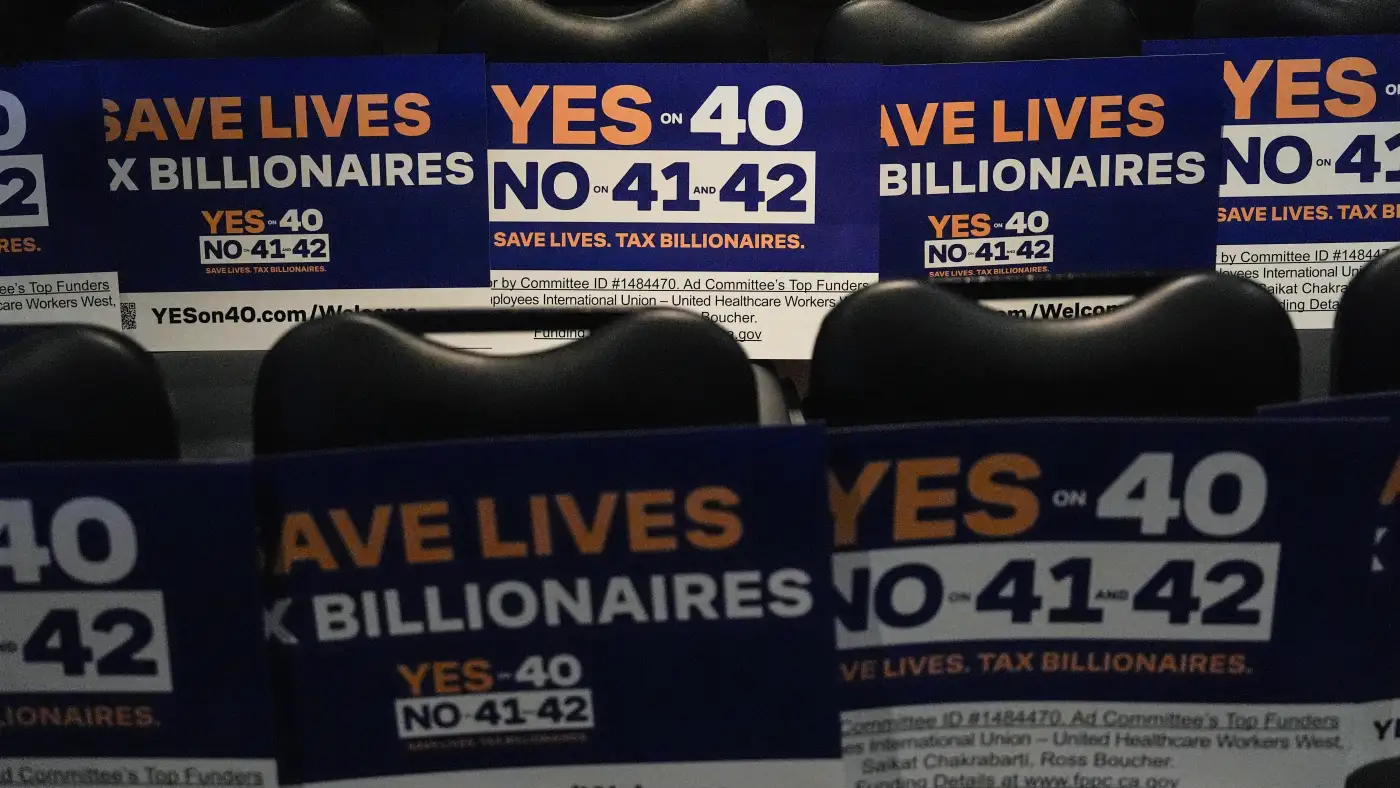
California voters have rejected a ballot measure that would have levied a one-time 5% tax on the wealth of billionaires in the state. The proposal, known as Proposition 40, was estimated by supporters to generate approximately $100 billion in revenue designated for healthcare programs.
Proponents of the measure, primarily led by the SEIU-UHW union representing healthcare workers, argued that such a tax was necessary to offset reductions in healthcare funding made by the Republican-controlled Congress. They pointed out that California contains more than 200 billionaires, suggesting the state’s wealthy should contribute to closing healthcare funding gaps.
Opponents contended that the tax would prompt billionaires to relocate from California, ultimately reducing state revenues and damaging the broader economy. The measure became a point of contention within California’s Democratic Party despite the party’s overall support. Governor Gavin Newsom, a Democrat, opposed the tax and advocated instead for a nationally implemented wealth tax. Xavier Becerra, the Democratic gubernatorial candidate, also opposed the measure. Additionally, a major teachers union declined to support the proposal due to concerns that it allocated only a minimal portion of projected revenues to schools.
Campaign spending heavily favored opponents of the measure. Sergey Brin, a Google co-founder, led a significant spending effort against Proposition 40, with opposition spending exceeding support spending by a ratio of at least five to one. Brin additionally sponsored ballot initiatives designed to prevent the tax from taking effect in the event voters had approved the measure.
Article Attribution | Read More at Article Source
Article summary produced by Claude AI