

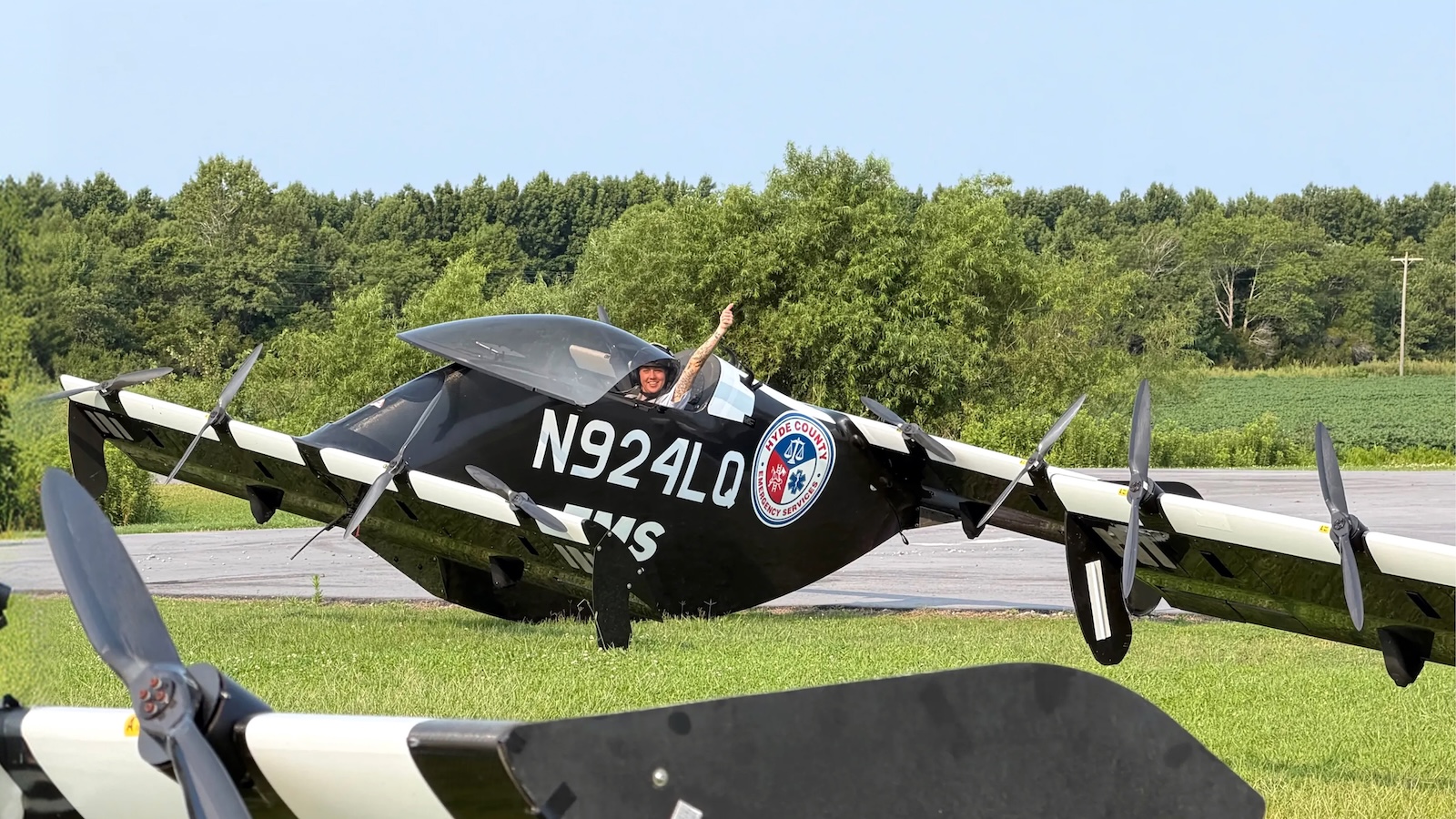
Electric vertical takeoff and landing aircraft, or eVTOLs, are finding unexpected applications beyond the widely publicized air taxi services that have dominated discussions about urban aviation’s future. Hyde County in North Carolina completed a six-month trial beginning in March with Pivotal’s BlackFly aircraft for emergency medical services. During one 911 response, paramedic Quinn Reece used the single-seat aircraft to locate a misidentified emergency address and arrived at the scene 20 minutes before traditional ambulances, demonstrating the potential value of rapid response in rural areas.
While manufacturers like Archer Aviation and Joby Aviation pursue commercial aerial taxi services in urban centers, the FAA’s eVTOL Integration Pilot Program has identified emergency medical response as a particularly important application for rural regions. The BlackFly can travel 20 miles on a single charge and carries 200 pounds of cargo, limiting its use to rapid response rather than patient transport. A competing design, Jump Aero’s JA1 Pulse currently in development, would offer greater range at 70 miles and higher speed at 288 mph compared to the BlackFly’s 63 mph. Both aircraft allow a single operator to serve as both pilot and medical responder, simplifying crew requirements.
The economic case for eVTOL adoption in emergency services remains compelling. Pivotal’s model costs approximately $190,000, substantially less than helicopters that range from $500,000 to $10 million. Operating costs for electric aircraft could be roughly 80 percent lower than fossil fuel equivalents, according to industry consultants. Furthermore, public agencies may operate under FAA public aircraft rules, potentially bypassing commercial pilot credential requirements that could otherwise limit deployment.
Beyond emergency response, similar aircraft powered by solar technology are in development for monitoring climate-related threats including wildfires and methane emissions. Rural areas present a more feasible initial deployment environment compared to urban centers, where identifying suitable landing and takeoff locations proves more challenging. Multiple counties have reportedly expressed interest in replicating Hyde County’s program based on its early success, suggesting broader adoption potential for electric aviation in practical public service applications.
Article Attribution | Read More at Article Source
Article summary produced by Claude AI